
Unlock Advanced Insights in Bioanalytical Method Development and Automation
Discover cutting-edge LC-MS/MS and automation methods for bioanalysis. Gain valuable insights into innovative techniques supporting efficiency and precision from discovery through to the clinic. These posters provide a detailed look at innovative methodologies, from patient-centric microsampling to advanced hybridization techniques, and efficiency through automation, offering practical solutions to some of the most pressing challenges in bioanalysis.
These scientific posters represent a significant advancement in bioanalytical methods and address key challenges in drug development that improve efficiency and outcomes to help save you time, reduce costs, and shorten development timelines.
Key Takeaways
- Expert Knowledge: Understand how advancements in automation and LC-MS/MS methods improve bioanalytical precision and efficiency.
- Practical Applications: Learn how these innovations streamline workflows and handle the high demands of preclinical and clinical research.
- Inspiration for Your Projects: Leverage advanced methodologies to overcome challenges with actionable solutions to achieve superior results in your studies.
Whether you’re exploring patient-centric sampling, oligonucleotide quantification, or automation for high-throughput studies, these resources will help you tackle complex challenges, improve workflows and enhance data accuracy. At Charles River, we’re here to partner with you, offering proven expertise and operational excellence to help you overcome these challenges, enhance your research, and drive your therapeutic programs forward with confidence.
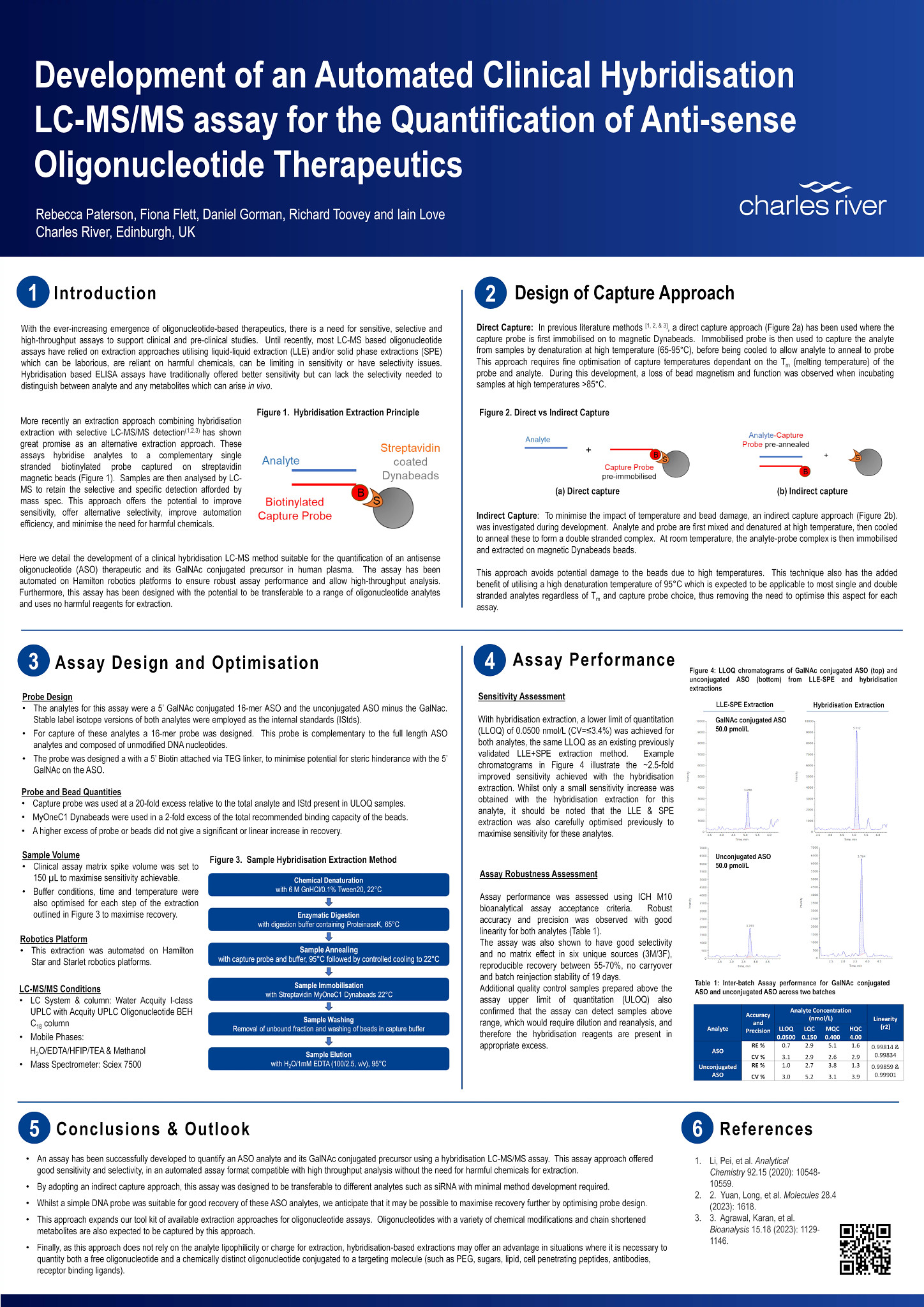
Development and Qualification of an LC-MS/MS Assay for Rapamycin in Capitainer ® Patient-Centric Microsampling Devices
The first scientific poster describes the development of an assay to quantify Rapamycin in Capitainer ® dried blood spots, and discusses the bioanalytical considerations required to do so per the range 1.00 - 50.0 ng/mL. Rapamycin is an immunosuppressive drug commonly used after organ transplantation; a therapeutic range of 5-15 ng/mL in blood is targeted to prevent organ rejection whilst minimizing the risk of toxic effects. This analyte was selected to demonstrate the approach, as patients administered Rapamycin often require therapeutic drug monitoring and may therefore benefit from healthcare providers using PCS techniques.
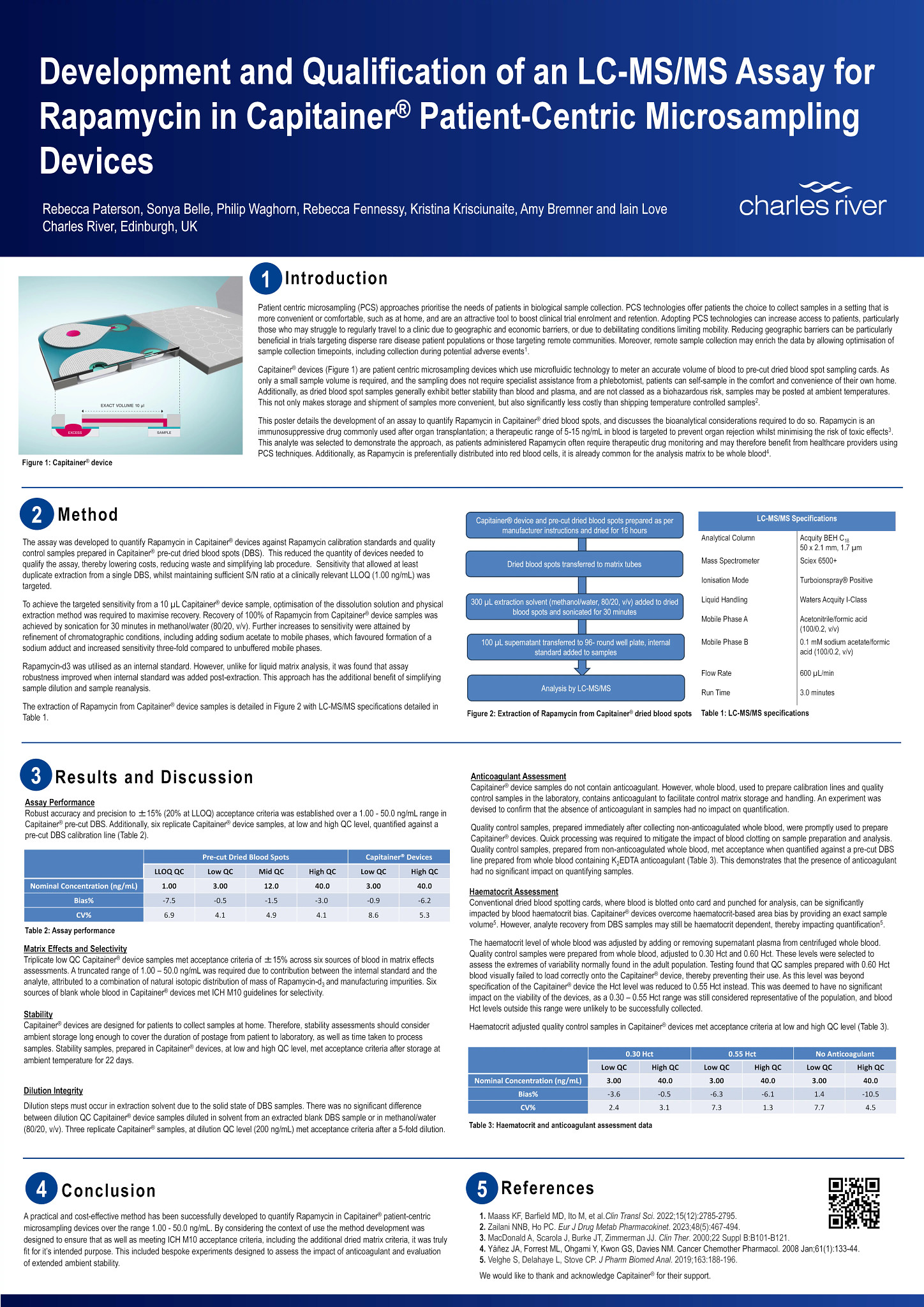
Development of an Automated Clinical Hybridisation LC-MS/MS assay for the Quantification of Anti-sense Oligonucleotide Therapeutics
The second scientific poster features a detailed development of a clinical hybridization LC-MS method suitable for the quantification of an antisense oligonucleotide (ASO) therapeutic and its GalNAc conjugated precursor in human plasma. The assay has been automated on Hamilton robotics platforms to ensure robust assay performance and allow high-throughput analysis. Furthermore, this assay has been designed with the potential to be transferable to a range of oligonucleotide analytes and uses no harmful reagents for extraction.
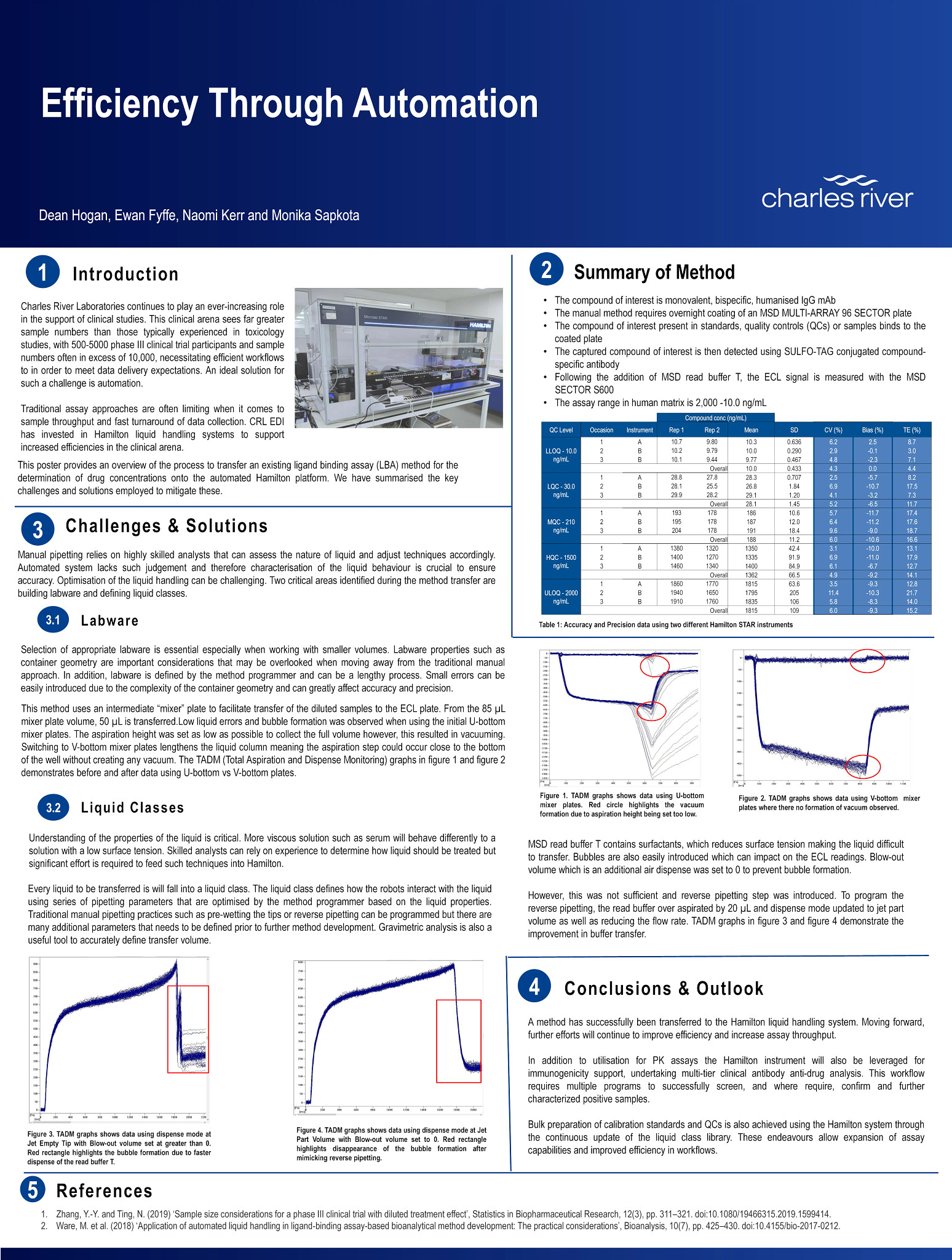
Efficiency Through Automation
Traditional assay approaches are often limiting when it comes to sample throughput and fast turnaround of data collection. We have invested in Hamilton liquid handling systems to support increased efficiencies in the clinical arena. This poster provides an overview of the process to transfer an existing ligand binding assay (LBA) method for the determination of drug concentrations onto the automated Hamilton platform.