

Science Ticker
|
Eureka Staff
Black History Month: Celebrating Scientists
In February we celebrate the African diaspora including African-American history. Follow Eureka in its month-long salute to black scientists.
Emmett Chappelle: Finding life in the vacuum of space
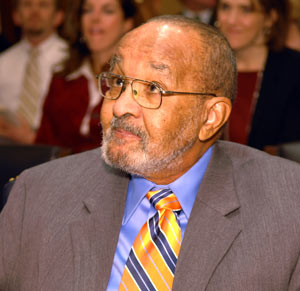 Emmett Chappelle (1925-2019) grew up on his father’s farm in Arizona and served in the Army during World War II. He was awarded the Purple Heart for a mortar shell injury sustained in Italy.
Chappelle attended University of California at Berkeley where he received a degree in biochemistry. He taught in Tennessee for a few years before earning his master’s at the University of Washington in 1954.
Chappelle symbolically brought life to the Universe by patenting and perfecting a method for detecting adenosine triphosphate (ATP), which is a sensitive test for finding evidence of bacteria. His work, in conjunction with research partner Grace Lee Picciolo, was recognized by NASA as a potential tool for detecting bacteria on other planets.
His other major contributions were to the field of bioluminescence and algal photosynthesis. His work demonstrating that algae do in fact photosynthesize has been cited as a potential method for creating breathable air and food sources for space travel.
Roger Arliner Young: A pioneer in zoology
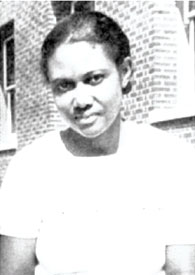 Dr. Young (1899-1964) was the first African American woman to receive a doctorate in zoology, which she earned in 1940 from the University of Pennsylvania. She was also the first to professionally publish in the field, which she did in 1924 for the journal Science.
Among other firsts: she was the first black woman to join the Sigma Xi fraternity for scientists, and the first to conduct research at the Marine Biological Laboratory in Massachusetts.
However, she was often plagued by both racism and sexism in her field. She was both helped and hindered by her relationship with noted biologist Ernest Everett Just, who saw her potential and fought for her funding at the University of Chicago, but who also unloaded administrative responsibilities on her at Howard University that took time away from her own research. When she sat for her exams at The University of Chicago for her doctorate, it was overseen by eugenicist Frank Lillie.
Her later career was marked by her social justice work. She was arrested a few times for her activism and seemed to have been blacklisted from many universities for her reputation as a labor rights and racial justice advocate.