
Discovery
|
Eureka Staff
Nanotubes in Tumours: What's Hot in 2022
Now that we know tumors use nanotubes to make contact with immune cells in test tubes, can they be targeted to improve immuno-oncology drug responses?
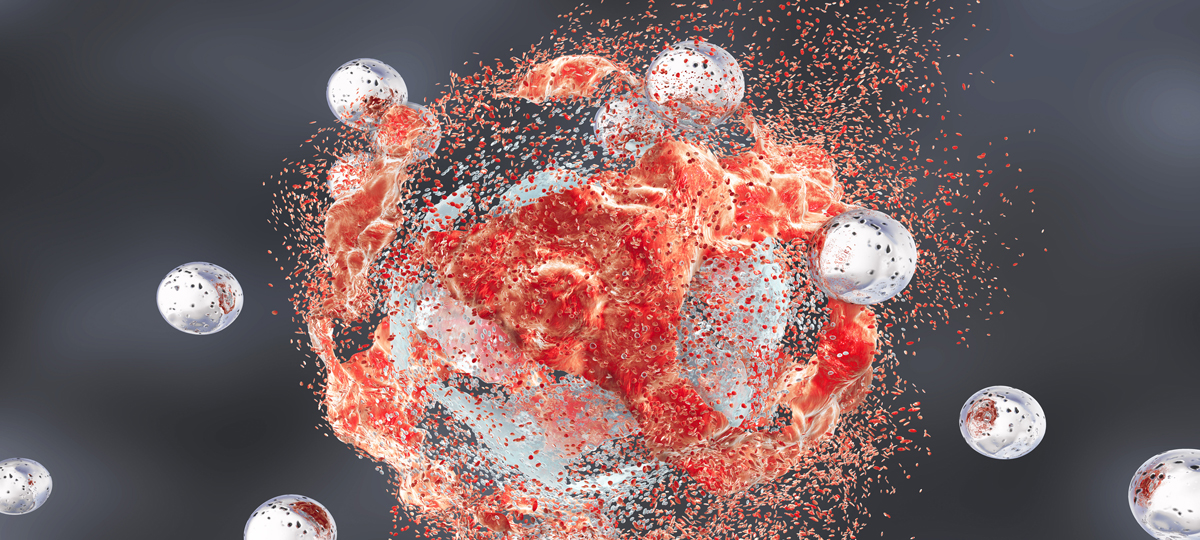
My hot topic for 2022 is truly hot! As in what makes a tumour “hot” in terms of immunogenicity and response to immune checkpoint inhibitors and other immuno-oncology (IO) approaches. Tumour cells could be considered as taking the “coward’s way out” either by hiding within an immune-suppressive or immune-excluded environment or by persuading immune effector cells such as macrophages not to eat them. Now, a group of researchers in Boston (1) have shown that tumour cells can go on the offensive and attack immune cells directly at least in the test tube. They do this by extending “nanotubes” that make contact with immune cells and suck the mitochondria out of them. These hijacked mitochondria are used to enhance the metabolic activity of the tumour cells.
The phenomenon of cells using nanotubes to communicate between each other has been reported in immune cells, in neurons and in epithelial cells allowing intercellular organelle trafficking and even transfer of viruses such as HIV or prion proteins. So, the finding that nanotubes occur in tumours is not all that surprising and should send the field of immuno-oncology in a new direction in 2022. The burning questions for 2022 are whether nanotubes occur in tumours in patients, whether they are related to patient outcome and whether they can be targeted to improve response to existing immuno-oncology approaches.
References:
1. Saha et al Nature Nanotechnology https://doi.org/10.1038/s41565-021-01000-4
Our What's Hot series are annual forecasts provided by Charles River's thought leaders. Check out here what our scientists are predicting for 2022 and what they called out in years past.