
Discovery
|
Julia Schueler, DVM
The Trifecta of 3D Cancer Models
This novel in vitro panel combines critical elements of the tumor microenvironment, and allows for rapid screening of drugs
There is no doubt that immune checkpoint inhibitors have transformed the treatment of certain cancers and continue to dominate the field of oncology research. But the tumor microenvironment as a target for cancer therapeutics is also getting more and more attention.
Besides unleashing the power of tumor-infiltrating lymphocytes (TILs), which generally speaking are a collection of lymphocytes that can fight their way through the connective tissue and blood vessels surrounding the tumor, researchers are also gaining important insights on how the stromal cells that inhabit the tumor’s complex ecosystem can be modulated and used as a therapeutic target.
To study these strategies and targets we need preclinical models that mimic the various parts of the tumor tissue as realistically as possible. It isn’t easy. Over the last 10 years the available cell systems have gotten so complex that we now can create fully human tumor tissue-like structures ex vivo. Unfortunately, the price of all this complexity is lower throughput. This leads to a slow-down in the drug development process which is already taking more than five years before a new drug is ready for clinical testing.
A good compromise that preserves the complexity of the cell systems and allows us to evaluate more compounds is the trifecta of in vitro systems: triple cultures of tumor cells, immune cells, and fibroblasts in a 3D setting. These platforms are usually run in a 96-well format in a matrix-based culture system.
A robust scalable screening method for immunotherapy targets
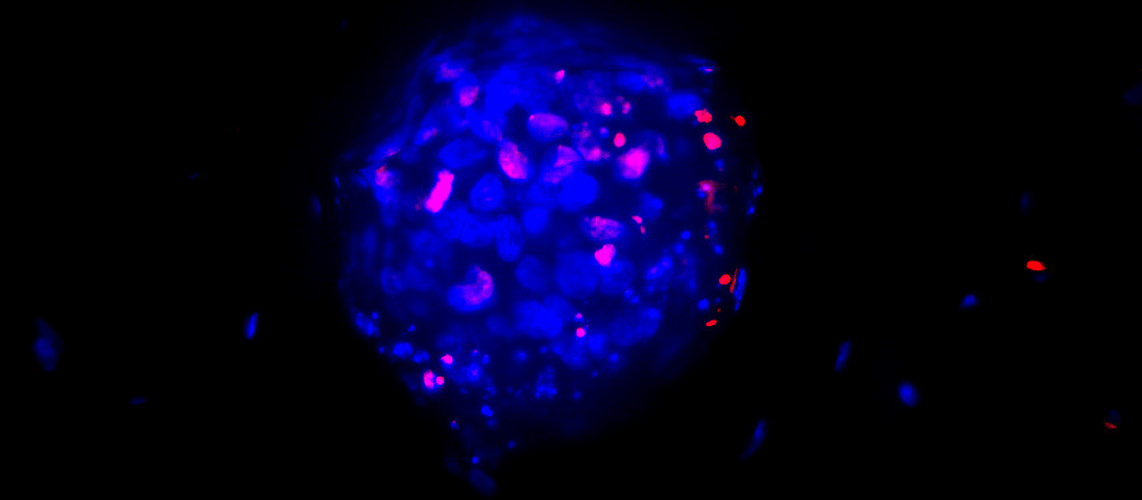
With our collaborators from Cypre we established something even better, a novel panel of 30 tumor models of solid cancer in co-and triple cultures with human fibroblasts and immune cells. In the panel, we used patient-derived-xenograft (PDX) cell lines from human tumor cells; human peripheral blood mononuclear cells (PBMCs) were added to the mix, along with fetal human dermal fibroblasts (HDFs).
The main purpose of the platform is to provide a robust, scalable screening method that we can use to identify promising immunotherapy targets and drug candidates in a fully human set-up. The results from our study suggest it works the way it is intended!
For instance, cytokine analyses confirmed the immune-suppressive characteristic of the human dermal fibroblasts. When testing different immune-modulating compounds such as bi-specific antibodies and checkpoint inhibitors we found that we needed to adapt to the culture conditions to anticipate changes in the molecule following exposure to the target. The same holds true for the read-outs, even ones as basic as tumor cell death.
We also found that when using hydrogel as a matrix, the system was amenable to deeper analyses using proteomics, flow cytometry and even RNA sequencing.
The acid test for every in vivo system is its ability to predict what will happen in the clinic. The 30 PDX panel predicted efficacy of the well-studied chemotherapy drug cisplatin in vivo. Furthermore, we found that it was possible to develop hot and cold lung cancer models with distinct TIL populations that resemble the respective PDX in a humanized setting.
So, this newly developed platform indeed demonstrates an innovative way to recreate the tumor microenvironment and brings us ever closer to exploiting this tumor ecosystem for pharmaceutical gain. We now have a platform for robust and repeatable screening using high-content image analysis. The hope is that this will rapidly identify a pipeline of effective therapies that hold up in the clinic and make it to patients. Stay tuned!

3D Tumor Panels
Through our partnership with Cypre, we offer 3D hydrogel tumor model panels to support your oncology and immuno-oncology drug development.The Cypre 3D PDX Tumor Panel is comprised of 3D tumors models of PDX-derived cell lines and human dermal fibroblasts. This enables targeted screening and the addition of PBMCs, or your cell therapy for immunotherapy screening, to determine therapeutic efficacy.