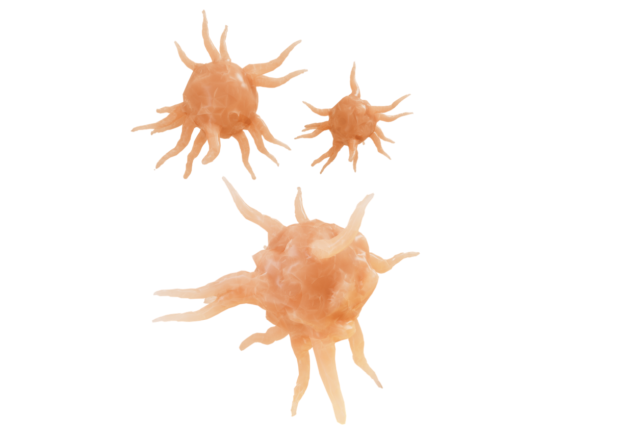
What Role do Human Platelets Play?
Human platelets play an important role in hemostasis by leading the blood clotting process. They function by clumping together to plug tears in blood vessels. Unlike other blood components, human blood platelets have a relatively short shelf life of five days at room temperature. Platelets are a natural source of growth factors.
Human blood platelets develop in the bone marrow from large precursor cells called megakaryocytes. Each megakaryocyte produces between 1000-3000 platelets in its lifetime. Platelets adhere to the site of blood vessel injury, where they become activated and chemically recruit other platelets to the injury site to help form a clot.
Human platelets from Charles River are collected in our FDA-registered collection center from healthy donors who have consented to an approved IRB protocol. Human platelets are collected using the Trima Accel® Automated Blood Collection System, under the platelet collection protocol, in an acid-citrate-dextrose (ACD) anticoagulant blood bag and are available as freshly isolated single and double units. All platelet donors are tested for HBV, HCV, HIV, HTLV, WNV, Trypanosoma cruzi, and Syphilis. Platelets should be used immediately upon receipt.
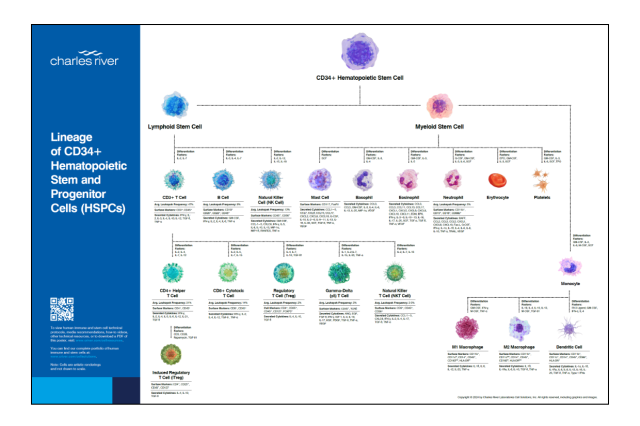
Lineage of CD34+ Hematopoietic Stem and Progenitor Cells (HSPCs)
Receive a complimentary poster to access information on immune cell markers, differentiation factors, cytokines, technical protocols, media recommendations, how-to videos, and more. Download Poster
Human Platelets in Research
In addition to their role in blood clotting, human platelets play a critical role in the innate immune system. They can initiate and respond to inflammation and infection and are also involved in the adaptive immune response.
Human platelets can bind to bacteria directly or indirectly via plasma proteins that recognize invading pathogens and bind to both bacteria and platelets. Blood clotting acts as a first line of defense by cutting off the invading pathogen from the general circulation.
- Bleeding disorders – Abnormal platelet counts or dysfunctional platelets can increase the risk of clot formation or bleeding.
- Chronic inflammation – Human blood platelets interact with white blood cells by secreting cytokines and other inflammatory mediators. Under certain circumstances, this interaction can become unbalanced, resulting in chronic inflammation. Platelets are currently being investigated for their role in chronic inflammatory diseases such as inflammatory bowel disease and rheumatoid arthritis.
- Thrombocytopenia – Abnormally low platelet counts can result from either decreased production or increased sequestration of human blood platelets into the spleen. Either can trigger immunological problems and excessive bleeding after injury.
- Platelet-rich plasma (PRP) – PRP is a concentrate of a platelet-enriched blood fraction from which the red blood cells have been removed. The PRP fraction also includes platelet-derived growth factors and fibrinogen. PRP is currently under clinical investigation as an autologous treatment with proposed therapeutic effects for helping to heal damaged tissue.