
High-Quality Human Blood Products
We offer a full spectrum of human blood products, including whole blood, platelets, plasma, and serum. Our blood products are sourced ethically, processed, and tested with state-of-the-art technology to ensure the highest standards of quality and consistency. Our offerings are tailored to facilitate various research applications, from basic biological studies to advanced therapeutic developments.
Explore Human Blood Products from Charles River
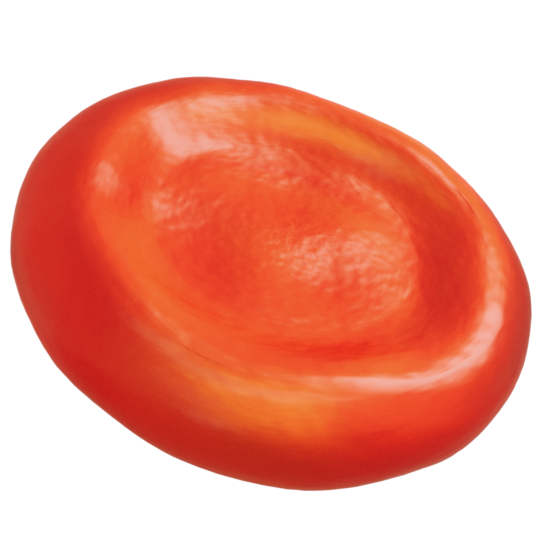
Whole Blood
Whole blood provides a complete cellular and plasma component profile, ideal for comprehensive analysis. Human whole blood can be collected in a bag containing citrate-phosphate-dextrose (CPD) as an anticoagulant or in commercially available collection tubes with anticoagulants. Explore whole blood
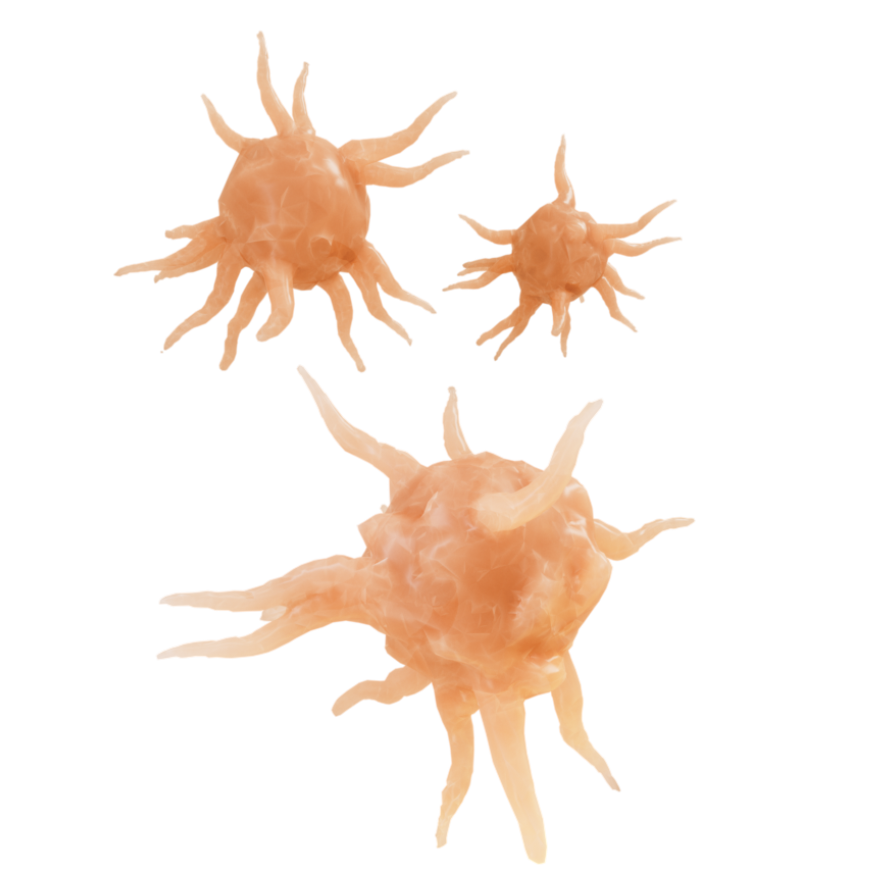
Platelets
Platelets are carefully isolated to maintain viability and activity, which is crucial for studies in hemostasis and thrombosis. Human platelets are collected using the Trima Accel® Automated Blood Collection System in an acid-citrate-dextrose (ACD) anticoagulant blood bag and are available as freshly isolated single and double units. Explore platelets
-cr.png?crop=true&anchor=0,0&color=ffffffff&u=fwtil1&w=2048&h=2048)
Plasma
Human blood plasma is separated from peripheral blood by centrifugation and is available through custom requests as either a fresh or cryopreserved sample. Plasma can be collected in a bag through apheresis with ACD-A as an anticoagulant or directly from whole blood using any commercially available tube with an anticoagulant. Explore plasma
Serum
Human blood serum is collected from peripheral blood in a plain or serum separator tube and is available through custom requests as either a fresh or cryopreserved sample. Explore serum
-
Discounted Pricing
Your company or academic institution may be eligible for pricing discounts. Government labs in the United States are also eligible for GSA MAS discounts. Request a quote to find out more.
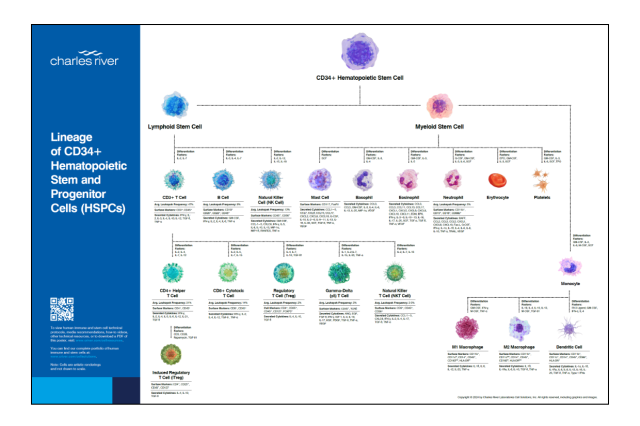
Lineage of CD34+ Hematopoietic Stem and Progenitor Cells (HSPCs)
Receive a complimentary poster to access information on immune cell markers, differentiation factors, cytokines, technical protocols, media recommendations, how-to videos, and more. Download Poster
Frequently Asked Questions (FAQs) About Human Blood Products
-
What are whole blood anticoagulants?
Whole blood anticoagulants, also known as blood thinners, are substances used to prevent blood from clotting outside the body, such as during blood collection or storage.
They work by interfering with the blood's natural clotting mechanisms. By inhibiting clot formation, these anticoagulants help maintain the blood in a fluid state, ensuring its components remain viable for transfusions or laboratory analysis. Some examples of commonly used anticoagulants for whole blood collection include ACD-A, Heparin, EDTA, and CPD.
-
What is the difference between serum and plasma?
Serum and plasma are blood components that differ primarily in clotting factors.
Plasma is the liquid portion of blood that contains water, salts, enzymes, antibodies, and other proteins, including clotting factors. It serves as a medium for transporting nutrients, hormones, and waste products throughout the body.Serum is derived from plasma but lacks these clotting factors. It is obtained after blood has clotted and the clotting factors have been removed. While both are used for various diagnostic tests, serum is often preferred in laboratory settings because it is free of clotting proteins, which can interfere with specific analyses.
-
What are human blood products used for?
Human blood products are vital in medical treatments and are used for various therapeutic purposes.
- Whole blood, which contains red blood cells, white blood cells, platelets, and plasma, is often used in situations of significant blood loss, such as trauma or surgery, to restore blood volume and improve oxygen delivery, also known as blood transfusion.
- Platelets are crucial for blood clotting and are used to treat patients with low platelet counts or bleeding disorders, helping prevent excess bleeding.
- Plasma, the liquid component of blood, is rich in proteins and clotting factors, making it valuable for treating conditions like liver disease or bleeding disorders.
- Serum, derived from plasma but without clotting factors, is used in diagnostic testing and research.
Because of their life-saving roles, these components are indispensable in surgeries, trauma care, managing chronic conditions, and treating many other medical conditions. - Whole blood, which contains red blood cells, white blood cells, platelets, and plasma, is often used in situations of significant blood loss, such as trauma or surgery, to restore blood volume and improve oxygen delivery, also known as blood transfusion.
-
How are human blood products collected?
Human blood products are collected through blood donation, which is conducted with utmost care and under strict safety protocols. Depending on the component needed, this can be done in different ways.
Whole blood donation involves drawing blood directly from a donor’s vein, typically from the arm. is the most common method.
Apheresis is a method for separating and collecting specific components from a person's blood, such as platelets or plasma, and returning the remaining components to the donor. This targeted collection method allows efficient use of each component based on medical needs.
The rigorous safety measures applied to blood collection ensure the health and safety of blood donors and recipients, providing reassurance and confidence in the process. Blood components can also be collected using whole blood samples through centrifugation techniques.
-
What is blood transfusion?
A blood transfusion involves medical professionals transferring blood or specific components from a donor directly into a recipient's bloodstream. This process replaces lost blood during surgery, injury, or illness and treats conditions that affect blood components, such as anemia or clotting disorders.
Depending on their medical needs, recipients receive either whole blood or specific components such as red blood cells, plasma, or platelets during a transfusion. Blood transfusions are carefully matched to the recipient's blood type to ensure compatibility and prevent adverse reactions.
Blood transfusion saves lives and improves health outcomes in various medical situations.
-
What is blood typing?
Blood typing involves identifying a person’s blood group by checking for specific antigens present or absent on the surface of their red blood cells. The most common classification systems are the ABO and Rh system.
In the ABO system, blood can be classified as type A, B, AB, or O, depending on the antigens present.
The Rh system categorizes blood as positive or negative, depending on whether the Rh factor is present.
Knowing a person’s blood type is crucial for safe blood transfusions and organ transplants. It is also vital in managing pregnancies, ensuring compatibility, and lowering the risk of adverse reactions.
References
-
References
Associations between peripheral whole blood cell counts derived indexes and cancer prognosis: An umbrella review of meta-analyses of cohort studies
Zhang YY, Liu FH, Wang YL, Liu JX, Wu L, Qin Y, Zheng WR, Xing WY, Xu J, Chen X, Xu HL, Bao Q, Wang JY, Wang R, Chen XY, Wei YF, Zou BJ, Liu JC, Yin JL, Jia MQ, Gao S, Luan M, Wang HH, Gong TT, Wu QJPlatelets in Thrombosis and Atherosclerosis: A Double-Edged Sword
Martinez Bravo G, Annarapu G, Carmona E, Nawarskas J, Clark R, Novelli E, Mota Alvidrez RIPlasma for prevention and treatment of glycocalyx degradation in trauma and sepsis
Kravitz MS, Kattouf N, Stewart IJ, Ginde AA, Schmidt EP, Shapiro NIEvolving patterns of first blood product use in trauma in the era of hemorrhage control resuscitation
Asif M, Haider SU, Liu Z, Stansbury LG, Hess JRTransfusion of blood and blood products for the management of postpartum haemorrhage
Williams CR, Huffstetler HE, Nyamtema AS, Larkai E, Lyimo M, Kanellopoulou A, Robertson L, Choi L, Alwy Al-Beity FM