
C3H Mice Details
From a cross of a Bagg albino female and a DBA male by Strong in 1920. A litter of 4 females and 2 males sent to Andervont in 1930, then to Heston at F35. To NIH in 1951 from Heston at F57. To Charles River in 1974 from NIH.
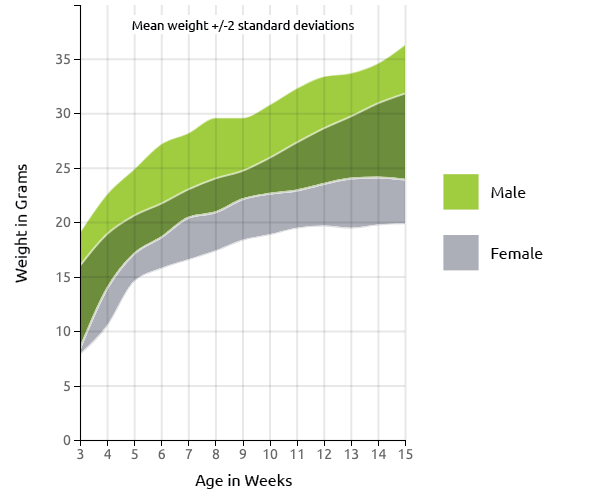
LOCATION: Kingston
UNIT: K61
Download the Report
➤ DOWNLOAD OUR CATALOG for instant access to Standard List Pricing
➤ TALK TO US to discuss organization or volume-based discounts
Already have an eCommerce portal account?* Login to order research models, obtain quotes, view organization-specific pricing, and see inventory. Processing time required to validate new eCommerce access requests.
*eCommerce is available in US, Canada, UK, France, Germany, Austria, Netherlands, Denmark, Finland, Norway, Sweden, Spain, Portugal, Belgium, Luxembourg, and Switzerland
C3H Mice Details
From a cross of a Bagg albino female and a DBA male by Strong in 1920. A litter of 4 females and 2 males sent to Andervont in 1930, then to Heston at F35. To NIH in 1951 from Heston at F57. To Charles River in 1974 from NIH.
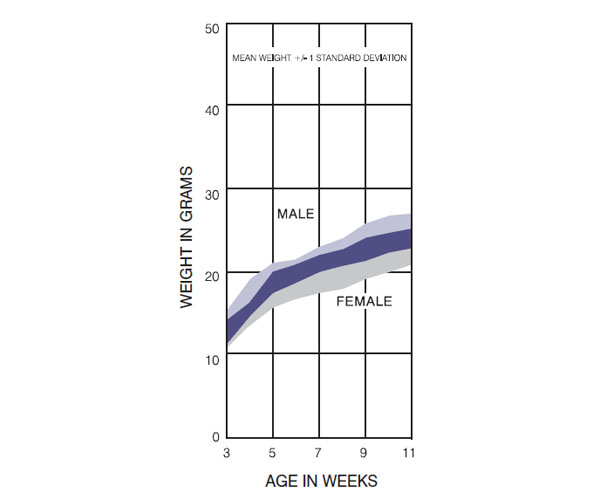
Growth chart data should be used as a guideline only.
The shaded areas on each chart are the mean weight plus or minus one standard deviation at a given age averaged across all production facilities. This represents approximately 67% of the population, with the remaining 33% falling outside of this weight range.
UNIT: 5
Download the Report
➤ DOWNLOAD OUR CATALOG for instant access to Standard List Pricing
➤ TALK TO US to discuss organization or volume-based discounts
Already have an eCommerce portal account?* Login to order research models, obtain quotes, view organization-specific pricing, and see inventory. Processing time required to validate new eCommerce access requests.
*eCommerce is available in US, Canada, UK, France, Germany, Austria, Netherlands, Denmark, Finland, Norway, Sweden, Spain, Portugal, Belgium, Luxembourg, and Switzerland
C3H Mice Details
From a cross of a Bagg albino female and a DBA male by Strong in 1920. A litter of 4 females and 2 males sent to Andervont in 1930, then to Heston at F35. To NIH in 1951 from Heston at F57. To Charles River in 1974 from NIH.
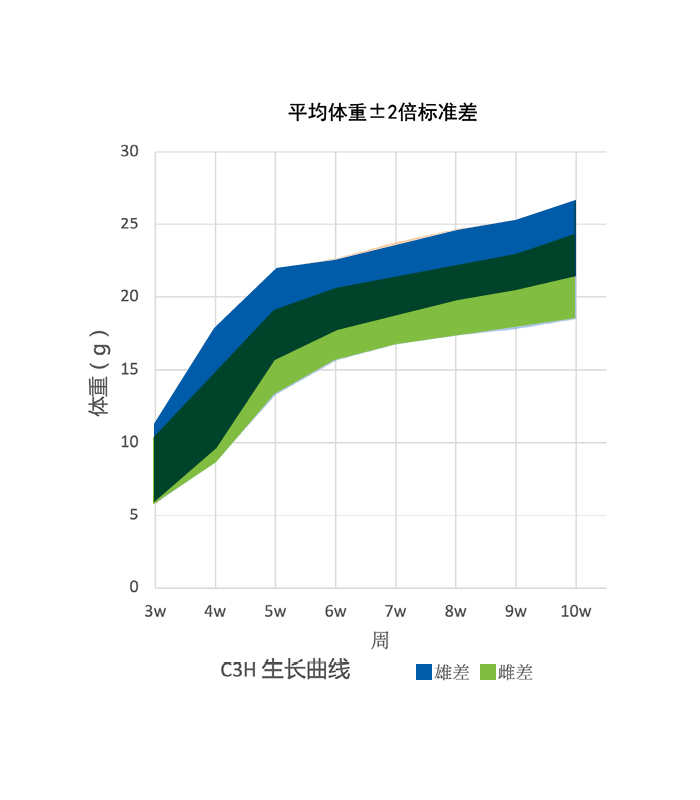
Please email us at [email protected] to request a health report for this model.
For additional information, including pricing details, please visit the C3H mouse page on the Vital River Laboratories website.

GUIDEBOOK
Rodent Model Genetic Quality Control
Learn the essentials of genetic QC programs: inbred/outbred colony quality control, transgenic rodent model creation, rederivation, and cryopreservation techniques. Download Now
Frequently Asked Questions About C3H Mice
-
What is the origin of C3H mice and what makes them unique?
C3H mice were first developed in 1920 in the United States by Haldane. In 1930, Snell extensively inbred this strain. They are known for their susceptibility to a wide range of pathogens and their ability to produce a high incidence of spontaneous tumors. C3H mice are also used extensively in behavioral studies because of their predictable behavior patterns.
-
What is the lifespan of C3H mice and do they have any health concerns?
The lifespan of C3H mice is typically 2 – 2.5 years. They are prone to developing cancer, especially mammary gland tumors, spontaneous muscular dystrophy, and autoimmune diseases. Some C3H mice can experience seizures and tremors at a young age. These symptoms, however, may not affect behavior or cognition.
-
Are there any notable behavioral characteristics of C3H mice?
C3H mice are known for their aggressive behavior and hyperactivity. They display increased anxiety-like behavior and tend to avoid open spaces. C3H mice also notable for their cognitive abilities, especially in learning and memory tasks, making them an ideal model organism for studying cognitive disorders and the effects of drugs that affect cognition.