
DBA/2 Mice Details
Developed by C.C. Little in 1909 from stock segregating for coat color. Oldest of all the inbred strains of mice. In 1929-1930, crosses were made between sublines, and several new sublines were established, including the widely used sublines 1 (previously called 12) and 2 (previously called 212). To Mider in 1938. To NIH in 1951 from Mider at F34. To Charles River in 1974 from NIH.
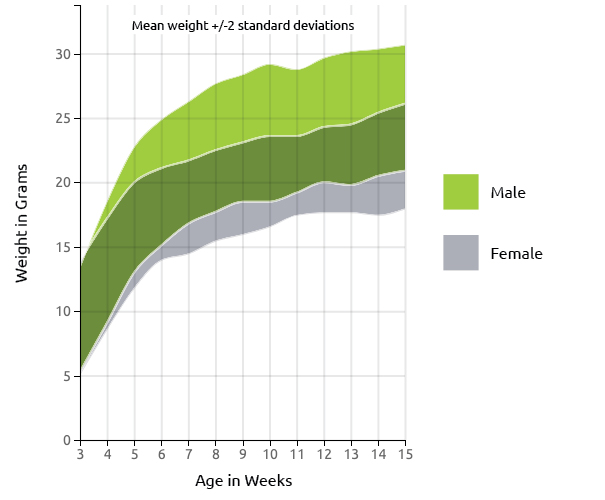
LOCATION: Raleigh
UNIT: R02
Download the Report
LOCATION: Raleigh
UNIT: R07
Download the Report
➤ DOWNLOAD OUR CATALOG for instant access to Standard List Pricing
➤ TALK TO US to discuss organization or volume-based discounts
Already have an eCommerce portal account?* Login to order research models, obtain quotes, view organization-specific pricing, and see inventory. Processing time required to validate new eCommerce access requests.
*eCommerce is available in US, Canada, UK, France, Germany, Austria, Netherlands, Denmark, Finland, Norway, Sweden, Spain, Portugal, Belgium, Luxembourg, and Switzerland
Try out this model with our animal evaluation program (North America)
Try out this model with our animal evaluation program (Europe)
DBA/2 Mice Details
Developed by C.C. Little in 1909 from stock segregating for coat color. Oldest of all the inbred strains of mice. In 1929-1930, crosses were made between sublines, and several new sublines were established, including the widely used sublines 1 (previously called 12) and 2 (previously called 212). To Mider in 1938. To NIH in 1951 from Mider at F34. To Charles River in 1974 from NIH.
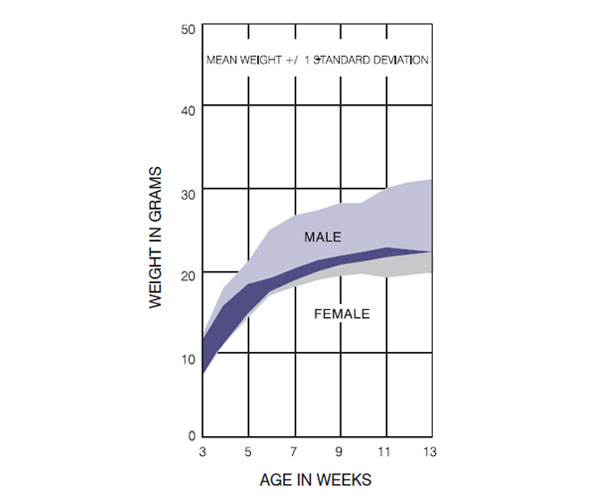
Growth chart data should be used as a guideline only.
The shaded areas on each chart are the mean weight plus or minus one standard deviation at a given age averaged across all production facilities. This represents approximately 67% of the population, with the remaining 33% falling outside of this weight range.
UNIT: 9
Download the Report
➤ DOWNLOAD OUR CATALOG for instant access to Standard List Pricing
➤ TALK TO US to discuss organization or volume-based discounts
Already have an eCommerce portal account?* Login to order research models, obtain quotes, view organization-specific pricing, and see inventory. Processing time required to validate new eCommerce access requests.
*eCommerce is available in US, Canada, UK, France, Germany, Austria, Netherlands, Denmark, Finland, Norway, Sweden, Spain, Portugal, Belgium, Luxembourg, and Switzerland
Try out this model with our animal evaluation program (North America)
Try out this model with our animal evaluation program (Europe)
DBA/2 Mice Details
Developed by C.C. Little in 1909 from stock segregating for coat color. Oldest of all the inbred strains of mice. In 1929-1930, crosses were made between sublines, and several new sublines were established, including the widely used sublines 1 (previously called 12) and 2 (previously called 212). To Mider in 1938. To NIH in 1951 from Mider at F34. To Charles River in 1974 from NIH.
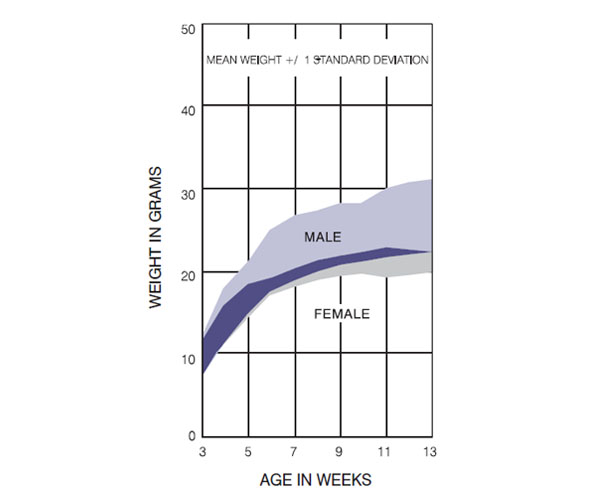
Growth chart data should be used as a guideline only.
The shaded areas on each chart are the mean weight plus or minus one standard deviation at a given age averaged across all production facilities. This represents approximately 67% of the population, with the remaining 33% falling outside of this weight range.
UNIT: 5
Download the Report
➤ DOWNLOAD OUR CATALOG for instant access to Standard List Pricing
➤ TALK TO US to discuss organization or volume-based discounts
Already have an eCommerce portal account?* Login to order research models, obtain quotes, view organization-specific pricing, and see inventory. Processing time required to validate new eCommerce access requests.
*eCommerce is available in US, Canada, UK, France, Germany, Austria, Netherlands, Denmark, Finland, Norway, Sweden, Spain, Portugal, Belgium, Luxembourg, and Switzerland
Try out this model with our animal evaluation program (North America)
Try out this model with our animal evaluation program (Europe)
DBA/2 Mice Details
Developed by C.C. Little in 1909 from stock segregating for coat color. Oldest of all the inbred strains of mice. In 1929-1930, crosses were made between sublines, and several new sublines were established, including the widely used sublines 1 (previously called 12) and 2 (previously called 212). To Mider in 1938. To NIH in 1951 from Mider at F34. To Charles River in 1974 from NIH.
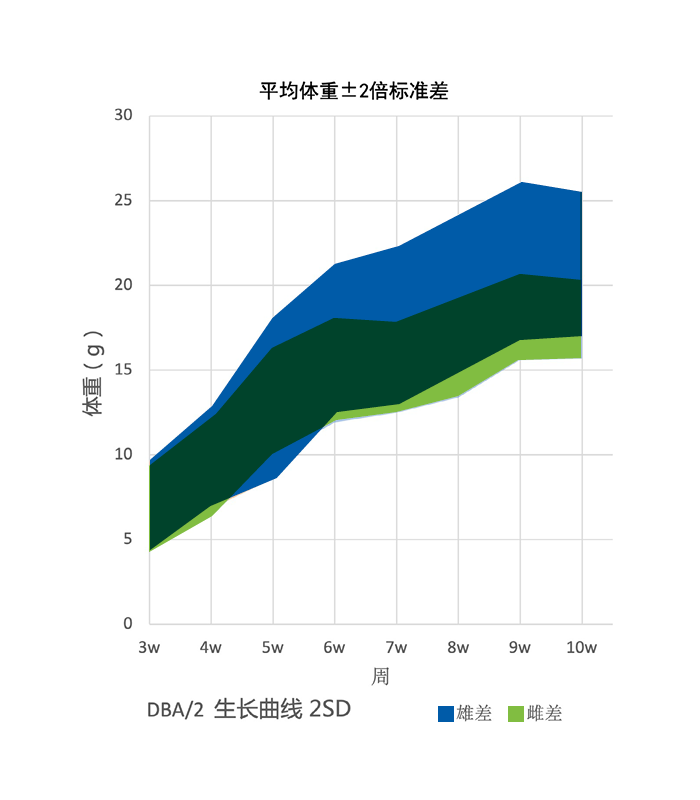
Please email us at [email protected] to request a health report for this model.
For additional information, including pricing details, please visit the DBA/2 mouse page on the Vital River Laboratories website.
Try out this model with our animal evaluation program (North America)
Try out this model with our animal evaluation program (Europe)
GUIDEBOOK
Rodent Model Genetic Quality Control
Learn the essentials of genetic QC programs: inbred/outbred colony quality control, transgenic rodent model creation, rederivation, and cryopreservation techniques. Download Now
Frequently Asked Questions About DBA/2 Mice
-
What is a DBA mouse and what is its significance in research?
A DBA mouse is a strain of laboratory mice that is widely used in research because of its suitability for studying hearing loss, neurodegenerative diseases, and several other medical conditions. DBA mice are particularly relevant to research related to cochlear and inner ear disorders, given their hearing loss susceptibility.
-
What are the differences between DBA/1 and DBA/2 mice?
DBA/1 mice are known for their susceptibility to autoimmune diseases, whereas DBA/2 mice are characterized by their tendency to develop ocular defects. Moreover, DBA/2 mice show greater genetic variability than DBA/1 mice and are considered more suitable for general purpose experiments. However, researchers should also note that some differences in phenotype and genotype can arise from the different genetic backgrounds of the DBA/1 and DBA/2 strains.