
What is the purpose of clinical flow cytometry assays?
Clinical flow cytometry assays for early-phase clinical trials are powerful tools for assessing the impact of a therapy on immune cell populations, providing data to help you make informed decisions about your program. The simultaneous analysis of multiple parameters at high throughput allows for the detection of rare cell populations and changes in the expression of markers of interest at a rapid rate.
As an experienced flow cytometry contract research organization (CRO), we can collaborate with you to customize and validate flow cytometry panels tailored to your specific program’s context of use.
Why use clinical flow cytometry?
Clinical flow cytometry can serve as a valuable exploratory endpoint in clinical trials, helping to assess a therapy’s effect on its intended target. The data generated from these assays can significantly impact whether your therapy progresses to the next stage.
Nonclinical Flow Cytometry Services
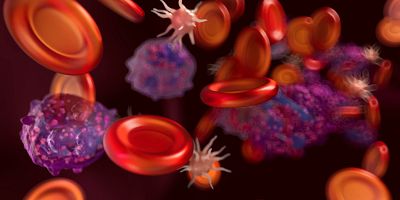
Flow cytometry can be a powerful, high-speed technology to use in your program, but only when it’s done right. We pair rapid, multiparameter analysis with rigorous validation and expert design to deliver reliable, actionable insights.
Immunophenotyping
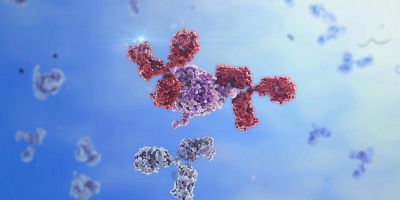
Immunophenotyping is a vital endpoint to evaluate the impact of a pharmaceutical compound on the immune system, and selecting the correct markers for inclusion should consider the mode of action and how it will modify cell populations. Our experienced teams can help you design the most appropriate panel of markers to make more accurate assessments.

eGuide: Biomarker Solutions from Discovery to Clinical Trials
Learn how strategic biomarker integration can accelerate research and de-risk pipelines to bring life-saving therapies to patients faster. This guide helps you uncover smarter ways to de-risk studies and accelerate timelines, without compromising scientific rigor.
Get your copy
Importance of Clinical Flow Cytometry in Drug Development
Clinical flow cytometry plays a vital role in enhancing medical diagnostics and therapeutic strategies, ultimately improving patient care and health outcomes. Flow cytometry assays used in early-phase clinical trials are practical tools for evaluating the impact of therapies on immune cell populations by providing valuable data that help inform decisions about your program. The ability to simultaneously analyze multiple parameters at high throughput allows for the rapid detection of rare cell populations and changes in the expression of specific markers of interest.
Assay Development
During the method development, specific attention is paid to:
- Optimal panel design for the intended use and cell populations of interest
- Selection of antibody clones/titration and critical reagents
- Optimization of acquisition, gating, and data reporting strategies
- Ex vivo treatment optimization when marker expression is weak in available cell samples (e.g., activation, exhaustion, apoptosis)
- Sample processing optimization for shipment (fresh, frozen, or fixation)
- Instrument considerations and assay controls for standardization, when applicable
Assay Validation
During the method validation, standard and fit-for-purpose parameters are included to verify at least the following critical performance checks:
- Precision (e.g., intra/inter run, inter-user, inter-day, inter-instrument)
- Limit of detection (LOD)
- Minimum required events (MRE) acquired
- Inter-sample variability and reference ranges
- Stability (pre-post processing)
Other parameters of interest may include:
- Accuracy (when appropriate controls are available)
- Reagent stability (i.e., cocktail stability)
- Instrument carryover
- Linearity of samples
Study Endpoints Using Clinical Flow Cytometry
Cell-based therapeutics involve the characterization of activation, expansion, persistence, and exhaustion status. Key components include:
- CD8+ T Cell Subsets and CD4+ T Cell Subsets: This involves analyzing the frequency of T cells specific to a peptide using tetramer staining.
- Myeloid Cell Subsets: These are characterized by assessing immune cell frequency, along with the evaluation of phenotypic and functional markers directly ex vivo.
- Lineage Markers, Activation Markers, and Effector Molecules: For example, examining the expression of cytokines through ex vivo activation using a polyclonal or antigen-specific stimulus for T cells, or utilizing an innate cell stimulus such as LPS.
- Receptor Occupancy Assessments: This refers to evaluating the binding of ligands to specific receptors on cells.
This framework offers a comprehensive approach to investigating cell-based therapeutics and their impact on the immune system.
Bioanalytical Strategies Unlocked: Innovative Approaches to PK, Immunogenicity, and Biomarkers
In this webinar, our scientific experts will walk you through real-world case studies that illustrate how innovative bioanalytical approaches can help you overcome common hurdles in pharmacokinetics (PK), immunogenicity, and biomarker applications.
Watch now
Comprehensive Global Solutions for Clinical Insights
Clinical flow cytometry is a transformative tool in diagnostics, offering comprehensive insights into cellular populations and their functions. By combining cutting-edge platforms with custom assay development and comprehensive cell profiling, we deliver richer, more relevant data tailored to your study’s objectives. Our global footprint ensures harmonized processes and consistent quality worldwide, while GLP/GCP compliance safeguards the integrity of your results.

Global Footprint
With a global presence, we can transfer and validate clinical flow cytometry assays at multiple sites worldwide. Our infrastructure allows us to receive samples 24/7, ensuring timely analysis even for samples with limited stability.

Custom Assay Development
Our team works closely with you to design, validate, and optimize assays that align with your specific goals, no matter how complex the study.

Good Clinical Laboratory Practice (GCLP)
While not mandatory for all clinical flow cytometry assessments, we have the capabilities to operate in accordance with Good Clinical Laboratory Practice (GCLP).
Frequently Asked Questions (FAQs) About Clinical Flow Cytometry Assays
-
What are flow cytometry assays?
In clinical settings, flow cytometry assays measure characteristics of certain cell populations or particles. They can be used to assess a therapy’s effect on its intended target and facilitate the advancement of a therapy to subsequent stages of clinical trials.
-
How many fluorochromes can be detected in a clinical flow cytometry assay?
Many of our sites supporting clinical flow cytometry studies can develop antibody panels for clinical use that include up to 15 fluorochromes.
-
Can you help me design a panel?
Yes, we can provide full flow cytometry services including technical and scientific support. We can develop flow cytometry panels from scratch as well as guide you and recommend relevant flow cytometry readouts according to your compound and its related context of use.
-
Can I select a standard flow cytometry panel, or is each one-custom built?
We have extensive experience with a wide range of biomarker assay platforms and flow cytometry panels. Each study is customized and provides scientific guidance on experimental design, selection, and, when needed, fit-for-purpose assay validation to ensure data are robust and meet regulatory or study-specific requirements.
-
What is the regulatory level requested for a clinical flow cytometry panel?
Flow cytometry assays are validated and used under a fit-for-purpose approach. Consequently, the degree of validation is dependent of the context of use. An exploratory end point on a clinical study will have to be evaluated in terms of sample stability, precision, and the characterization of key markers and critical reagents. While this analysis does not generally need to claim GCP or CLIA compliance, sponsors may request a flow cytometry assay validated and executed to this level of compliance at selected sites around the globe.
-
How long does it take to develop and validate a panel?
Method development or method transfer can take 6-10 weeks for a flow cytometry CRO. Flow cytometry assay validation can then take 3-4 weeks depending on the complexity of the panel and cell populations. Contact an expert to obtain more details.