Discovery
|
Christoph Eberle, PhD
Lupus Cure Research Eyes CAR-T Therapy
Systemic lupus erythematosus is a very old disease with no cure. Scientists are hoping a novel approach using re-engineered immune cells might finally tame the wolf that gives this disease its name.
Known for his comedies written during the Roman Republic, Plautus still handed his contemporaries and us a serious warning. In his play “Asinaria” he cautions: “Homo homini lupus est” – “ Man is wolf to his fellow man”.
Patients suffering from lupus have been connected to the same Latin word for “wolf” when referring to their disease, even though it is not communicable. Supposedly, this coinage comes from the characteristic facial sores and rashes that resemble a wolf’s bite or appear to be shaped like a wolf’s face.
Is lupus curable?
As old as the Hippocratic oath, lupus to this day remains incurable. Most commonly diagnosed as systemic lupus erythematosus (SLE), it is a rare disease affecting only about 1.5 million in the US and 5 million worldwide, as estimated by the Lupus Foundation of America . Though, just like cancer, lupus forms not one, but many diseases. An autoimmune dysfunction manifesting in various organs and body fluids, it occurs more often in women than men and tends to be passed along in families.
What causes lupus?
Having a certain genotype increases the risk of developing lupus, but it also needs environmental and hormonal triggers or drug induction to surface. Beginning stages include the inability of phagocytes to sufficiently clear dead and dying cells, which in turn allows the immune system to be directed against its own proteinaceous targets, mostly within the nucleus. Ultimately, the body’s own antibodies confuse friend for foe and attack its own cells.
Cell Therapies: A New Avenue for Advances in Lupus Cure Research and Treatment
Conventional drug interventions only aim to decelerate the associated chronic inflammation or potentially adjust a patient’s lifestyle to avoid aforementioned triggers. However, at best such immunosuppressive treatments alleviate symptoms and eventually come with severe side effects.
Scientists are hoping to improve those odds by giving the immune cells of lupus patients a fighting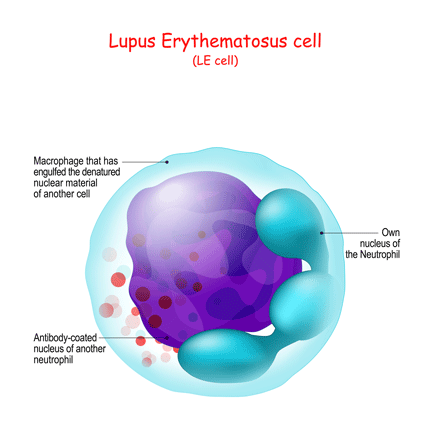 chance. Though it is still early days, lupus cure research has a promising target. The approach is known as CAR T therapy, which scientists first tried about a decade ago in a handful of leukemia patients. The strategy entailed using a patient’s own immune cells (T lymphocytes), modifying them to express a chimeric antigen receptor (CAR), and infusing the cells back into the body to kill the cancer. The artificially introduced cell surface receptor is made to recognize a pathogenetic target. For selected forms of leukemias and lymphomas these individualized cell therapies have been FDA-approved, encouraging the concept to be expanded towards solid cancers. Earlier this week, scientists published findings suggesting that CAR-T is curative, basing up their 10-year follow up of several patients who are still in remission.
Due to their inherent targetability CAR-T cells can be generated for other immune-based illnesses. As experimental therapy they proved to be feasible for blocking B cells from releasing lupus-causing antibodies, according to a clinical case report from 2021 . Clinical trials with more participants are in early stages but will provide systematic investigations of safety and efficacy of similar strategies that deplete B-cells or inhibit their activity associated with lupus.
Lupus Cure Research: CAR Therapy Looks Promising
CAR therapy is being hailed as revolutionary. The idea of remaking T lymphocytes for narrowly striking against a defined target was consequently applied to other immune cells like macrophages and NK cells and is now explored beyond cancer treatments. Someday it may cure lupus or mitigate symptoms, its promises need to measure up against clinical outcomes. Early remission data from blood cancer patients that received CAR-T therapy indicate warrant lupus cure research scientists to pursue this option further.
Trust does tame what Plautus recognized as the wolf-like in our behavior, as we can decide above our instincts what we want to be to each other. Whether any patient’s lupus finally can be chased away with these new immunological weapons and advances in lupus treatment research, remains to be seen.