Careers
|
Regina Kelder
In the Lab: These Scientists Found the Right Chemistry
When a couple works close enough to hear each other shout ‘eureka’
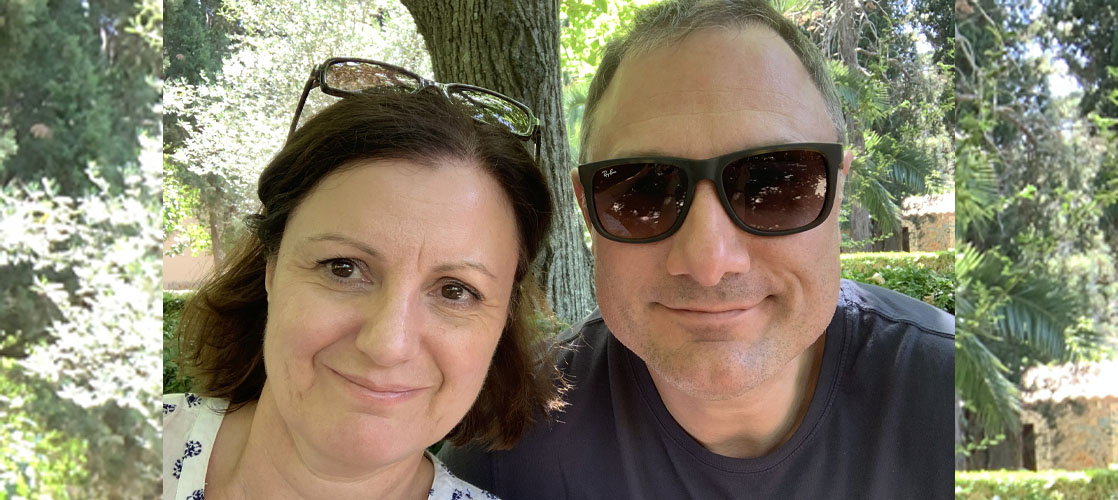
Basic science, from medicinal chemistry to structural biology, has attracted some of the brightest minds in science, so it’s not too surprising that a number of those researchers have linked up outside the lab, too. How research couples have been able to successfully mix science and love and achieve a healthy work/life balance intrigued us, so we reached out to a couple at one of our Early Discovery sites to talk a bit about their professional and personal relationships. For purely unscientific reasons, we are posting this around Valentine’s Day.
Early in their careers, Jon Sutton and Christine Edwards, PhD chemists and long-time partners, decided to take a chance on a brand-new company in Harlow called Argenta Discovery, which specialized in the earliest stages of drug development. Early Discovery research, once a sacred area for pharmaceutical companies, was gradually being outsourced to contract research organizations and Argenta, launched in 2000, wanted to catch the wave.
The UK-based company is now part of Charles River Laboratories – which acquired it in 2014 along with a sister company BioFocus from Galapagos NV—but back in the day it was a solo effort comprising a few dozen scientists who answered the growing demand for core functions of early-stage drug development while also embarking on a few innovative projects of its own.
At the time Christine was a lecturer at the University of Essex, and Jon was finishing up a post-doc under one of Christine’s colleagues. Not long after they started dating, organizers of Argenta recruited Jon as one of their first chemists. Christine followed a year later at Jon’s urging.
There were several factors which helped convince Christine she was making the right move. “The academic work was nice… you have freedom to do your own thing. But there wasn’t much money and you had to apply for grants to support your research,” says Christine. “When Jon moved to Argenta, he was working for clients, but he also didn’t have to worry about buying chemicals. In my academic lab, I can remember when we sometimes used to distill our own solvents to save money.”
As Jon’s partner, Christine attended an open day for the formal opening of one of Argenta’s new labs, liked the camaraderie and decided to take the plunge.
Today the company Christine and Jon started out at numbers around 140 employees and is just one of Charles River’s 150 sites. It collaborates within and outside the company on dozens of projects yearly. The outsourced services their site offers run the gamut from medicinal chemistry, in vitro biology, structural biology, and computer-aided drug design (CADD), to scale up chemistry for scale-up of promising candidates. Charles River Early Discovery has delivered more than 90 preclinical candidates, contributed to more than 470 patents, and co-authored more than 270 peer-reviewed publications.
This work is, technologically speaking, less empirical than the bench science that brought us drugs decades ago. Indeed, most drug discovery efforts begin with a list of desirable attributes – a target candidate profile – and a range of in vitro assays, arranged in an efficient screening cascade, to help identify leads.
Jon and Christine know this process well. Both began as senior medicinal chemists, but today they are Group Leaders with managerial responsibilities. They also work on integrated drug discovery projects where they get to collaborate with biologists and DMPK scientists who determine the pharmacological characteristics of a drug and its fate in vivo, and CADD scientists who use molecular modeling to optimize identified drug leads.
Christine has nearly 20 years of experience in the design of molecules for inhaled delivery and has contributed to the discovery of multiple development candidates, mainly for the treatment of respiratory diseases. Jon has a track record in delivering novel pre-clinical candidate compounds across a range of disease areas and targets, with a passion for discovering new medicines for patients. More recently, he led one of the first blended offerings, which engaged synthetic chemistry partners in the Far East, to provide for cost-sensitive clients.
Yet despite their proximity in the workplace, and the fact they are both chemists by training, they have never worked on the same project together, and usually don’t even work in the same areas of the building. However, this is not by coincidence. In the Chemistry Department, couples were usually not put together on the same project to help separate out work/home environments.
COVID reshaped many workplaces, and while their Early Discovery labs never closed, scientists did work more hours remotely. So, when working from home they maintain separate offices which, Jon says, spares them from “getting cranky.”
They do seek each other’s counsel. “Today, I was writing a proposal and I was out of ideas, so I asked Jon to take a look,” says Christine.
Outside of work, they enjoy taking vacations, and walking in the countryside near their home. Jon has a passion for fast cars and they both dote on their 15-year-old Tiffanie cat, Jasper.
So, what is their secret to mixing science, work and love. “We do spend a lot of time together, which is why our relationship is so strong,” says Jon. “And we try not to talk about work too much outside of typical working hours.”