Perspective
|
Deborah Dormady Letham, PhD
A Rare Brain Bleed
How one family climbed back from incredible loss to become a beacon for their community and coworkers
Arteriovenous malformation (AVM) is a lot of long words for a serious rare disease causing a problem in the circulatory system. However, there were no words on that day five years ago when my “work brother” Doug got the phone call that no parent should get. Doug and I were walking our usual half-mile lunchtime hike up the hill near work—great for exercise and conversation. His family had just returned from vacation, and he regaled me with stories of their three amazing children plus cousins and their moms and dads, who gathered at a rented beach house. This was the best Monday morning recap ever of sand volleyball and football games, ocean swims and great meals.
But then the phone call. The unexpected phone call where Doug’s daughter sounded SO distraught, he could not make sense of her many words. Something was seriously wrong. It was their youngest, Taggy... We walked back to the office in silence.
Down the hill, swiftly back to the site, Doug grabbed his laptop bag and hopped calmly into his car. No word until later when I got the dreadful news. Sweet 7-year-old Taggy was gone. A brain bleed; maybe he suffered only a half an hour. So out of the blue, so rare. We know now it was AVM.
AVM is an abnormal tangle of blood vessels connecting arteries and veins, which disrupts normal blood flow and oxygen circulation. When an AVM disrupts this critical process, the surrounding tissues do not get enough oxygen. Because the tangled blood vessels that form the AVM are abnormal, they can weaken and rupture. The rupture causes bleeding in the brain (hemorrhage), stroke or brain damage. For 7-year-old Taggy, it was the worst case. Medical staff scientists can quite often pinpoint problems and develop medications and surgical interventions to help, but in Taggy’s case this disease was underlying and invisible with no family history.
Intervention and hope for rare disease patients
Studying these rare diseases, like AVM, helps to find avenues of prevention. Because of ongoing research, brain scans taken when family history presents itself allow for real promising medical intervention. Doctors can successfully sew or "clip off" a section of the brain's blood vessels that appear weak. In recovery, the patient lives a normal life.
There are over 8000 diseases affecting 300 million people worldwide, so by funding scientific research, perhaps more rare diseases can be detected before they strike. The NORD organization catalogs and acts as an information source for people wanting to study rare diseases and their symptoms.
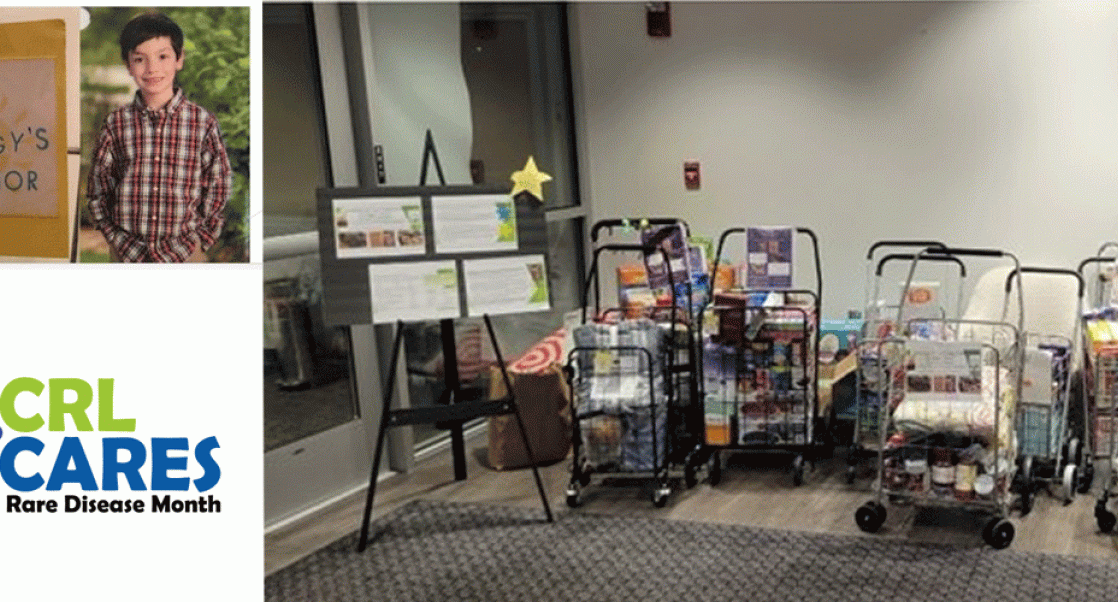
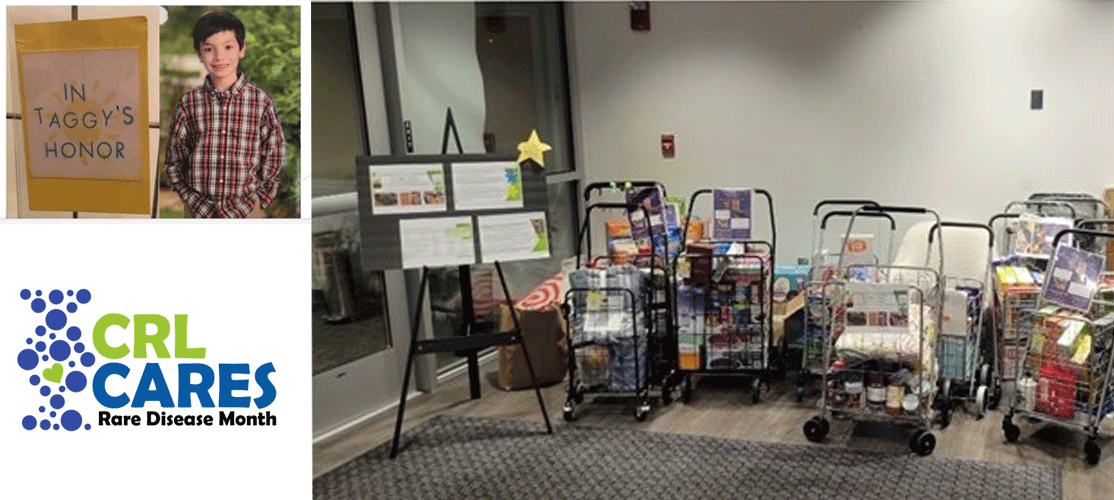
After Taggy's passing five years ago, we have seen my friend Doug and his family through the worst of times, and now gratefully they themselves have come back to live full lives, sharing generously and helping others in their community. They have endeavored on an inspired calling of work in honor of their youngest son. Their daughter, who is in college, is also a practicing EMT, and their oldest son just completed an Eagle project for Boy Scouts in honor of his little brother. Mom and Dad have poured their energies into revamping and growing a needed foodbank in a local city center with deep socio-economic hardships, most recently hit particularly hard during the COVID years. Not only did they inspire others to grow this food bank with increased collection and storage of food donations, but they also spearheaded a unique assistance program by fundraising for folding grocery carts. With "Taggy's Carts" these community patrons, most of whom walk to the site, can take more of the free healthy food home. This foodbank is a lifeline blessing for 300 families each week. And the carts help immensely.
Recently, our coworkers at Charles River Laboratories in PA Biologics and our partner company PathoQuest were difference-makers by donating over 50 of “Taggy’s Carts”. We thank our co-workers for their generous donations of plenty of food to fill them as well, and thank the greater CRL workforce which tested over 80% of the treatments for rare diseases that were approved in the past year.
While dropping off these donations I was thrilled to see my work brother once again "being Doug", full of enthusiasm and life-healing. As we pitch in to help teach their story and their worthwhile mission, we need to make these rare diseases like AVM known and we need to keep pushing for better treatments and hopefully cures.
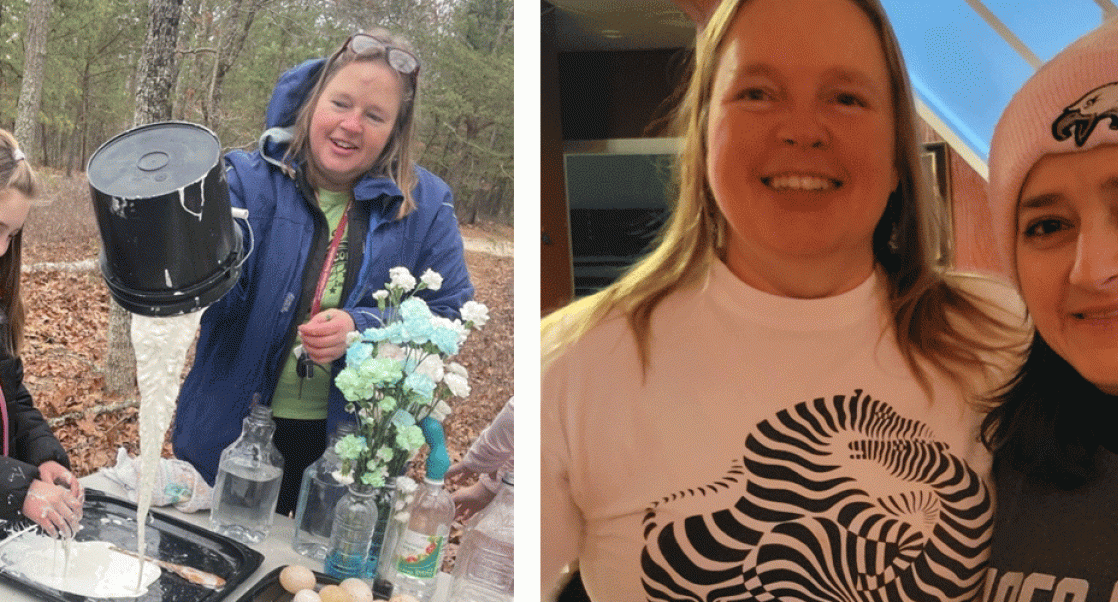
The lives of people with Rare Diseases are honored in this month of February, especially on Rare Disease Day, February 28th each year, where we are encouraged to wear stripes uniquely like a Zebra. What a great visual to support an often-hidden set of diseases.
Let's all keep rolling along, like Taggy’s Carts, helping others.
Above image shows Taggy, and the carts named in his honor.