Researcher Profiles
|
Daniel Klein
Sickle Cell Survivor’s Twin Mission: Advocacy and Research
From Kenya to Charles River Laboratories, how a scientist is waging a personal battle against the genetic blood disorder
Marie Ojiambo lives a life outlined by loss. Defined, in many ways, by the illness she carries—sickle cell anemia.
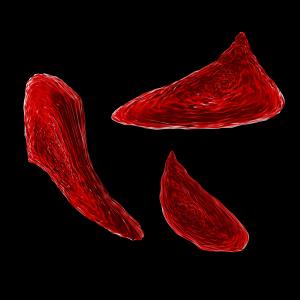
Marie was born in Kenya to a single mother, Josephine Ojiambo. She eventually had two younger siblings, but she bonded most closely with her older brother Peter. They were just one year apart. “We sheltered each other… and went through life teaching each other.” Their experiences were very similar. They went to the same schools. They had the same friends. And they both were born with sickle cell anemia, caused by a mutation in a single gene that turns red blood cells into rigid crescent or sickle shapes, instead of soft discs. The cells get stuck in veins and arteries, blocking the flow of blood, and causing painful and dangerous clots.
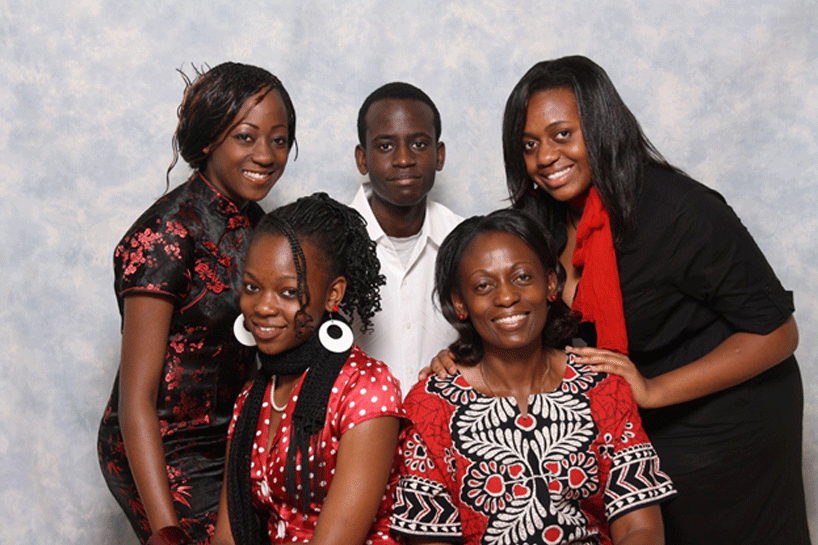
Left to right: Marie, Peter and sister Veronica on the top. Her sister Julie and Josephine on the bottom.
Josephine was 24 years old, newly graduated with an MBchB — Bachelor of Medicine, Bachelor of Surgery — when she had Peter. Marie was born soon after, and the two leaned heavily on each other. Sickle cell wasn’t a surprise, Marie’s mother was acutely aware of the possibility, and did newborn screening on both children. Both children had it, and Marie was diagnosed by the time she was a year old.
The two grew up in Kenya. Their mother worked. “She was in hospital or if not in hospital she was traveling a lot for work. My brother and I became best friends... that was my person.” Eleven years ago, Marie was finishing out her final semester at the University of Nairobi when the family moved to New York. Josephine became an ambassador of Kenya at the United Nations.
Weathering cold weather and a sickle cell crisis
Marie arrived in NYC February 2011, to a city gripped by winter. “This was a totally new ball game. In Kenya, we do not have winters. We have sunshine all year round.” The environmental adjustment was difficult for both siblings, as cold can trigger a sickle-cell crisis. In March, Marie was hospitalized for a sickle cell crisis. “I remember going out with some friends and I wasn't properly layered up and I got sick. So, it was a lesson: ‘Okay, Marie, this is how to dress properly.’”
It was not the last time Marie would be hospitalized for sickle cell, nor was it the first. The specter of hospitalization was ever-present throughout their upbringing. “There were two or three times we were hospitalized together.” The siblings, both in sickle cell crisis, sharing a hospital ward.
After arriving, Marie took a gap year, both to settle in and figure out the landscape here in the United States, from the extreme weather patterns to the food to the racial biases and struggles to find new friends. “It was also difficult because when I came, everybody was up and running. My mom was going to work. My sisters and brother were also enrolled in school and for them it seemed like business as usual. And I’m left in the house just trying to figure myself out and going through this change and wondering: ‘What am I doing? Where do I fit into all this?’” During this time, Marie toured St. John’s University and applied for their master’s program in pharmaceutical sciences. In the summer of 2015, before her final year, she had another crisis event, and was hospitalized once again.
She spent several weeks in the hospital, part of that time in ICU and step-down units. At this point, her mother had moved to London on another assignment, and Marie followed to spend time with her while recuperating. She interned at Pfizer and went back to St. John’s in the fall to finish her thesis.
Peter was accepted to the University of Cambridge, returning to Kenya to get his student visa and process his documents.
That December, Peter was hospitalized for another sickle cell crisis.
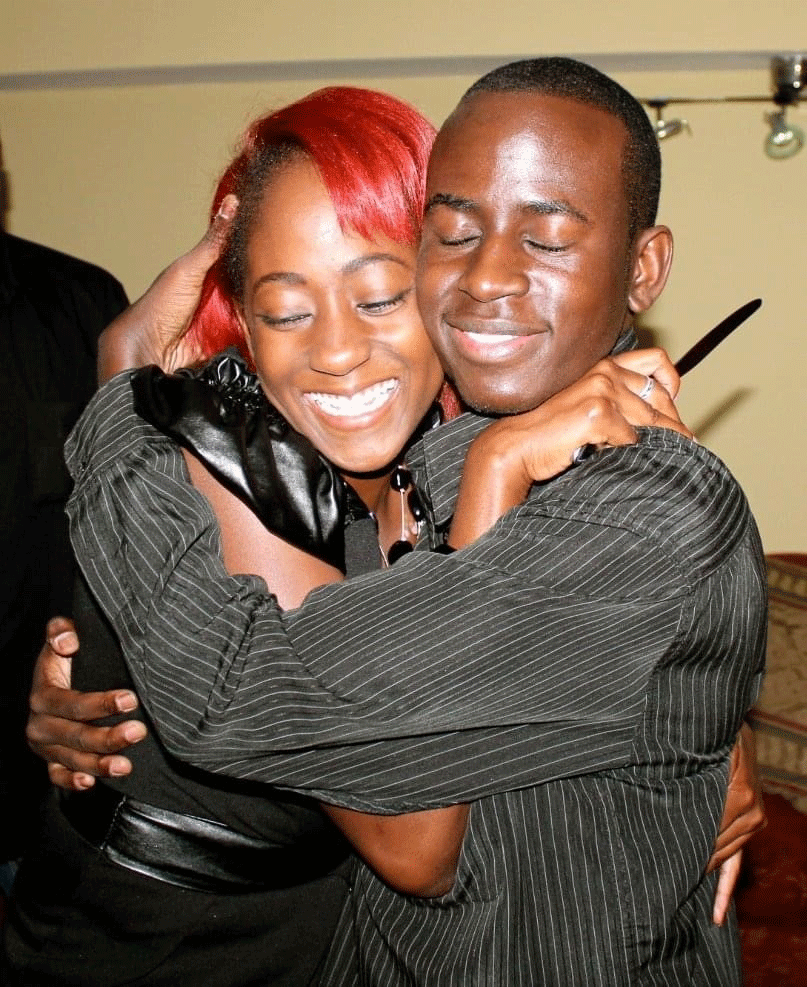
Marie and Peter on his 26th birthday.
“I remember before he was hospitalized, he called me, ‘Marie, we need to talk.’ And I remember at the time we had guests and we were entertaining, and I said, ‘Peter, I'm going to call you back when the guests leave.’ And unfortunately, I did not get around to calling him back and that's one of my biggest regrets. I do remember calling him when he was going through the crisis episode and the chest pain. And I said to him, ‘You have to fight.’ And I remember him, he wasn't saying anything. He just kept going, ‘hmm, hmm’. I'm like, ‘Peter, are you okay?’ He's like, ‘hmm.’ I'm like, promise me, you'll fight.’ And he's like, ‘hmm.’ I don't remember ever hearing any other words from my brother's mouth.”
A tragic loss for Marie and her family
Peter’s condition deteriorated very rapidly. After being immobilized with pain, he was hospitalized on the 27th of December and died on the 29th. His mother flew to Kenya from the UK but was still in the air when he passed. “I think that was the worst day of my life. I literally just... I broke my phone. I was screaming. I was crying. My sisters were trying to hold me down… The next day we traveled to Kenya. We landed and went straight to the morgue. I remember feeling shock and disbelief. I found my brother… his body was cold.”
It’s difficult to move forward, after such a loss. Marie grieved, struggling to be present. She
eventually overcame those challenges, and early that following summer, defended her thesis. “My thesis was based on a new drug study with the potential use in treatment of sickle cell disease. And, for me, I lost a brother to this condition. That is what saw me through.” On the heels of her successful defense, she was offered a fully funded PhD, but ultimately turned it down. “I just wasn't in the space to continue on with school. I was mentally fatigued, and I needed a break just to figure things out.”
Marie’s mother founded the Peter Ojiambo Foundation, of which Marie and her sisters are board members. They have since donated computers to Peter’s primary school in Kenya. Marie had done extensive work in the nonprofit space before this, focusing on advocacy and education for sickle cell disease with the Sickle Strong Initiative. Since beginning her advocacy work, the number of treatment options for sickle cell have significantly increased.
Marie is frank when describing her disease and relishes the chance to educate. It is a very difficult condition to live with, and there are many opportunities in her life she has missed out on because of the pain of a sickle cell crisis. “I remember once I went into the ED to sit with my brother when he had a painful episode and one of the nurses came in. We talked for a while and joked about me wanting to have five children. And she said, ‘The upside of this is, childbirth for you will be a walk in the park. I know the type of pain that you sickle cell patients go through and trust me, childbirth for you, you literally sneeze, and your babies will be out.’"
A new career in biomedical research
Nine months after defending her thesis, Marie started work as a research associate at Charles River Labs. An outside hire, she faced a steep learning curve, but rose to the challenge. A year later, she was encouraged to apply for a supervisory role. Her interview process and her work were interrupted by another crisis event, this time coupled with pneumonia, but she got the position anyway. She has risen quickly, with several promotions over the last few years.
She enjoys working in the unique space that is drug research and development because she is able to apply her very personal experience of living with sickle cell disease. “I am very intentional about wanting to leave a legacy in my work. … I want to help scientists understand what the important research questions are and help them understand why it is important to the patient that not only cures are addressed but also complications of living with the disease.”
For Marie, her life’s work — in her career and in her advocacy — is done with an eye for bettering the lives of people living with and affected by sickle cell disease. She’s faced loss and adversity, but remains upbeat and focused, moving ever forward. It’s been six years now, since Peter’s death. And for the first time, she’s ready to celebrate again.