Careers
|
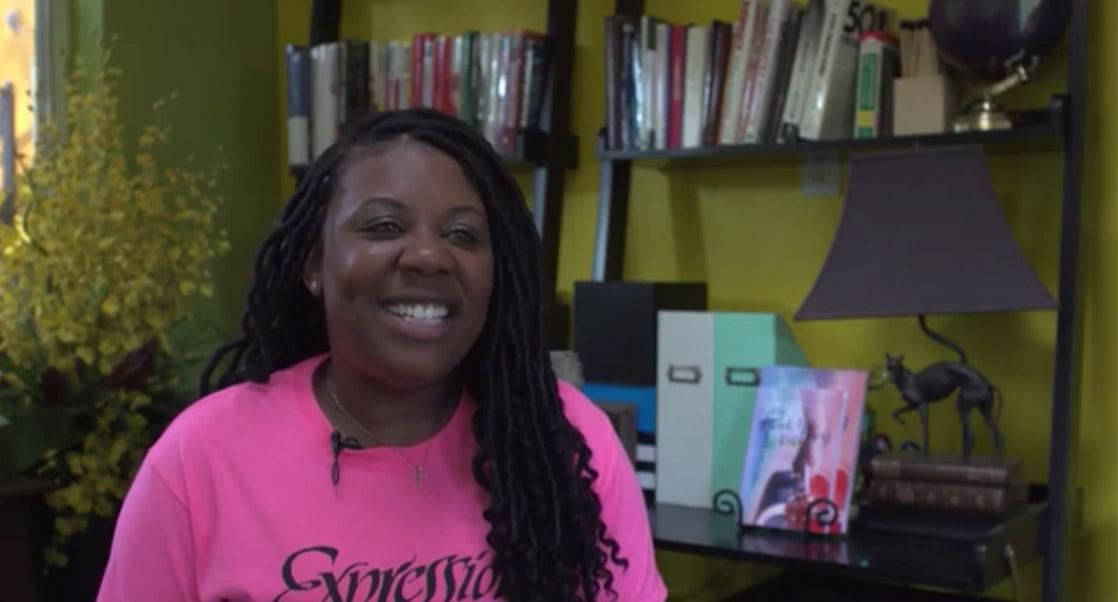
Deborah Dormady Letham, PhD
Strategies to Success in the Scientific Workplace
What works at work? Advice on how to not just survive but flourish in the workplace
My 20-year anniversary with Charles River Laboratories coincides with my company’s 75th anniversary. I must say that I have learned a few things about adaptability and setting priorities, both at work and at home.
I am nowhere near the end of my career, but I do want to give some advice on how to not just survive but flourish in the scientific workplace. First, you need to look at work as something bigger than yourself. To paraphrase JFK’s inaugural address, ‘ask not what your company can do for you but what you can do for your company’ – and by company, I mean the people we work with, our clients, and everyone our work touches. In our industry, we support each other so that we can help our clients help people with life-saving medicines and treatments that give people hope. We help people whom we will never meet, we help our friends and families.
Certainly, during my time with Charles River, there have been many innovations both in the sciences and in the technology supporting our work. But none of what we do would be possible without a motivated scientific workforce. In my 20 years, simply watching the instrumentation be streamlined is amazing, something that took me months is now done in a week. Some homemade reagents are now bought for a fraction of what my time would cost to prepare them. I explain the old techniques to some, and the fresh faces of science look at me like I am from another century (well, I guess I am). And who knew that as a company and society, we would see a pandemic roll through our work and personal lives, forcing us to socially distance in the lab all while working nonstop. This was just another opportunity for us as a company and as individuals to be adaptable. A motivated scientific workforce became more motivated.
To “be adaptable” in any job is a key attribute to success, according to career development resources. This does not mean to just “go with the flow.” Sometimes we need to direct that flow, to channel resources and ideas to others. We help them and they help us and others. And as encouragers, we can surely make a difference by lifting other people’s sails and watch them succeed.
How each of us defines success varies. For me, success is multiple things. It could be having an impact on a project’s outcome, furthering the education of a colleague, or just finding a place to pitch in and help. My recent advice to my new hires is ‘every day is a new day.’
Putting First Things First
Recently, I watched a presentation by the author of “Executive Motherhood” at one of our company-wide Employee Resource Groups (ERG). We were reminded that we should strategically rely on getting help from “assistants” of various types, so that we can be more effective with our precious time. As you move forward in your career, you need to start structuring your time differently to get the most out of your day.
There is a “vintage” Franklin Covey video for management training which shows the classic priority-setting experiment represented by big rocks and little rocks in a jar. The demonstrator is trying to fit EVERYTHING into life, all while having all the various small tasks and distractions, too. It is tough! How do people do it? How do parents do it? I re-watched the videos and rearranged my own rocks and wow it changed my day and my week.
Our CEO Jim Foster has encouraged us to ‘get off the bench and onto the field', know you can make a difference. When they say ‘half the job is showing up’ I would agree, but the other half is to keep busy and stay relevant. It is not lost on me that I am considered unusual, unique, even downright strange by many of my Charles River colleagues. I have a deep memory of people and activities, initiatives, and random facts. I also have one of those memories that connects people, emotions and projects, and this is probably because I simply show up as a sponge to learn. Over my 20 years I've seen lots of acquisitions, expansions, and partnerships. At the start of my career, I was introduced to molecular biology as a new set of tools for science, a blossoming field. Today, it’s learning deeply about expanding molecular genetics tools, like CRISPR, Car T, and many cell and gene therapy advances.
Of course, the toolbox is only useful if you have a willingness to open it.
What works in the scientific workplace? We do… thanks to all our hard workers!