Discovery
|
Kamil Czuchrowski
Unraveling the Defense Mechanisms of the Respiratory System
Exploring mucociliary clearance and assessing toxicity in human epithelial airway models
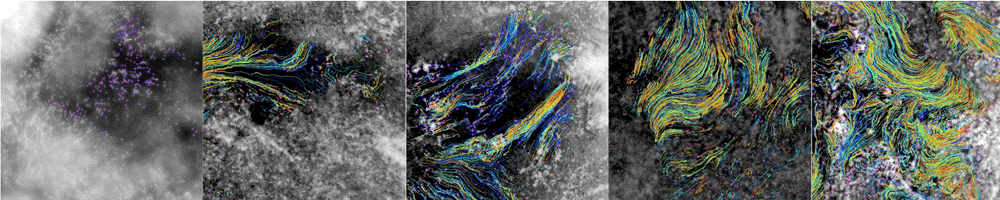
The human respiratory system is constantly exposed to a wide range of pollutants and toxic substances in the environment. However, it possesses an exceptional defense mechanism called mucociliary clearance (MCC) to safeguard the airways from potential harm. MCC is a vital process that involves the coordinated movement of cilia and the mucus layer that lines the respiratory tract. In recent years, innovative techniques using advanced tissue models like MucilAir™ have been developed to study MCC and evaluate the toxicity of different substances.
Animal models have limitations as they may not accurately represent human physiology and may exhibit different responses to substances compared to humans. Human Epithelial Airway Models (HEAM) overcome these limitations by utilizing human cells, providing a more accurate representation of human respiratory biology. The use of in vitro models is growing extensively and is now becoming a requirement from different submitting bodies for toxicity assessment of new drugs and chemicals.
This article describes the importance of mucociliary clearance and the revolutionary role of HEAM in toxicity assessments for respiratory research. Our team in Edinburgh has worked with different 3D and organotypic models for over a decade and we are at the forefront of the change.
The Significance of Mucociliary Clearance
Mucociliary clearance plays a crucial role in maintaining respiratory health. The airways are lined with a protective layer of mucus that captures particles, microorganisms, and harmful substances present in the inhaled air. Cilia, tiny hair-like structures on the surface of epithelial cells, work in perfect coordination to move the mucus along with trapped particles towards the throat. From there, the mucus is either swallowed or expelled through coughing.
Efficient mucus clearance ensures the removal of potentially harmful substances from the lungs, reducing the risk of respiratory infections and diseases. Damage of the mucociliary clearance mechanism can lead to the retention of toxins, particles, and pathogens, increasing vulnerability to respiratory ailments. Impaired MCC can result in the buildup of mucus, particles, and pathogens in the airways, creating an environment conducive to infections and inflammation. Individuals with impaired MCC may experience chronic cough, heightened susceptibility to respiratory infections, and difficulty in clearing mucus from their airways.
Several factors can contribute to the impairment of mucociliary clearance. Smoking, for instance, is a well-known risk factor that damages cilia and impairs their coordinated beating, thereby reducing mucus clearance. Environmental pollutants, such as particulate matter and toxins found in air pollution, can also interfere with the MCC process. Prolonged exposure to these pollutants can lead to persistent inflammation and respiratory diseases.
Understanding Human Epithelial Airway Models
Assessing the toxicity of substances on mucociliary clearance using 3D HEAM provides valuable insights into the potential impact of various environmental pollutants and chemicals on respiratory health. By identifying substances that impair the MCC process, we can contribute to the development of preventive measures and strategies to minimize exposure, ultimately reducing the risk of respiratory diseases.
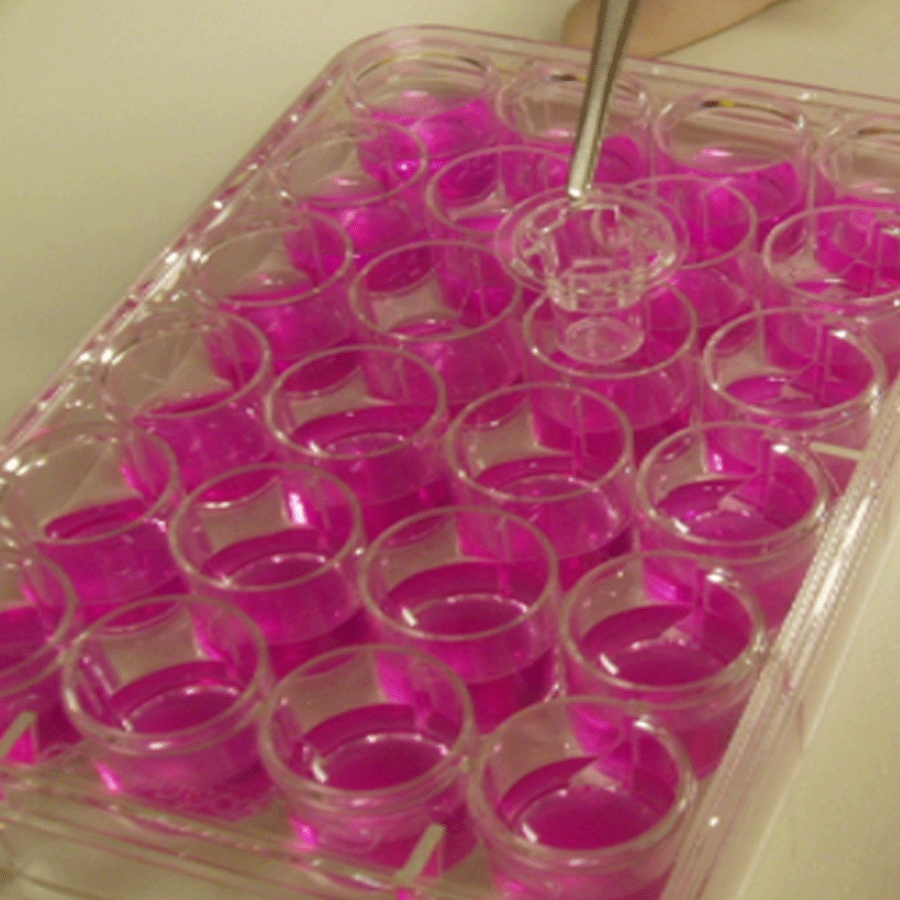
HEAM are advanced three-dimensional models of the human respiratory system created by combining human epithelial cells and extracellular matrix components. These tissue models closely mimic the structure and function of the respiratory epithelium, allowing us to study the effects of various substances on the respiratory system in a controlled and realistic manner.
The systems in general comprise well-differentiated epithelial cells with functional cilia and a mucus layer, providing an accurate representation of the mucociliary clearance process. It offers an ethical and efficient alternative to traditional animal models for toxicity testing.
Advantages of HEAM
HEAM offer several advantages over traditional methods of toxicity assessment. Firstly, they provide a model that closely resembles the structure and function of the human respiratory system.
Secondly, these models ensure high reproducibility, allowing standardized experiments and reliable results. The tissues can be produced in large quantities and maintain their functionality over extended periods of time, enabling researchers to conduct experiments consistently and reproducibly. 3D models facilitate high-throughput screening of substances, which is crucial in toxicology studies. Researchers can evaluate the effects of multiple substances simultaneously, leading to efficient and cost-effective toxicity assessments. This proves particularly beneficial in the initial stages of substance screening and prioritization, where a large number of substances need evaluation.
Toxicity Assessment Using HEAM
One of the primary applications of 3D models is in toxicity assessment. In our labs we can expose the tissues to airborne substances, such as pollutants, drugs, chemicals, or nanoparticles, to evaluate their potential toxic effects on the respiratory system.
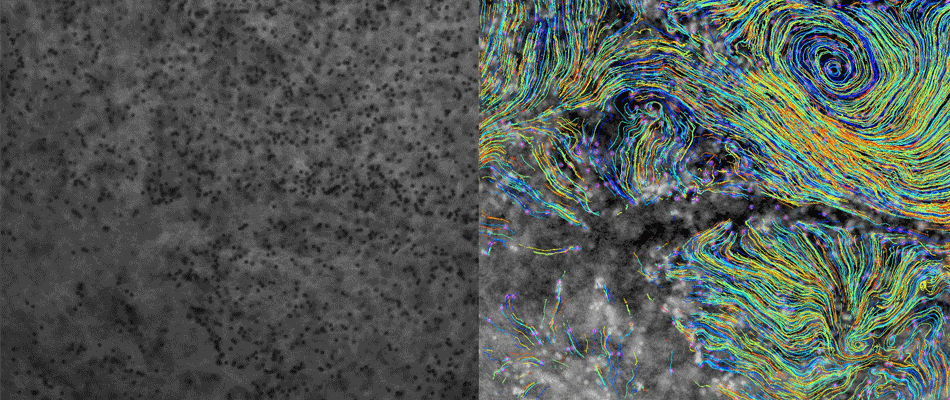
HEAMs provide valuable insights into the impact of these substances on mucociliary clearance. By monitoring the frequency of ciliary beating and the movement of mucus, we are able to assess whether a substance impairs or enhances the clearance process. For instance, exposure to certain pollutants may decrease ciliary beating, leading to a slowdown in mucus clearance and compromising respiratory defense mechanisms.
The tissues also enable our scientists to study the effects of substances on the mucus layer itself. Alterations in mucus properties, such as increased viscosity or modified composition, can affect its ability to trap and clear harmful particles. Understanding these dynamics is crucial for assessing the potential risks associated with exposure to various substances.
Furthermore, the advantages of using reconstructed tissue models in toxicity assessment extend beyond mucociliary clearance. These tissues allow us to investigate other aspects, such as inflammation, oxidative stress, and tissue damage. Analyzing the response of tissues to different substances provides a comprehensive understanding of potential risks and aids in the development of mitigation strategies.
Future Perspectives and Advancements
As the field of toxicology progresses, Human Epithelial Airway Models hold tremendous promise for further innovation and application. Researchers are continuously refining and enhancing the model to improve its accuracy and functionality. This includes incorporating immune cells into the tissues to study the interaction between the immune system and mucociliary clearance, providing a more comprehensive understanding of respiratory defense mechanisms.
The integration of advanced imaging techniques and analytical tools enables researchers to delve deeper into the dynamics of mucociliary clearance. High-resolution imaging allows real-time visualization and quantification of ciliary beating and mucus movement, providing detailed insights into the effects of substances on these processes.
Combining 3D tissue models with other advanced technologies like microfluidic systems and organ-on-a-chip platforms shows promise for creating even more sophisticated and physiologically relevant models of the respiratory system. These integrated systems could mimic the complex interactions between lung cells, blood vessels, and the immune system, providing a comprehensive platform for toxicity assessment and drug development.
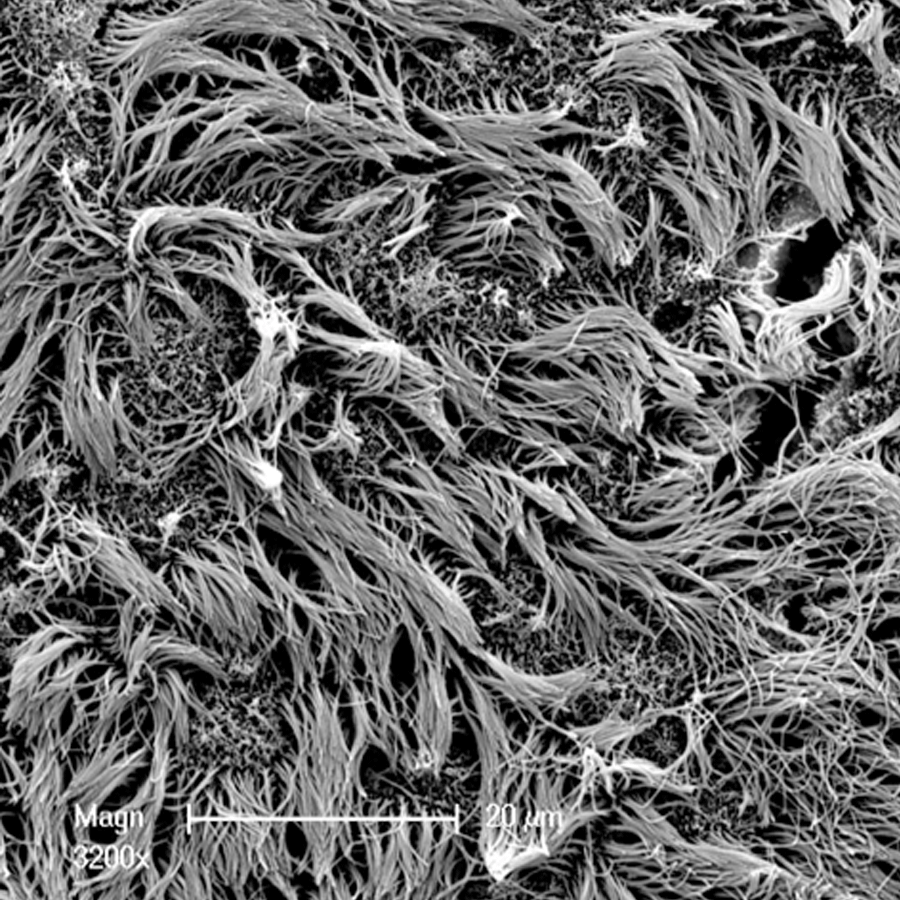
Mucociliary clearance is a critical defense mechanism that protects the respiratory system from harmful substances. The development of advanced tissue models like MucilAir™ has revolutionized toxicity assessments, providing a more accurate representation of the human respiratory epithelium. By closely mimicking the structure and function of the airway lining, the model enables us to study the effects of various substances on mucociliary clearance and assess their potential toxicity. The advantages of Human Epithelial Airway Models, including reproducibility, human relevance, and high-throughput capabilities, make them invaluable in advancing our understanding of respiratory toxicology.