
Featured News
Beyond Animal Models: How Human Complex In Vitro Lung Models Can Help De-Risk Early
How In Vitro Lung Models Strengthen Early Inhalation Toxicology
Many compounds show promising respiratory data in preclinical studies, yet some still encounter challenges during human trials. This is partly because animal models, while valuable, do not fully replicate the molecular and physiological complexity of the human lung, making accurate prediction of absorption, clearance, and toxicity a challenging task. These species-specific differences highlight why animal models alone may not provide the most reliable translational insights, highlighting the value of incorporating human-relevant lung models alongside traditional approaches.
Complex in vitro lung models, while long-established, are rapidly advancing and gaining regulatory momentum. Leveraging organ-on-chip technology and air-liquid interface systems, they replicate human lung physiology more accurately than traditional 2D cell cultures. By incorporating human-derived cells and preserving human-specific signaling pathways, these platforms help address some of the molecular limitations observed in traditional models, enhancing the predictivity of inhalation toxicology studies and early safety assessment.

Breathing New Life into Toxicology: Human-Relevant Models in Action
What if we could predict how chemicals affect human lungs without using animals? In this episode, Mary McElroy, Head of Discovery Toxicology and Pharmacology at Charles River, joins us to explore pioneering work on human-relevant, non-animal models that could revolutionize inhalation toxicology.
Listen to the full episode
Filling the Molecular Gaps in Animal Toxicology Studies
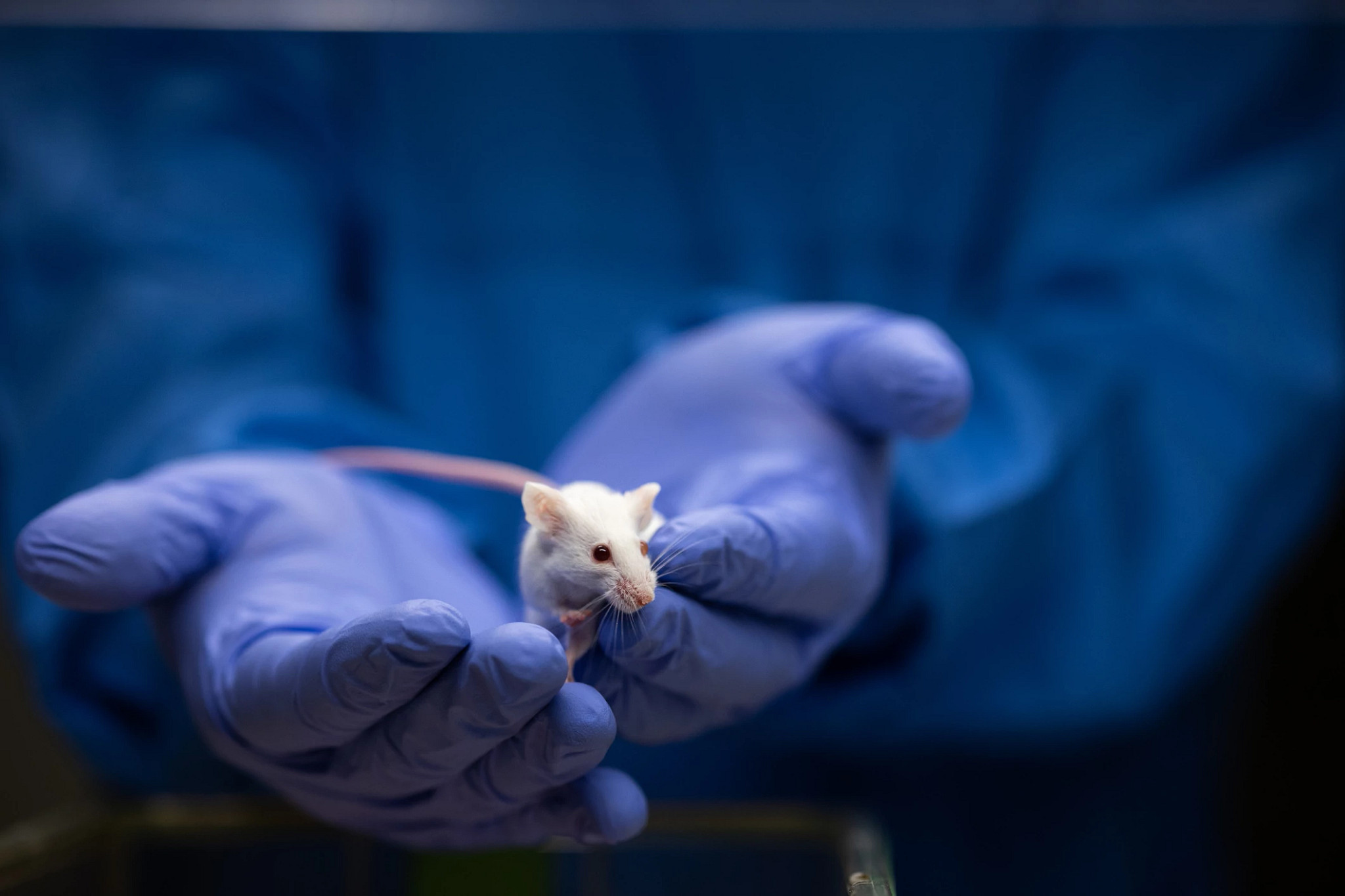 Species differences in lung physiology and molecular pathways mean animal models often struggle to capture the complexity of the human lung and accurately predict how inhaled drugs will behave in humans. For instance, surfactant proteins like SP-A and SP-D, which help clear particles and regulate immune responses, vary in structure and function between humans and rodents. This variation is further complicated by genetic diversity in humans, where clinically relevant polymorphisms in SP-A genes are linked to lung disease susceptibility. Such polymorphism complexity is less in rodents; therefore, rodent data may not always fully predict human SP-A/SP-D biology.
Cytokine signaling also differs between species—IL-8 is the major neutrophil chemoattractant in humans, whereas, in rodents, CXCL1/GROα is one of several CXCR2 ligands contributing to neutrophil recruitment. Receptor activity adds another layer of complexity: TLR4 responses to endotoxins are stronger in rodents, and P2X4 receptors, which influence surfactant secretion, behave differently across species.
Advanced in vitro lung models address these gaps by using human-derived epithelial, endothelial, and immune cells under conditions that mimic breathing and air exposure. Combined with organ-on-chip systems and inhalation-specific assays, researchers can gain predictive insights into absorption, clearance, and inflammatory responses early in the development process.
The Microenvironment Matters in Lung Models
Replicating the lung microenvironment in advanced in vitro toxicology models provides a more physiologically relevant platform than traditional 2D cultures or animal systems. The air-liquid interface enables aerosolized compounds to interact with cells under conditions that mimic natural inhalation exposure. Incorporating multiple cell types—epithelial, endothelial, and immune—creates a functional barrier and immune landscape, allowing researchers to observe complex processes such as cytokine signaling and inflammatory responses. Mechanical cues that simulate breathing cycles further influence drug distribution and cellular behaviour, which are critical for understanding absorption and toxicity. Together, these features generate data that more accurately reflect human lung physiology, supporting informed decisions on formulation, dosing, and safety before progressing to later stages of development.
Webinar: Secure Regulatory Approval of Complex Lung Models Through Collective Momentum
Regulatory agencies are increasingly embracing in vitro lung models. By integrating these advanced models, you can generate more human-relevant data, helping streamline regulatory approvals and improve decision-making.
Watch the replay
Accelerating Through Regulatory Momentum: Human Complex In Vitro Models and NAMs
The FDA recently issued draft guidance to reduce or eliminate six-month large-animal toxicity studies for monoclonal antibodies, marking a noteworthy shift in nonclinical safety evaluation. Instead of relying solely on traditional animal testing, the agency encourages risk assessments that incorporate human-relevant tools such as computational toxicology, organoid systems, and real-world safety data. This direction reflects FDA’s commitment to New Approach Methodologies (NAMs), including microphysiological systems and in silico models, which are increasingly being considered in regulatory submissions. By taking this step, the FDA is helping pave the way for broader integration of NAMs across modalities, creating an opportunity to accelerate the use of advanced lung models for more predictive respiratory safety assessments in the future.
Through the creation of a global, cross-functional Scientific Advisory Board, we are prioritizing complex animal welfare and the 3Rs—Replacement, Reduction, and Refinement. Reinforcing this commitment, Charles River and its longtime partner MatTek—a pioneer in 3D inhalation systems—have secured a $1.3 million grant from the American Chemistry Council’s Long-Range Research Initiative (LRI) to advance next-generation respiratory NAM models for inhaled chemical risk assessment. This initiative aims to reduce the need for animal inhalation studies while improving the accuracy and confidence of safety evaluations. This work builds upon progress in advanced 3D respiratory models, including established platforms such as MatTek’s EpiAirway™ and Epithelix’s MucilAir™, which provide human-relevant approaches for inhalation toxicity assessment.
The momentum continues to build as regulators, industry, and technology innovators increasingly recognize the value of NAMs in nonclinical evaluation. As these approaches undergo further validation and broader adoption, they are expected to play an increasingly important role in inhalation toxicology, helping researchers make better decisions earlier, reduce reliance on animal testing, and move toward more predictive human-relevant toxicology methods.
Drive innovation in predictive inhalation safety assessment and accelerate your program with advanced NAM models today.