Get to Market Faster with A Proven Vaccine Development Process
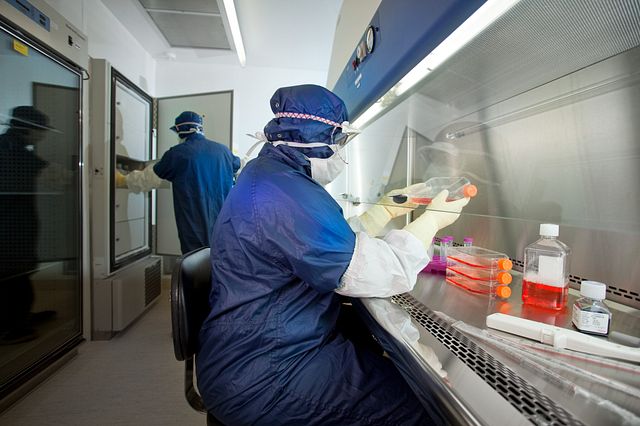
Effective vaccine quality control testing not only focuses on eliciting a strong immune response and ensuring safety but also considers production capabilities and logistics to streamline the manufacturing journey. We can help establish and validate methods for vaccine quality control testing and the release of your product. Whether you're at the inception of your vaccine design or further along in the development process, our team is here to assist.
We work with all types of vaccines:
- Live, attenuated - Measles/mumps/rubella, Varicella, Influenza, Rotavirus, Polio
- Inactivated - Hepatitis A, Influenza, Polio, Rabies
- Subunit - Diphtheria toxoid, Tetanus toxoid, Pneumococcal polysaccharides Conjugates - Hemophilus influenza type b, Pneumococcal polysaccharides, Meningococcal
- Recombinant - Hepatitis B, Human papillomavirus
Streamline your vaccine quality control testing with our GMP-compliant services, which adhere to stringent regulatory standards and offer a complete range of testing panels. With 20 years of trusted expertise in vaccine efficacy and quality control testing, our comprehensive approach simplifies your path to success, making us your ideal partner in supporting your vaccine quality control and release testing, bringing vaccines to those who need them.
Vaccine Quality Control and Release Support
- Identity
- Purity
- Process Related Impurities
- Residual Host Cell DNA
- Residual Host Cell Proteins
- Other residuals (i.e., serum, antibiotics, benzonase, etc.)
- Sterility
- General Safety
- Physicochemical properties (i.e., appearance, pH, osmolality, subvisible particles)
- Detection and Quantification of formulation excipients (i.e., Sucrose, Polysorbate 80 or Polysorbate 20)
- Potency (Biological Activity)
- Stability studies
Vaccine Manufacturing Support
- GMP cell banking and characterization
- Virus seed preparation and testing
- Small-scale virus/vaccine manufacturing
- In vivo and in vitro biosafety testing by compendial methods or NGS
- Viral Clearance
- Bulk antigen production
Potency Testing for Vaccine Quality Control and Release
Potency is a critical quality attribute (CQA) for controlling quality, consistency, and relevant biological properties of many products, including vaccines. Our full range of potency testing services for a variety of biologics includes in vitro, in vivo, and ex vivo bioassays up to BSL-3 containment. We offer highly customized solutions tailored to your needs.
In vivo Potency Testing
Historically, vaccine potency assays were in vivo assays such as infection models and animal challenge tests, PD50 tests including immunogenicity and immunopotency, and PGP tests.
Due to the high demand for animals, the lengthy operations and the higher variability of in vivo methods, along with increasing focus on ethical considerations and meeting our Alternative Methods Advancement Project™ (AMAP™) and 3Rs objectives, laboratories have been trying to find in vitro alternatives to the animal.
Where possible and in line with the principle of Replacement, we support in vivo assays with ex vivo analysis of sera, plasma, or tissue samples by cell-based or analytical-based methods.
Potency quality control testing is a valuable tool for testing the actual relative strength of vaccine assembly lots. Charles River can aid in the development of an in vivo potency assay through range-finding studies by investigating parameters such as dose level and route of administration, followed by validation and implementation.
In vitro and ex vivo Potency Testing
Complementary to our in vivo capabilities and where available, we support non-animal alternative approaches to potency testing. The potency of vaccines can be measured by a variety of techniques depending on the nature of your vaccine. Charles River offers a varied portfolio including immunohistochemistry-based assays such as neutralization tests, ELISA tests, as well as cell-based and molecular biology-based methods such as infectious titre assays including PCR and RT-qPCR readouts.
We are equipped to handle specialized cell types and readouts for each assay, and we have the expertise needed in cell and molecular biology, immunology, and statistics to ensure your testing delivers fast, accurate results.
Development, Validation, and Implementation of GMP Release Potency Assays for Vaccines
One of the biggest challenges facing most vaccine manufacturers is the development and validation of biological test methods and its establishment as an estimation of potency of a vaccine. This presentation will provide some guidance and information on the development, validation, and ultimately, the implementation of GMP batch release potency assays for vaccines.
Watch Now
Safety Testing for Support of Vaccine Manufacturing
Assess the biosafety of your virus seeds and master cell banks used in vaccine manufacturing in accordance with current guidance for industry for the EU, US, or international markets. Charles River offers a portfolio of in vivo, in vitro, and biochemical viral safety assays.
Next Generation Sequencing (NGS) is a powerful tool for vaccine quality control and is increasingly being adopted as regulatory authorities update their guidelines. It offers an alternative to the historical viral safety assays and faster turnaround times to meet tight clinical or release timelines and accelerate your path from vaccine manufacturing to market by ensuring a fast, comprehensive safety testing package.

Genetic Characterization of Gene Therapy Vectors & Vaccines by NGS
Genetic characterization testing is critical for ensuring the quality and safety of biopharmaceuticals and is a key regulatory requirement for release testing. This webinar provides considerations for genetic characterization testing of gene therapy vectors and vaccines while focusing on the advantages NGS offers.
Watch Now
Efficacy Testing for Vaccine Quality Control
Vaccination is highly efficacious in terms of preventing morbidity and mortality and widely considered one of the greatest achievements in medicine; however, the quantity and quality of the immune response can greatly impact the efficacy of the vaccine. The complexity of the immune system is an environment we understand, and our vaccine research services can efficiently translate your program into the clinic. We have experience conducting in vivo bioassays for the purposes of showing efficacy, such as challenge studies and infection models at a preclinical and pivotal stage, and up to BSL-3 containment.
Real-time, secure access to your data
Our innovative Apollo™ platform gives you secure, cloud-based, real-time access to your sample data, milestones, and documents. With it, you can submit sample submission forms, track samples, and exchange documents all in one place, ensuring accuracy and saving time.
Frequently Asked Questions About Vaccine Quality Control and Release (FAQs)
-
What types of vaccines can Charles River test?
We can test a broad variety of vaccine types, including virus-based vaccines, virus-like particle (VLP) vaccines, viral vector vaccines, plasmid DNA vaccines, mRNA vaccines, and conjugated polysaccharide vaccines. We can work with you to come up with a solution that’s right for your project.
-
What is a viral or bacterial vector vaccine?
Live recombinant bacteria or viral vectors effectively stimulate the immune system like natural infections and have intrinsic adjuvant properties. The use of recombinant proteins allows for the targeting of immune responses focused against a few protective antigens as platforms to deliver vaccine antigens and as immunotherapeutic agents to specifically target and kill cancer cells. However, one of the main challenges in developing vaccines for these new strategies of immunization consists of designing vaccines that elicit the appropriate kind of immune response to confer immunity, mainly to intracellular pathogens and especially to those that establish chronic, often lifelong, infections.1
Generally, recombinant antigens delivered as DNA plasmids or subunit proteins are reasonably safe. In contrast, replicating viral vectors are often highly immunogenic, but they also carry the risk of recombination, reversion to virulence, and pathogenesis during vaccine development.
-
What is a messenger RNA/DNA vaccine?
In the past few years, nucleic acid-based vaccines (i.e., DNA [as plasmids] and RNA [as messenger RNA (mRNA)] vaccines) have been studied as a new therapeutic modality. They pave the way for safe and efficacious biologics to mimic inoculation with live organism-based vaccines, particularly for stimulating cell-mediated immunity.
They have advantages over traditional vaccines in terms of safety, efficacy, and inducing both B and T cell responses, but there is a technical challenge associated with DNA and RNA vaccines. Since changes of the encoded protein just alter the sequence of the RNA molecule, leaving its physicochemical characteristics largely unaffected, diverse products can be manufactured using the same established production process without any adjustment, saving time and reducing costs when compared with other vaccine development platforms.
-
Can Charles River make my vaccine as well as test it?
We can help with your gene therapy or cell product manufacturing with a broad variety of vaccine types, including virus-based vaccines, virus-like particle (VLP) vaccines, viral vector vaccines, plasmid DNA vaccines, mRNA vaccines, and conjugated polysaccharide vaccines. We can work with you to develop a solution that’s right for your project.
-
What are the regulatory guidelines for vaccines?
We have compiled a list of regulatory documents to assist you as you move through your development and release process. The production of a biologic is primarily regulated by agencies in the Food and Drug Administration in the US (FDA), the European Agency for the Evaluation of Medicinal Products (EMA), Japan, the WHO, and the International Conference on Harmonization (ICH). Some of the guidance documents provided are referenced below.
- EMA/CHMP/ICH/804363/2022, ICH Q5A(R2): Guideline on viral safety evaluation of biotechnology products derived from cell lines of human or animal origin - Step 5
- EMEA/CHMP/BWP/398498/05: 1 February 2009 Guideline on virus safety evaluation of biotechnological investigational medicinal products
- EMA/CHMP/BWP/532517/2008, Guideline on development, production, characterization and specification for monoclonal antibodies and related products - Revision 1
- EMA/CHMP/VWP/141697/2009: 24 June 2010 Committee for Medicinal Product for Human Use (CHMP) Guideline on quality, non-clinical and clinical aspects of live recombinant viral vectored vaccines
- FDA/CBER: 28 February 1997 Points to consider in the manufacture and testing of monoclonal antibodies for human use
- FDA/CBER: February 2010 Characterization and Qualification of Cell Substrates and Other Biological Materials Used in the Production of Viral Vaccines for Infectious Disease Indications
- WHO TRS 878 (RBS 50): 1998 Requirements for the Use of Animal Cells as In Vitro Substrates for the Production of Biologicals
