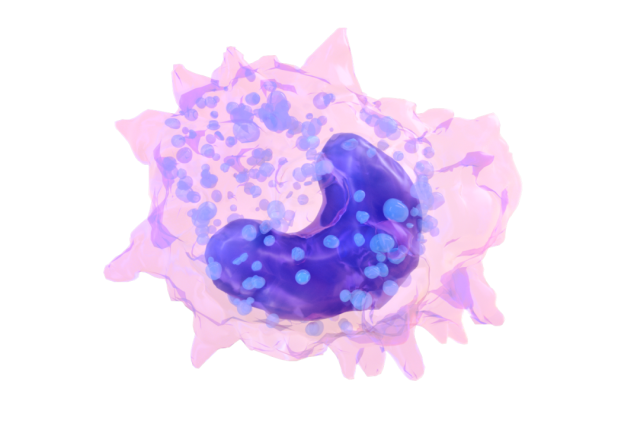
Monocytes Cell Product Information
What are Monocyte cells?
Monocyte cells are phagocytic immune cells that are capable of killing infected host cells via antibody-mediated cellular cytotoxicity. Under the right culture conditions, monocytes can differentiate into dendritic cells, Langerhans cells, or macrophages.
Monocytes make up 10-30% of white blood cells present in the peripheral blood. Monocytes serve multiple immune functions, including maintaining vascular homeostasis and acting as early responders to pathogens during acute infection. These immune cells can migrate to the infection site in response to inflammatory immune signaling.
Validated High-Quality
Monocyte cells from Charles River are isolated via immunomagnetic separation—the yield and purity are then validated using flow cytometry. Our monocytes are guaranteed to have >90% purity and >95% viability. CD14+ monocytes are isolated from mononuclear cells by either positive or negative selection using state of the art immunomagnetic cell separation procedures.
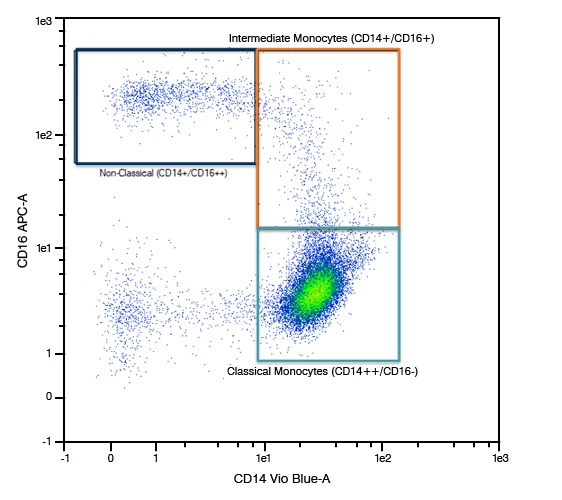
Figure 1. Different monocyte subsets (classical, intermediate and non-classical) are identified via flow cytometry.
Validated Cell Yield and Purity
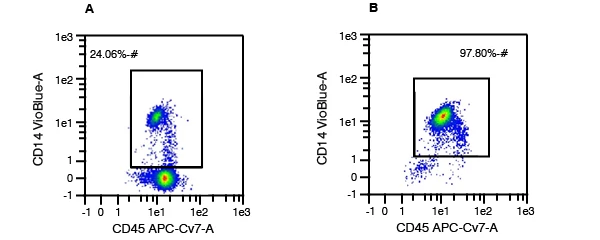
Figure 2. CD14 is a marker expressed on multiple cell types, including human monocytes, macrophages, and neutrophils. In Figure 2A, assessing expression of CD14 versus CD45 (a white blood cell surface marker) within the whole mononuclear cell population of peripheral blood enumerates what percentage of the sample are monocytes. Representative data illustrates a relative monocyte population of 24.06%. In Figure 2B, CD14 expression versus CD45 in the isolated monocyte cell sample elucidates the purity of the sample for CD14+ monocytes. This graph shows a representative data set with 97.80% purity after isolation.
Which Monocyte Cell is Best for Your Research?
While all human monocyte cells express the CD14 cell surface marker, three distinct subsets may be distinguished based on the level of CD16 surface marker expression. Each monocyte subset is characterized by differential phenotypic expression and discrete categories of homeostasis and disease functions.
- Pan monocytes. These include all three classifications of monocyte cells (classical, intermediate, and non-classical monocytes). These monocyte subsets are genetically distinct and can be distinguished by their level of CD16 expression. Isolation of pan monocytes through negative selection depletes non-target cells via their lineage surface antigens, leaving an untouched mixture of monocytes with varying levels of CD14/CD16 expression. Human CD14+ pan monocytes are the third most common immune cell subtype present in peripheral blood, making up 20% of the white blood cell population on average. These cells are the foundation for numerous cell therapy applications.
- Classical monocytes make up approximately 85% of the total monocyte population and primarily function as phagocytic cells capable of innate immune response and migration. The classical monocyte subset can be characterized by high CD14 expression and low CD16 expression (CD14++, CD16+).
- Intermediate monocytes (CD14+, CD16+) make up 5% of the monocyte population and have characteristics of both classical and non-classical monocytes. This subset expresses the highest levels of antigen presentation-related molecules.
- Non-classical monocytes (CD14+, CD16++) make up 10% of the monocyte population. Like classical monocytes, they have antigen processing capabilities, but they are distinguished as a subset by their association with wound healing processes.
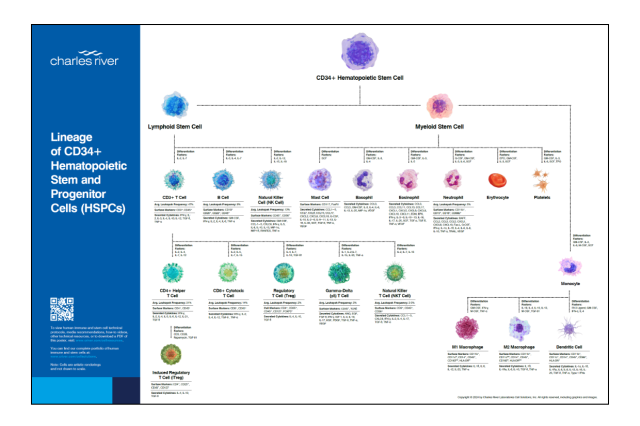
Lineage of CD34+ Hematopoietic Stem and Progenitor Cells (HSPCs)
Receive a complimentary poster to access information on immune cell markers, differentiation factors, cytokines, technical protocols, media recommendations, how-to videos, and more.
Monocyte Cell Research Applications
Charles River is the global leader in providing human-derived biological products and apheresis collection services, directly enabling customers to advance autologous and allogeneic cell therapies. Peripheral blood monocytes are isolated onsite, same day as collection, and are available in fresh or in cryopreserved formats.
- Differentiation. Monocyte cells can differentiate into dendritic cells, Langerhans cells, or macrophages and are used as starting material for various innate immune cell populations, including mature antigen-presenting cells and phagocytic cells.
- Cancer immunotherapy. Monocyte cells influence multiple aspects of tumor growth and progression. Scientists have been investigating ways to take advantage of the cell’s ability to infiltrate solid tumors and monocytes are currently under investigation for the treatment of various cancers including lung cancer, pancreatic cancer, and ovarian cancer.
- COVID-19 activated monocytes. These have been shown to infiltrate the lungs in patients with COVID-19 and are implicated to be involved in the hyperinflammatory response in some patients that leads to severe COVID-19 related tissue damage. Current investigations are focused on understanding mechanisms of action and co-opting normal functions to disrupt hyperimmune responses.