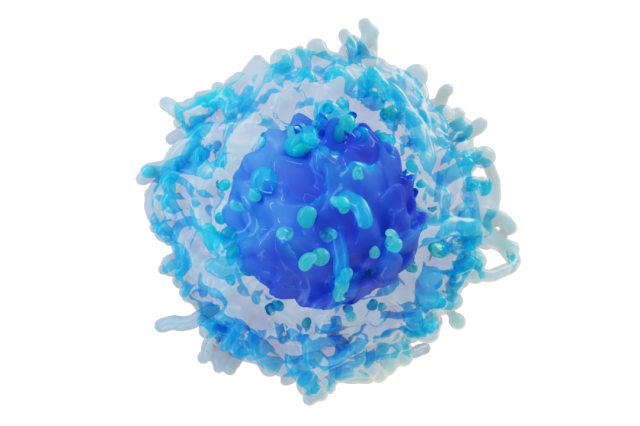
Human B Cells Product Information
What are Human B Cells?
Human B cells are responsible for the recognition and clearance of antigens in the immune system and, in the process, creating cells with the purpose of immunosurveillance. The wide range and sensitivity of the B cell to antigens lie in the process in which its receptor, the B cell receptor, develops.
All mature B cells express surface markers CD19, CD20, and CD22. Charles River Human B cells are isolated from mononuclear cells through either positive selection for CD20/22 or by negative selection using immunomagnetic cell separation procedures.
In the graph below, CD19 is targeted for immunofluorescent labeling to identify and characterize the human B cell population present in a fresh leukopak collection.
A
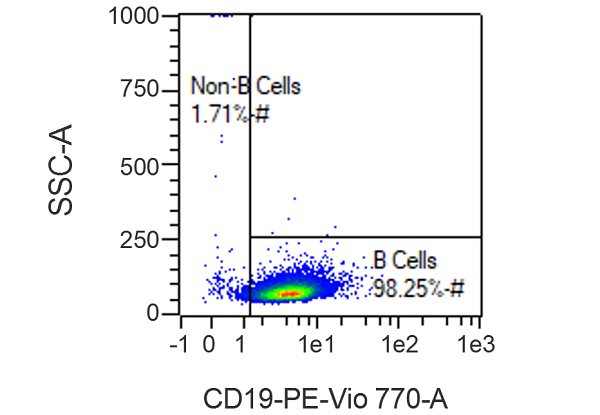
Figure 1. Panel A shows a representative data set with a purity of 98.25% B cells post immunomagnetic separation. Human B cells from Charles River are guaranteed to have >90% purity. Both freshly isolated and cryopreserved B cells are guaranteed >95% viability as measured by flow cytometry. CD19 is used to quantify the purity of the isolated B cells.
Consistent Quality for Consistent Results
High quality products start with high quality starting materials. Charles River’s cell collection, isolation, cryopreservation, and handling methods are governed by state-of-the-art methodology and stringent quality oversight. Donor network management techniques are used to minimize starting material variability.
Donor-to-donor variability is an intrinsic part of cell therapy development which can never be fully eliminated. Charles River’s large, diverse donor network gives our clients access to highly characterized, recallable and reliable donors. Repeat donors can be leveraged to provide highly consistent starting materials for your project or program.
Highly consistent profiles were observed in the percentage of CD19+ B cells per total white blood cell population isolated from repeat leukopak collections from the same recallable donor.
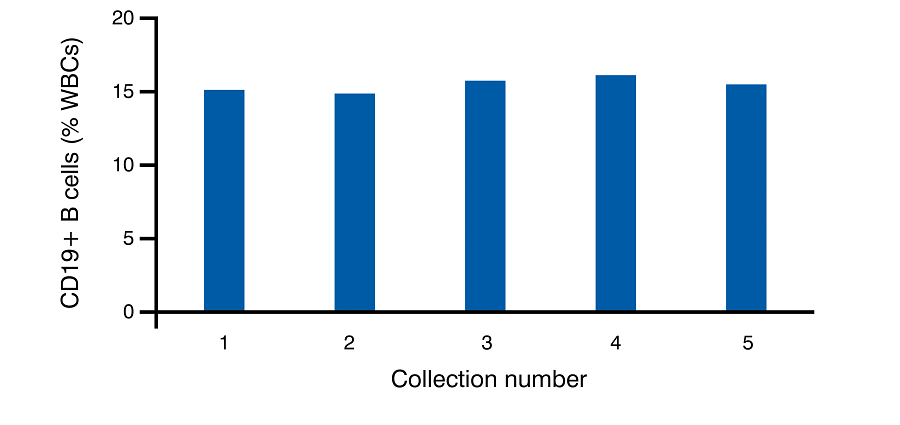
Figure 2. Across all 5 collections from the same recallable donor, > 15% CD19+ B cells were observed indicating the high quality of this starting material. Human B cell values are reported as the percentage of CD19+ cells per total WBC yield.
For cryopreserved CD19+ B cells, either prepare cells for long-term storage in liquid nitrogen vapor phase or thaw for use. Storage in liquid phase nitrogen is NOT recommended. Short-term storage of cells (less than 2 weeks) at -80°C is acceptable but should be minimized to ensure maximum stability. Once thawed, samples must be used immediately.
Cell Therapy Applications for Human B Cells
Charles River is the global leader in providing human-derived immune cell products and apheresis collection services. B cell-based therapies have been an area of intense focus over the past decade due to the critical role these cells play in antibody production and the adaptive immune response. As a result, human B cells form the basis of some of the most advanced cell therapies in development today:
- B cell-based cancer immunotherapy: The role of human B cells in antibody production and immune memory is well known, but the cells also play an important role as antigen-presenting cells and contribute to immune regulation. These multiple roles make B cells excellent targets for cancer immunotherapy. Several clinical trials are currently underway investigating B cell-based cancer vaccines, as well as CD40 activated B cells which have been shown to induce anti-tumor T cell responses.
- B cell depletion therapies: Human B cells are known to play an active role in the development of autoimmune diseases. As a result, targeted B cell depletion is actively being investigated in clinical trial as a means of mitigating such diseases.
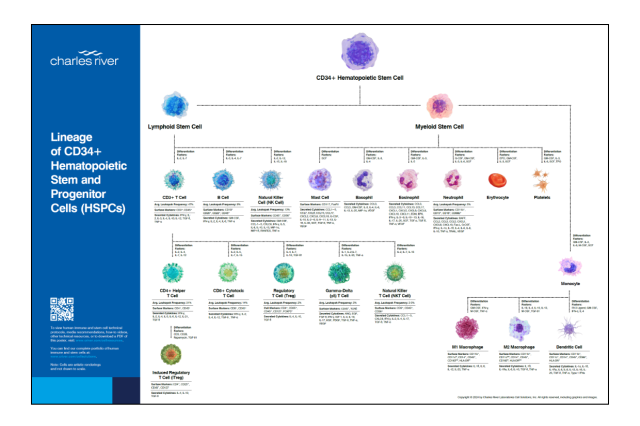
Lineage of CD34+ Hematopoietic Stem and Progenitor Cells (HSPCs)
Receive a complimentary poster to access information on immune cell markers, differentiation factors, cytokines, technical protocols, media recommendations, how-to videos, and more.