Research Models
|
Mary Parker
Researching Crimes of Opportunity
Why PathogenBinder is optimal in identifying opportunistic bacteria to protect immunodeficient mice
Control is the cornerstone of research. To understand the effects of an experiment, a researcher must consider all the variables. For example, if you are studying the effect of COVID on a lab mouse, you must be sure the mouse doesn’t already have a cold.
Traditionally, health monitoring for rodents has involved the use of soiled bedding sentinel animals. A bit of dirty bedding from the research mice is introduced into the cage of healthy sentinel mice, who are closely monitored for any illness. The sentinel mice form a control group to identify potential outside contaminants. But is this still the best method for monitoring mice?
Immunodeficient Mice
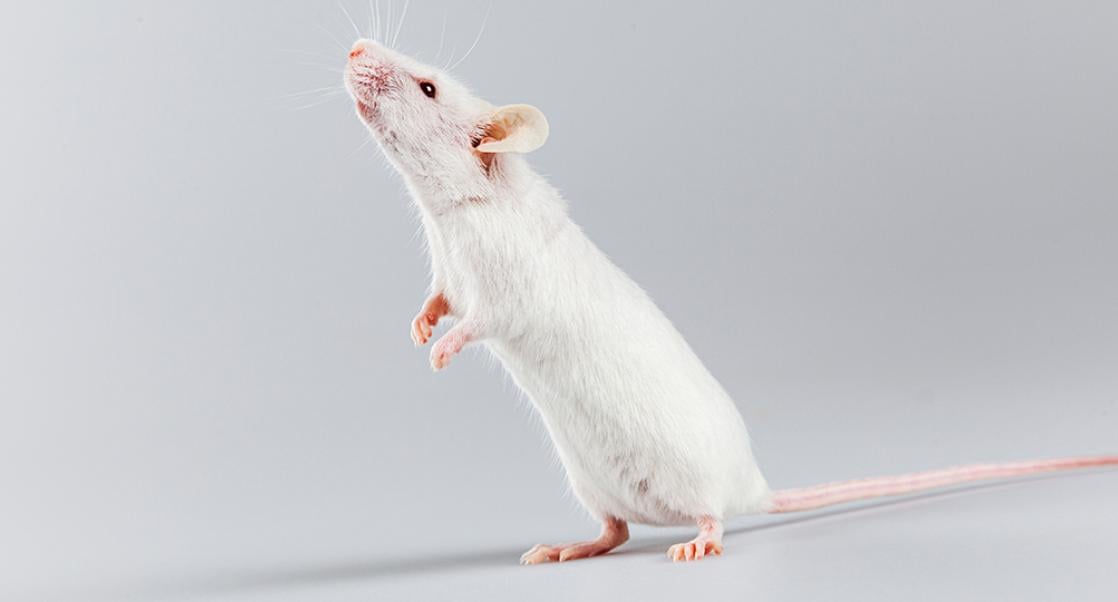
Immunodeficient mice have been used for decades in research. Their immune weakness has been exploited to create invaluable models for research into immunology, oncology, transplantation, and infection, but due to that weakness, their health must be monitored closely.
“When you have a highly immunodeficient mouse there is the risk of introducing something problematic to a vulnerable model,” said Kourtney Nickerson, Senior Scientist for Charles River’s Laboratory Services. “We do see things popping up that we haven't seen in a long time because you go and you thaw a tumor from the freezer, and suddenly you have an agent you haven't seen in a while because we didn’t know to test for it then, or didn’t have to tools to test for it historically.”
While researchers have been able to amplify the immunosuppressive traits of these mice, they have also gotten better about protecting them. However, that could be making pathogens harder to find.
What Are Opportunistic Bacteria?
Opportunistic bacteria are any pathogens that can cause issues under the right circumstances. They may live in mice without any ill effects, but under the right conditions can cause illness.
“Opportunistic bacteria are a huge challenge for the diagnostic lab because our traditional sampling methods, which would be direct animal sampling from either your colony animals or your sentinel animals, is not consistent in picking up these agents,” Nickerson said. “They cause disease when an opportunity arises. You can think of this as how humans can get C-diff as a secondary infection after they've taken antibiotics. That's an opportunistic pathogen.”
Problems With Soiled Bedding Sentinel Testing
For soiled bedding sentinels to work, an active infectious agent has to actually survive the journey from the sick mouse to its bedding, to the next cage, and into a sentinel. As methods for detection become more sophisticated and protections for immunocompromised mice become stronger, it is harder for an agent to make that trip.
“It seems like a great idea in theory, but when you start to look at all the advantages we've made in vivarium space where we can now go down to individually ventilated cages, we're working in biosafety hoods, we have much better cleanliness and understanding of how these agents are transmitted – we’ve cut down the prevalence of these agents,” Nickerson said.
Reduced prevalence means the pathogens that do exist are harder to find – a literal needle in a haystack of soiled bedding. Add in the threat of an opportunistic bacteria that might not even have an effect on a sentinel, and it is a best-case scenario for a sneaky pathogen.
Sentinel-Free Surveillance
If sentinels can’t be relied on, new methodologies are adopted. PathogenBinder is one sentinel-free option that not only can detect opportunistic bacteria, but also reduces the number of mice needed for a study – fulfilling one of the 3Rs.
The PathogenBinder kit comes with specialized filters for detecting exactly those most common pathogens that would worry research scientists.
“You take your soiled bedding and shake it around in a box that coats the filters in all of the material from that dirty bedding,” Nickerson said. “We can then take that filter, couple it with our highly targeted, highly sensitive PCR testing and detect if you have even a very low level of an agent on a rack.”
WEBINAR
An Evolving Approach to Rodent Pathogen Detection Methods
Learn about the implementation of PCR-based methods for infectious agent detection and the evolution of using contact media exposure in soiled bedding. Watch on Demand
Which is Better, Sentinels or Sentinel-Free Testing?
Nickerson’s team studied the transmission of opportunistic bacteria in order to figure out how to best protect immunocompromised mice. The first phase of the study involved housing mice with known opportunistic bacteria in the same cage as clean mice, to see if direct transmission actually occurred. After that phase, they used routine health monitoring and sentinel testing to see if they could detect the pathogens in traditional ways.
“Our findings were surprising,” she said. They expected some pathogens to be more transmissible that others, but by housing sick mice with immunodeficient clean mice, they expected transmission to be pretty easy.
“Those immunodeficient mice don't have any way to fight back, so they should be an easy colonization for pathogens. And we didn't see that, and that really surprised us.” And if transmission wasn’t consistent between cage mates, how could they expect transmission to a separately caged sentinel?
And indeed, the sentinels in their study did not test positive for pathogens Nickerson knew were present – but sentinel free soiled bedding testing did.
“We were only picking it up when we use the PathogenBinder samples,” she said. “You're able to pick up these agents that are just shed infrequently or in small amounts because it is accumulating on that filter and you're getting a lot more confidence that you're picking things up.”
While there are many factors that go into choosing the right methodologies for any experiment, Nickerson’s study offers strong evidence in favor of using something like PathogenBinder over sentinel testing for immunocompromised mice, and research models in general.
These results will be discussed in detail at NAALAS November 2025.