Safety Assessment
|
Rana Samadfam, PhD
What's Hot in 2024: Antimicrobial Resistance
The microbiome is a double-edged sword against antimicrobial resistance
Antimicrobial resistance (AMR) is currently the top global public health threat passing COVID-19 concerns. It is a major source of mortality worldwide in particular in war torn countries. The UN estimates that in the next three decades deaths caused by superbugs will match those caused by cancer. What's going on?
When antibiotics were first introduced in the 1900's, we naively assumed that bacterial infections will be part of humanities history. We soon realized how wrong that assumption was and how much we underestimated power of evolution and effector programs by which living organisms will fight against extinction. Nowadays scientists acknowledge that most pathogenic microorganisms have the capability of developing resistance to antimicrobial agents. Several mechanisms of resistance have been reported including inactivation, active efflux, target modification and limiting uptake of the drug.
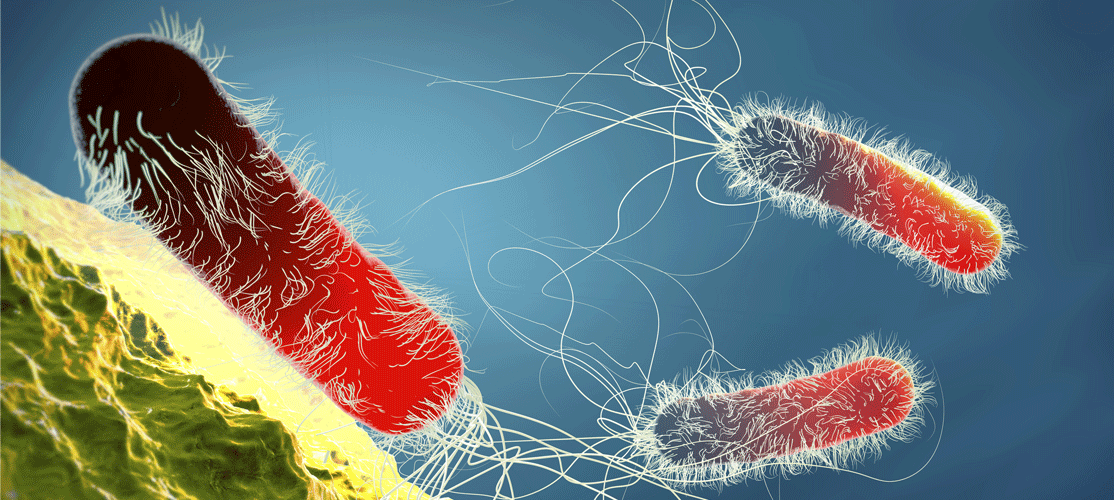
Human microbiome with its highly dense population of microorganisms creates a perfect condition for horizontal transfer of antimicrobial resistance (AMR) genes to potential pathogenic bacteria. On the other hand, numerous reports have demonstrated the amazing benefits of live therapeutics in fight against infectious disease. Understanding more about our microbiome and sophisticated interactions between the members will lead to better treatment options for infective diseases, and development of antimicrobial drugs.
-- Rana Samadfam, Senior Principal Research Scientist, Charles River