
Gain a Competitive Edge with Full CDMO Capabilities for CAR-T Cell Manufacturing
Position yourself as a leader in the rapidly evolving field of CAR-T cell therapies, shaping the future of next-generation medicine. Our cell therapy CDMO provides analytical and process development expertise to optimize and scale up your CAR-T manufacturing, supporting you at every stage. With in-house testing capabilities at our state-of-the-art CDMO facilities to ensure rigorous analytical assay development and quality control, we can expedite your journey toward transformative therapies.
Experience unparalleled flexibility with CAR-T manufacturing, allowing you to choose closed, automated, or manual processes in early-phase development. Learn more about our leading-edge Flex Platforms for autologous CAR-T and TCR-T cell manufacturing with off-the-shelf solutions that are customizable to fit your CAR-T production needs.
“Our extensive work in cell and gene therapy manufacturing, as well as end-to-end discovery and development expertise, provides the institutional knowledge required to drive forward oncology programs, with the ultimate goal of delivering safe, effective treatments to patients.”
Kerstin Dolph, Corporate Senior Vice President, Global Manufacturing, Charles River
See How Our Efficient CAR-T Manufacturing Process Works
Precision-driven CAR-T cell manufacturing
A strong start to your CAR-T cell manufacturing begins with efficiently isolating peripheral blood mononuclear cells (PBMCs). With our background in developing and implementing CAR-T processes, we have honed our techniques to genetically modify T cells, ensuring enhanced CAR-T cell functionality.
We insert the CAR construct into the T cells using a vector, such as lentivirus, or a non-viral method such as electroporation. From confirming CAR receptor expression to eliminating contaminants, our comprehensive approach ensures benchmark standards are met. Rely on our expertise to expand and cultivate your modified cells. Our streamlined workflows and advanced technologies enable us to deliver a large population of CAR-positive viable T cells with a realistic turnaround time.
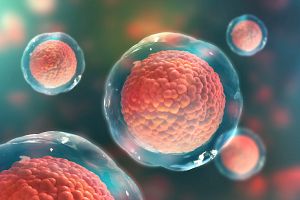
Next-gen Immunotherapy: A Guide for CGT Developers
Uncover the latest techniques to recognize, target, and eliminate cancer cells and tumors. Examine each cell type, plus autologous and allogeneic options, to better understand these evolving therapies.
Get the Insights
Leverage a Robust Tech Transfer Program
Smoothly transition from development to commercialization and ensure that your processes are reproducible with our experienced technology transfer team. De-risk your CAR-T manufacturing process and guarantee that critical information transfer is timely and complete
Autologous and Allogeneic CAR-T Manufacturing Solutions
Our CAR-T CDMO team of experts has deep experience in customizing both autologous as well as allogeneic manufacturing solutions. Whether you’re developing a personalized therapy using the patient’s own cells or creating a therapy at scale using donor-based starting materials, we can guide you the CAR-T manufacturing process.
Delivering reliable CAR-T cell therapies
Our CDMO facilities and stringent quality control processes are designed to ensure the highest product safety, potency, and purity standards. We implement comprehensive quality control measures to assess the genetic integrity of your CAR-T cells throughout the CAR-T manufacturing process. This makes certain your CAR-T cell product is free from unintended genetic alterations, providing consistent and reliable therapeutic outcomes. When you partner with us, you can confidently deliver CAR-T cell therapies that meet the most rigorous standards of excellence and provide optimal patient benefits.
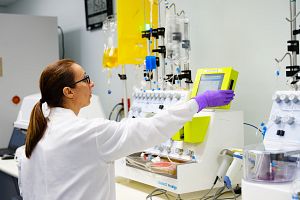
Cell Therapy Flex Platform
Accelerate your CAR-T program from first run to IND with Charles River’s Cell Therapy Flex Platform.
Read the Case Study
Scalable CAR-T CDMO capabilities
Meeting the growing demand for CAR-T manufacturing helps make innovative cell therapies more accessible. At Charles River, we use cutting-edge technologies, such as automated and closed systems, to develop and implement scalable manufacturing processes. This minimizes human error and ensures reproducibility. Another approach we use is improving our cell culture conditions and purification methods to enhance efficiency and facilitate large-scale CAR-T production.
Ensure compliance with regulatory requirements
Regulatory compliance is the glue that holds ethical scientific practice together. We help shape the future of CAR-T manufacturing and strictly adhere to quality systems and regulatory guidelines, including those for analytical processes, helping you move faster with your therapies. With our support, analytical assays can be designed to meet regulatory guidelines. Our scientific experts always follow good manufacturing practices (GMP) to provide high-quality CAR-T cells, while our in-house Scientific and Regulatory Advisory Services advisors stay up to date with the latest regulatory guidelines.
Still have questions for our scientists or want more information?
Consult an Expert
Frequently Asked Questions (FAQs) About CAR-T Manufacturing Services
-
What are the steps in the CAR-T cell manufacturing process?
The CAR-T cell manufacturing process involves several precise steps:
- T Cell Collection – First, a patient’s T cells are collected via leukapheresis.
- Cryopreservation of T Cells – The T cells then undergo cryopreservation.
- Shipping – Next, the cells are sent to a specialized CAR-T CDMO facility for thawing, isolating, and activating.
- Genetic Modification – T cells then undergo genetic modification with the aid of vectors to express CARs on their surface. They also undergo expansion and culturing.
- Quality Control Testing – The CAR-T cells must undergo rigorous quality control testing to ensure safety and efficacy.
- Cryopreservation of CAR-T Cells – Once the CAR-T cells are manufactured, cryopreservation is done for storage and transportation.
- Patient Administration – When ready for patient administration, the CAR-T cells are prepared to infuse into the patient to enable targeted cancer cell elimination.
-
What is the lifespan of CAR-T cells?
The lifespan of CAR-T cells can vary among individuals. CAR-T cells have been observed to persist for several months to years after infusion into the patient’s bloodstream. The exact duration of the lifespan of CAR-T cells depends on various factors, including the characteristics of the CAR-T cell product, the type of cancer being treated, and individual patient factors, such as how they respond to the treatment. Ongoing research seeks to better understand and optimize CAR-T cells' lifespan to improve long-term therapeutic outcomes.
-
How long does it take to produce CAR-T cells?
The time it takes to produce CAR-T cells varies between nine days to a few weeks. The timeline varies due to the steps involved in the CAR-T cell manufacturing process and the specific protocols used. Ongoing research aims to improve CAR-T production timelines of CAR-T cell therapies and hasten patient access to cell therapies. In a recent preclinical trial, University of Pennsylvania researchers produced a few CAR-T cells with enhanced anti-tumor capabilities in only 24 hours.1
1Balfour, H. (2022, March 30). Could CAR-T therapies be manufactured in one day?. European Pharmaceutical Review. https://www.europeanpharmaceuticalreview.com/news/169838/could-car-t-therapies-be-manufactured-in-one-day/
-
What is the difference between first and second generation CAR T cells?
The difference between first and second generation CAR-T cells primarily lies in the design and composition of the CARs used in these therapies. Each generation of CAR-T cells has distinct co-stimulatory molecules and shapes of the intracellular signaling domain.
First-generation CAR-T cells have a single CD3-zeta cytoplasmic domain, resulting in limited T cell activation and expansion. Second-generation CAR-T cells have additional co-stimulatory signaling domains, such as the CD28 or 4-1BB, which enhance T cell activation, proliferation, and persistence. Although the improved signaling capacity of second-generation CAR-T cells leads to anti-tumor responses and is the preferred design for most CAR-T cell therapies in clinical use, researchers are also developing third, fourth, and fifth-generation CAR-T cells.
-
What is the starting material for CAR-T cells?
CAR-T cells' starting material is white blood cells (leukocytes) collected during leukapheresis. Autologous T cells come from the patient’s own T cells, while allogeneic T cells are sourced from a healthy donor who meets specific criteria after selection.
Learn more about Cell Sourcing -
Are CAR-T cells genetically modified?
Yes. CAR-T cells are genetically modified. To genetically modify T cells, vectors, such as viral vectors, deliver the CAR genes into the cells. This allows them to integrate into the cellular genome. Genetically modifying T cells reprogram them to express the CAR on their surface, enabling them to recognize and target specific cancer cells.
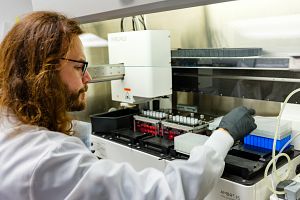
Process Optimization for Improving T Cell Therapies
Hear from experts on media control strategies for T cell therapies that can enhance expansion and differentiation.
Watch now
