
Inform Your Lead Selection with Human Protein Library Binding Data
The ability to uncover the identity of a therapeutic’s human protein binding partner(s) is essential in understanding candidate interaction. The Retrogenix® human protein library allows screening of candidate therapeutics against human plasma membrane, secreted, and heterodimeric proteins expressed in the context of human cells. In this way, you can understand how a drug candidate will interact with human cells so potential safety risks can be identified and mitigated, and unviable candidates can be optimized or discarded before further progression along the development process.
By using cDNA to individually encode each target in our library, and spotting these onto specialized slides, we are able to grow and reverse-transfect synthetic human cells which then overexpress those targets at the cell surface, enabling a comprehensive screen against entirely synthetic human protein targets. These synthetically created proteins are presented in the context of a human research cell line to maximize relevance to the human body.
The key components in making sure you are screening against the most accurate representation of the human biological profile are that the protein library must be as comprehensive and high quality as possible, and that human proteins are represented in the context of the human cell.
De-Risk In Vivo Studies with an In Vitro Non-Human Protein Screen
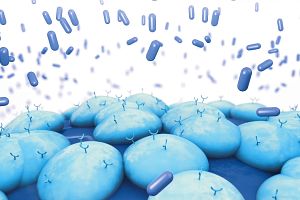
Our latest library development enables you to assess off-target binding to a non-human proteome to de-risk in vivo studies and aid in non-human species selection. The non-human protein library currently focuses on synthetic cynomolgus proteins with the most divergence from human proteins in the extracellular domain of the protein (less than 90% homology). Designed in silico and synthetically generated, the biosynthetic non-human protein library represents a variety of key protein sub-families, including CD molecules, GPCR, and transporters. The in vitro expression of these proteins in a natural cell environment supports correct protein folding, post-translational modifications, and cell surface presentation.
Add an optional non-human protein library to enhance your human screen and determine if cynomolgus would be a well-suited species for in vivo toxicity studies. Confirming potential off-targets are alike across species facilitates interpretation of in vivo results and ultimately reduces risk by ensuring safety studies are conducted in an appropriate species from the outset. In addition to offering the non-human protein library, we can also screen any observed human off-targets against any suitable in vivo model proteins to help inform next steps for client drug development.
eGuide for Off-Target Screening via the Retrogenix Platform
Download the eguide for all the information you need on how the Retrogenix platform can be leveraged to screen for specificity in vitro against a physiologically relevant human protein library from early-phase discovery onwards, to aid candidate selection, downstream study design, and IND approval.
Download now
Creating the Highest Quality Protein Library
Through extensive research and development in collaboration with leading pharmaceutical clients, we have compiled a library of the human cell surface proteins expressed in the body. By understanding the genetic code (DNA sequence) associated with each of these proteins, we are able to artificially synthesize biological material to overexpress each protein individually on the surface of lab-grown cells; drug candidates are then tested against this material.
With over a decade of expansion and refinement, the Retrogenix® human protein library now has over 6,500 proteins, including prenatal proteins present at 10-18 weeks of pregnancy. This is the largest available set of plasma membrane and secreted proteins expressed in human cells.
Data from Retrogenix® specificity screens are frequently used to support BLA / IND submissions. To ensure continued high success rates and study confidence, we are continuously working to maintain the size and quality of the library. In addition to regularly adding new proteins to improve proteome coverage, the existing library is continuously monitored, and proteins may be removed where necessary if confidence in their extracellular exposure reduces. This activity ensures that library quality and relevance remain as high as possible, and false-positive rates remain as low as possible.
Currently, more than 90% of high-confidence plasma membrane proteins are included in the platform, providing excellent coverage across the major sub-classes of cell surface proteins.
The Plasma Membrane Proteome: Coverage of Key Protein Sub-Classes
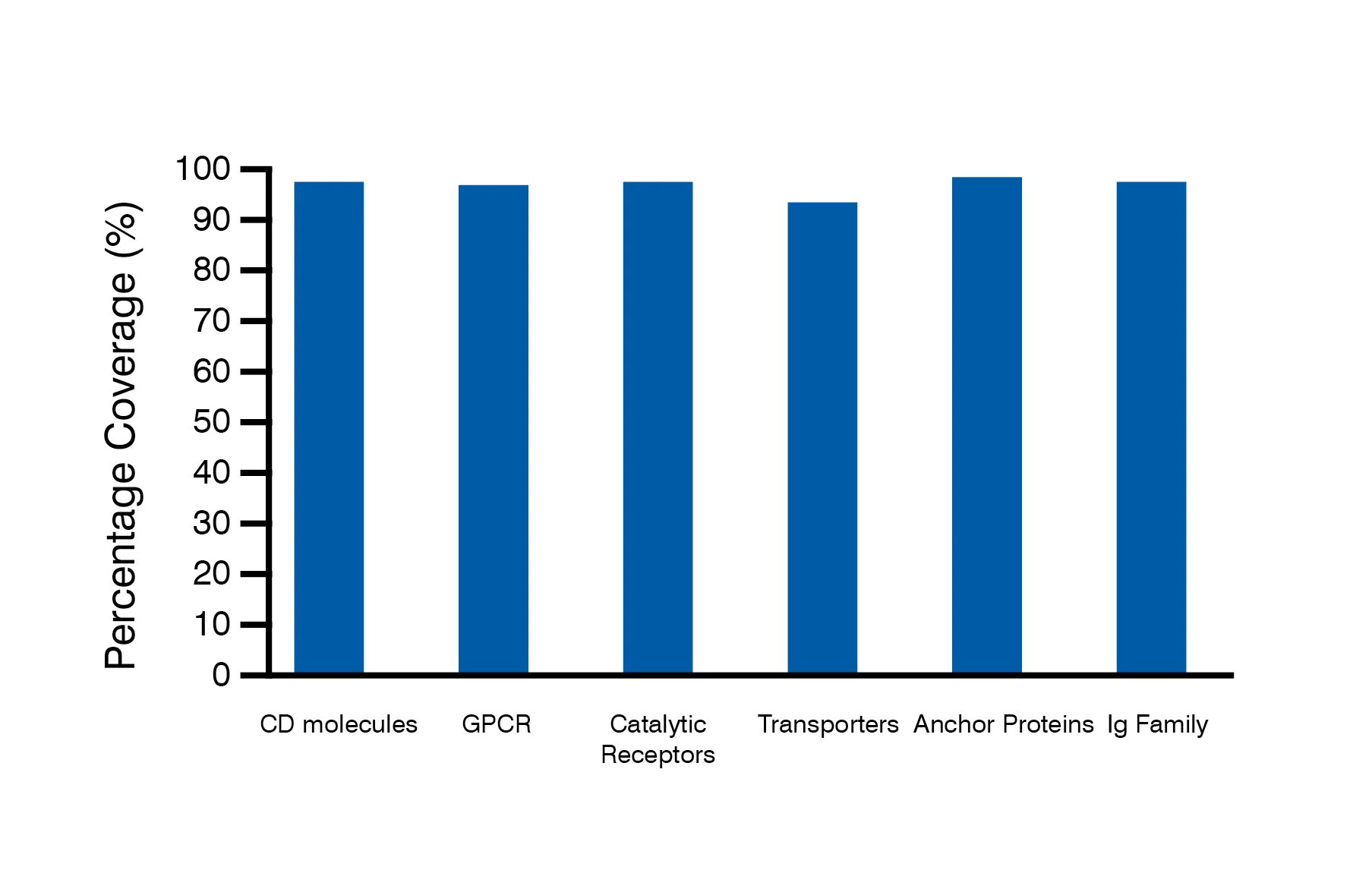
Bar chart showing the percentage of plasma membrane proteome coverage for the key protein sub-classes in the Retrogenix® human protein library
Coverage of the Human Secretome by Key Protein Sub-Classes
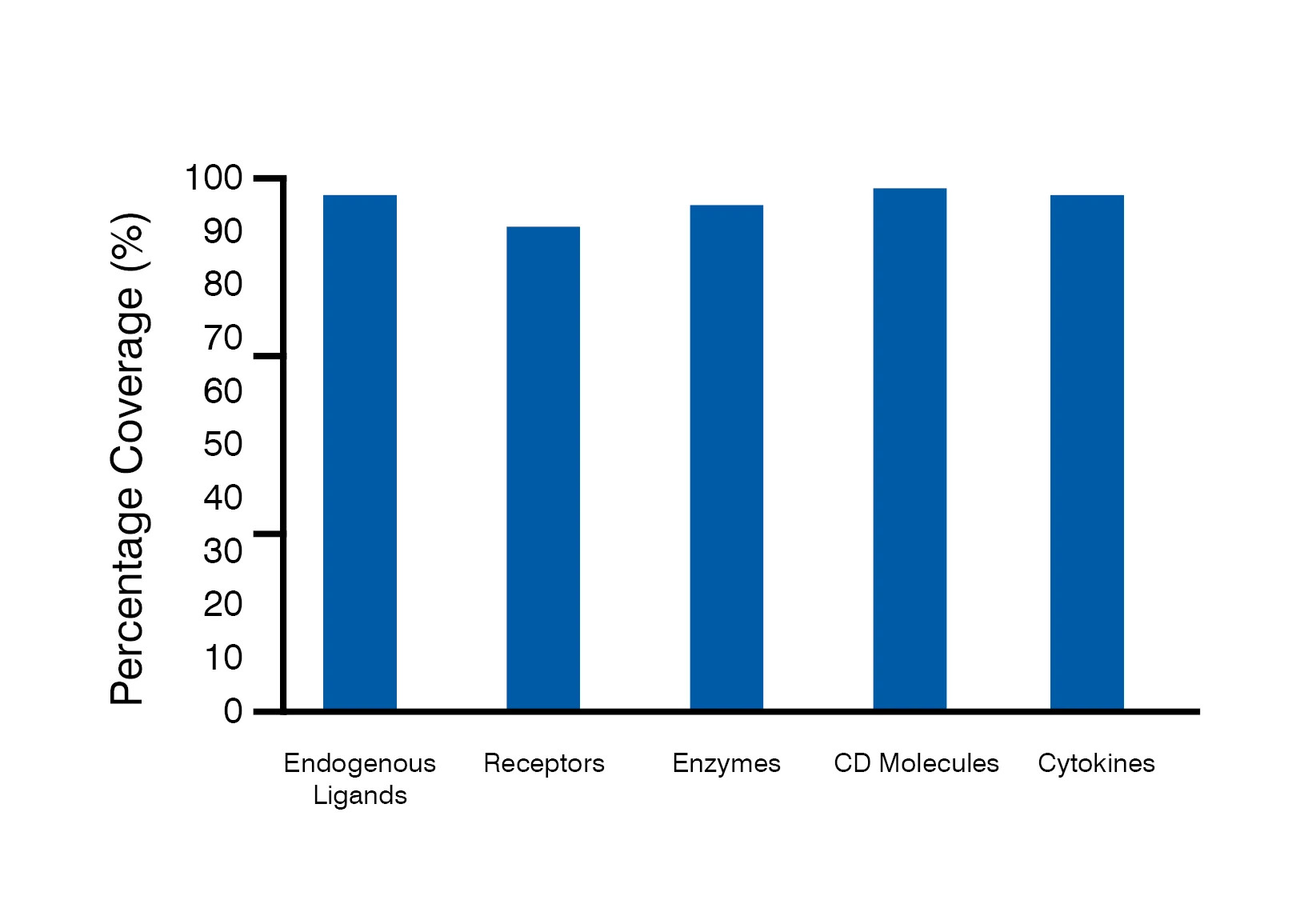
Bar chart showing the percentage of coverage of the human secretome by key protein sub-classes in the Retrogenix® human protein library
Tethering "Secreted" Proteins
As secreted proteins are not naturally localized on the cell surface, novel cDNA constructs have been developed which result in expression of "secreted" proteins fused to inert transmembrane and intracellular domains. As these proteins are tethered to the membrane, binding can be detected using the same workflow as the plasma membrane library.
Our bioinformatics collaboration on this project resulted in a high confidence list of secreted proteins being generated, for priority inclusion in the library. Of these, more than 90% are now expressed in our collection, with more under continuous development. We continue to innovate and develop the cell microarray technology to broaden the applications of the platform and provide valuable data that informs your discovery and safety assessment journey.

WEBINAR: Maximize Safer, Targeted Biologic Development with Smarter NAMs-Based Off-Target Screening
This webinar showcases how the Retrogenix® platform empowers smarter, earlier decisions across biologic formats. You’ll also learn how this platform, recently accepted into the FDA’s ISTAND Pilot Program, aligns with evolving regulatory support for NAMs and the shift toward reduced animal use.
Watch the Replay
Frequently Asked Questions (FAQs) About The Retrogenix® Human Protein Library
-
What cell types are the target proteins over-expressed on the platform?
Currently, our human protein library is expressed in human HEK293 cells to ensure correct post-translation modifications, folding, and localization in human cells to produce a physiologically relevant system. Research and development is also being performed to explore the use of other cell lines as alternative expression systems.
-
How can protein screening support translational success?
Screening candidates against an unbiased and high-quality protein library can de-risk against potential off-target mediated toxicity and improve therapeutic viability by allowing early identification and mitigation.