
What is the standard curve in bacterial endotoxin testing?
A standard curve in a traditional BET assay requires the rehydration of control standard endotoxin (CSE) followed by serial dilution of that CSE to achieve a series of pre-defined endotoxin concentrations. These concentrations make up the standard curve, which is then used to determine the endotoxin concentration in unknown samples.
What is the Archived Standard Curve (ASC)?
An Archived Standard Curve (ASC) is a pre-validated, stored calibration curve used in endotoxin testing, eliminating the need to prepare fresh standard curves for each assay. This significantly reduces variability and error, enhancing the reliability of test results.
Problems the ASC Addresses:
- Minimizes inconsistencies caused by manual preparation
- Reduces human errors in standard curve preparation
- Lowers the need for extensive training in standard curve preparation
- Saves lab space previously needed for curve preparation materials
- Eliminates the time required for preparing standard curves and cuts down assay preparation time
The initial use of ASC faced challenges due to variability and control requirements, leading to its decline in adoption. Modern ASC technology addresses these issues by using pre-validated curves, ensuring consistent results.
What Makes ASC Used in Charles River’s Cartridge Technology Different?
Endosafe cartridges are the gold standard in endotoxin testing, containing precise amounts of reagent, chromogenic substrate, and endotoxin standard. These cartridges simplify the testing process, meeting regulatory requirements and ensuring accurate results.
Charles River’s ASC technology differs from early attempts by incorporating stringent validation processes and external benchmarks. This ensures that each ASC is reliable, precise, and accurate, surpassing the variability issues of freshly prepared curves.
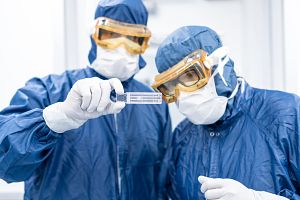
Endosafe® Cartridge Technology
This brochure provides detailed insights on endotoxin testing techniques, offering more streamlined, rapid, and precise solutions compared to traditional methods.
Simplify your BET
Problems Solved by Endosafe Cartridges
- Traditional methods of preparing standard curves involve manual preparation, which can lead to variability between tests. Endosafe cartridges contain pre-dispensed, precise amounts of reagent, chromogenic substrate, and endotoxin standard, ensuring uniformity in every test.
- Human errors in pipetting, reagent handling, and standard curve preparation are common and can affect test results. Endosafe cartridges eliminate these errors by automating the entire process, from reagent preparation to data analysis.
- Traditional endotoxin testing requires significant resources, including trained personnel, extensive lab space, and numerous consumables. Endosafe cartridges streamline the workflow, reducing the need for extensive resources and simplifying the testing process.
The Endosafe cartridges meet all pharmacopeia harmonized BET chapter requirements and LAL cartridges are FDA-approved for end-product release testing. This ensures that laboratories using Endosafe cartridges are compliant with regulatory standards, reducing the risk of non-compliance.
Demonstrating Consistency with the Archived Standard Curve
To demonstrate the reliability and accuracy of the archived standard curve used in Endosafe cartridges, Charles River performs rigorous validation:
- Generating the ASC: Fifteen cartridges from across a batch are tested using three Reference Standard Endotoxin (RSE) concentrations, with ten replicates for each concentration. The data points are used to construct a standard curve, which must achieve an R-value of 0.990 or higher.
- Positive and Negative Controls: Additional fifteen cartridges are tested using water for BET to assess the cartridge positive and negative controls. The positive control values must be within ±25% of the overall average, and all negative controls must be negative.
- Precision and Accuracy Challenge: Forty-five cartridges from across the batch are tested with three new RSE concentrations. Each concentration is tested, and the reported value must be within ±15% of the average value for the specific concentration. All 45 cartridges must meet all suitability criteria for sample and spike %CV (Coefficient of Variation) and spike recovery.
The consistency of the ASC is further validated by testing the same sample across multiple cartridges from the same batch over consecutive days. This ensures that each cartridge produces the same endotoxin value for a given sample, reinforcing the reliability and precision of the ASC.
Endosafe cartridges are part of Charles River’s “Quarterly Product Surveillance” program, ensuring ongoing compliance and reliability. Each cartridge batch undergoes extensive real-time stability testing to confirm its shelf life and performance.
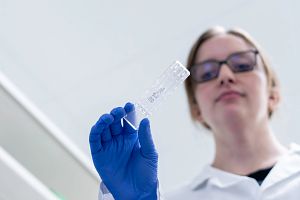
White Paper: The Significance and Utilization of Archived Standard Curves in Bacterial Endotoxin Testing
This white paper will show you how to streamline your testing processes, save time, and reduce costs. Available for a limited time.
Read Now
The Future of Endotoxin Testing
Endosafe cartridges represent the future of endotoxin testing by combining the advantages of ASC with advanced cartridge technology. This not only enhances the quality and reliability of test results but also simplifies the testing process, making it more efficient and less resource intensive.