image

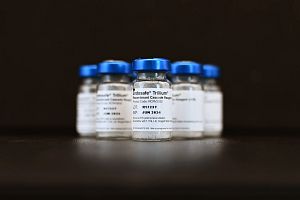
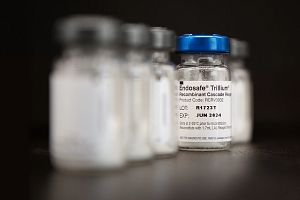
Endosafe® Trillium™ rCR Cartridges

The animal-free Endosafe® Trillium™ rCR cartridges are fueled by our optimized kinetic chromogenic reagent curated to simulate the natural LAL reaction, fully embracing the significance of sustainability, while accelerating testing times through our scalable suite of rapid, automated testing platforms.

Request more info

Simply Sustainable Endotoxin Testing

Keeping pace with an industry characterized by progressive change, we continue to challenge the limits of conventional thinking and testing. Twenty years ago, our scientists pursued a vision of streamlining and optimizing the labor-intensive process of detecting pyrogen producing Gram-negative bacterial endotoxins through the design of our microfluidic Endosafe® LAL cartridge technology. Transforming benches and labs all over the world, the flagship proprietary technology eliminated much of the time, training, raw materials, and accessories by fusing all the essential components into a single disposable cartridge, to provide highly precise, real-time, quantitative endotoxin analysis.  

Fast forward to today and elevating that approach, the next iteration integrates Endosafe Trillium recombinant cascade reagent (rCR) into the paramount cartridge technology to produce a rapid, animal-free solution to further propel the industry into the future of sustainable, quality control testing.

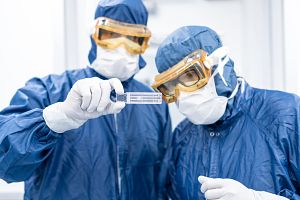
Two scientists holding up and looking at a single Endosafe Cartridge

Endosafe® Cartridge Technology
This brochure provides detailed insights on endotoxin testing techniques, offering more streamlined, rapid, and precise solutions compared to traditional methods.
Simplify your BET

 
Synthesized and Simplified →
  • Powered by a 3-Factor enzymatic cascade, curated to simulate the natural LAL reaction from the Limulus polyphemus species
  • Eliminates the potential for 1,3-B-D-glucan induced false positives
  • Reduces manual pipetting, diluting, reconstituting steps, and consumables which requires less glassware, plastic accessories, and eliminates reagent waste
 
Real-time, Robust Results →
  • Delivers rapid, quantitative kinetic chromogenic rCR results in approximately 15 minutes
  • Quantitative range of 0.5 to 0.005 EU/mL, 1 to 0.01 EU/mL, and 5 to 0.05 EU/mL
  • Seamless integration with our existing suite of scalable, automated, Endosafe cartridge technology platforms
  • Utilizes an archived standard curve, reducing human error in standard curve preparation


"We are diligently working on our sustainability initiatives and are very pleased that we’ll be able to offer an alternative to the horseshoe crab derived LAL with Endosafe Trillium rCR for our customers. The samples we test contain compounds that cause inhibition with the LAL test. However our experience with trialing Endosafe Trillium has reduced the inhibition, allowed us to remove the use of buffers in the assay, and work at a lower dilution. It’s great that both the Trillium rCR cartridges and vials can be used as a direct replacement for the traditional LAL with no need for additional equipment, training, or reagents."

Senior Microbiologist, Sub-contract Medical Device Testing Laboratory, UK

Beta testing study

Endosafe® Trillium™ rCR Technical Report
To further demonstrate the robustness and validity of our Trillium rCR matrix and formulation, we published a technical report detailing the results of our comprehensive beta test study program. The report highlights assay equivalency to our FDA-licensed kinetic LAL assay via our primary alternate method validation.
Download the Report

Engineered for an Effortless Endotoxin Testing Experience

The design of the cartridge technology was tailored around simplicity, flexibility, and sustainability. That approach continues with the integration of Trillium, elevating and aligning our sustainability mission with our customers. Endosafe cartridges significantly reduce the burden of creating a standard curve and sample preparation by eliminating the need for costly specialized training and excessive consumables, driving sustainability through operational efficiency.

Cartridge Functionality

  • The four reservoirs represent duplicate sample and spike channels that allow the test to automatically run in duplicate as is the requirement for standard BET testing
  • In the sample channels, the reader draws and mixes the sample with the rCR reagent
  • In the spike channels, the sample is mixed with the rCR reagent and positive control
  • Each sample is then combined with the chromogenic substrate drawn into the optical cell and incubated
  • Each channel ends in an optical cell where the samples are analyzed by the cartridge instrument
  • The instrument measures color intensity directly related to the endotoxin concentration and compares the reaction times to the archived standard curve
An aerial view of a beach

Replace, Reduce, Refine: Achieving Sustainability
Today, organizations worldwide are pursuing animal-free options to ensure the longevity of their supply chains and business operations while maintaining a strong commitment to corporate citizenship.
Discover our Dedication

MS-002281.jpg

Build a recombinant BET validation plan module by module
A documented validation plan can be the deciding factor in adopting recombinant BET methods. This four-part series covers study design, acceptance criteria, and interference testing.
Start Training Now

Additional Support and Product Information

MS-002280.jpg

Best Practices for rCR Vial and Cartridge Adoption
Uncover how to standardize your testing, reduce invalid results, and stay compliant with Trillium™ recombinant cascade reagents (rCR) vials and cartridges.
View the Guide

Frequently Asked Questions (FAQ) for Endosafe Trillium rCR Cartridges

Upcoming Events

View All Events

Sep 30, 2026

Taking the Alternative Route: A Recombinant BET Roadshow - Bologna, Italy

Bologna, Italy

Back to Endosafe® Kinetic Chromogenic Cartridge Technology

Endotoxin Testing Sensitivity
Endosafe® Trillium™ rCR Cartridges

More Products and Services

View All Products and Services

Endotoxin Testing Sensitivity: How to Choose the Right BET Assay Sensitivity

The Role of Sensitivity in Bacterial Endotoxin Testing What Is Endotoxin Test Sensitivity and Why Does It Matter? Endotoxin test sensitivity is the lowest concentration of endotoxin that an assay can detect and quantify. If a product has an endotoxin limit of 0.5 EU/mL, the assay must reliably measure endotoxin at or below that threshold. Reagent sensitivity, combined with the dilution a sample requires, determines whether the method supports compliant testing. Regulatory frameworks, including USP <85>, USP <86> , Ph. Eur. 2.6.14, and the JP 4.01, require the bacterial endotoxin test to detect endotoxin at or below the product’s specified limit. When sensitivity is mismatched to the application, the consequences compound. An assay that is not sensitive enough may fail to detect endotoxin below the product limit, which can create compliance risk. An assay set too low increases the potential for invalid rates, extends reaction times, and reduces throughput without adding value to the results. Why Traditional BET Methods Struggle with Assay Sensitivity Control Many labs assume that choosing the most sensitive assay will protect them in every scenario. In practice, sensitivity does not work in isolation. It interacts with two other variables: the product’s endotoxin limit and the level of sample interference. In real-world samples, interference is a key factor that must be evaluated and controlled during suitability testing. Most product types can introduce interference that affects endotoxin testing and may lead to invalid results. These interferences often arise from sample properties such as pH, color, viscosity, or protein content, which can disrupt the endotoxin detection reaction and prevent valid spike recovery. The standard response is dilution, which reduces interference but also reduces endotoxin concentration. If the sample is diluted beyond the method's detection capability, the result may be unusable. The maximum valid dilution (MVD) defines this boundary and is the highest dilution at which the assay can still detect endotoxin at the product’s limit. Traditional BET methods, such as microplates and gel-clot assays, can make it harder to maintain this balance. Microplate-based assays require a manually prepared standard curve for every run. Each curve depends on the analyst’s technique, reagent condition, and accessory quality, which can introduce variability and increase the risk of invalid results, often requiring the lab to repeat the entire plate. Gel-clot methods only indicate whether endotoxin is above or below a threshold, without quantification. Neither format may give labs the precision needed to match sensitivity to the application with confidence. Traditional vs. Cartridge-Based Sensitivity Control Factor Traditional Gel-Clot Traditional Microplate-Based Kinetic Chromogenic Cartridge-Based Technology Standard curve Prepared manually each run Prepared manually each run Archived and validated within the system Analyst variability High (pipetting, reagent prep, technique) High (pipetting, reagent prep, technique) Minimal (pre-measured, self-contained) Retest rates Not consistently tracked due to qualitative results A recognized challenge in traditional microplate testing Reduced through a standardized format Sensitivity selection Limited by labeled sensitivity Selectable based on reagent type Multiple predefined ranges available per reagent type Time to result ~1.5 hours or more ~1.5 hours or more ~15 minutes Note: Results may vary by lab and method.

Endosafe® LAL Cartridges

Compendial FDA-Licensed Kinetic Chromogenic LAL Cartridges Traditional endotoxin testing has had a history of pain points, including long turnaround times, extensive training, and multiple steps for assay preparation. To make matters worse, an invalid LAL test result can potentially cripple your manufacturing timelines. The Endosafe LAL cartridge technology is the innovative response to the need for a more precise, objective, and faster quantitative results in the kinetic chromogenic method. A novel technology designed to optimize and refine the usage of LAL, our Endosafe LAL cartridges utilize 95% less horseshoe crab raw material and accessories than gel-clot and KTA methods. The disposable cartridges contain precise amounts of our FDA-licensed chromogenic LAL reagent, chromogenic substrate, and controls needed to measure color intensity directly related to the endotoxin concentration in a sample and obtain rapid, accurate results. Endosafe LAL Cartridges Are a Compendial BET Method FDA-licensed Endosafe LAL cartridges are a kinetic chromogenic LAL method as specified in the EP/USP. See the regulatory requirements here: FDA Guidelines USP BET <85> or BET <2.6.16> and Ph.Eur. <2.6.14> Automatically performing a duplicate sample and positive product control, they satisfy the harmonized BET chapters USP<85> or Ph.Eur.<2.6.14> for LAL testing. Each cartridge is manufactured according to rigid quality control procedures to ensure test accuracy and product stability and is compliant with existing global harmonized regulatory guidelines. As the cartridges are pre-filled, they eliminate the manual daily preparation of standards and reagents. Consolidating all the essential components in a self-contained cartridge reduces pipetting steps, decreases assay variability, cross-contamination, false positive risk, and retest rates. Endosafe ® Cartridge Technology This brochure provides detailed insights on endotoxin testing techniques, offering more streamlined, rapid, and precise solutions compared to traditional methods. Simplify your BET Designed to optimize and refine our use of LAL , the FDA-licensed cartridge technology uses 95% less amount of the raw material and accessories than the traditional LAL testing methods while reducing time-consuming preparation and technician variability. Is Your BET Program Sustainable? We recognize every organization has their own directives on how to embrace the 3R principles while ensuring product quality and patient safety. Our extensive portfolio has transformed the way we approach endotoxin detection, each offering their own degree of sustainability while allowing us to further optimize our resources to reduce reliance on the horseshoe crab. Go Animal-Free

Endosafe® Beta-Glucan Cartridges

Rapid beta-D-Glucan Detection With recent inspections indicating a need to verify the absence of glucans, the assurance that your product is free of contamination is essential. Endosafe ® beta-glucan cartridges provide a rapid, in-process test designed for investigational purposes to ensure that products do not contain (1,3)-β-D glucans. The test can quantify glucans faster, which supports tighter process monitoring and quicker out-of-specification (OOS) resolution. Explore the Beta-Glucan Assay Guide Endosafe ® Cartridge Technology This brochure details endotoxin testing techniques and shows how cartridge technology can streamline workflows, shorten turnaround times, and improve precision compared to traditional methods. Simplify your BET

Essential Guide to Archived Standard Curves

What is the standard curve in bacterial endotoxin testing? A standard curve in a traditional BET assay requires the rehydration of control standard endotoxin (CSE) followed by serial dilution of that CSE to achieve a series of pre-defined endotoxin concentrations. These concentrations make up the standard curve, which is then used to determine the endotoxin concentration in unknown samples. What is the Archived Standard Curve (ASC)? An Archived Standard Curve (ASC) is a pre-validated, stored calibration curve used in endotoxin testing , eliminating the need to prepare fresh standard curves for each assay. This significantly reduces variability and error, enhancing the reliability of test results. Problems the ASC Addresses: Minimizes inconsistencies caused by manual preparation Reduces human errors in standard curve preparation Lowers the need for extensive training in standard curve preparation Saves lab space previously needed for curve preparation materials Eliminates the time required for preparing standard curves and cuts down assay preparation time The initial use of ASC faced challenges due to variability and control requirements, leading to its decline in adoption. Modern ASC technology addresses these issues by using pre-validated curves, ensuring consistent results. What Makes ASC Used in Charles River’s Cartridge Technology Different? Endosafe cartridges are the gold standard in endotoxin testing, containing precise amounts of reagent, chromogenic substrate, and endotoxin standard. These cartridges simplify the testing process, meeting regulatory requirements and ensuring accurate results. Charles River’s ASC technology differs from early attempts by incorporating stringent validation processes and external benchmarks. This ensures that each ASC is reliable, precise, and accurate, surpassing the variability issues of freshly prepared curves. Endosafe ® Cartridge Technology This brochure provides detailed insights on endotoxin testing techniques, offering more streamlined, rapid, and precise solutions compared to traditional methods. Simplify your BET Problems Solved by Endosafe Cartridges Traditional methods of preparing standard curves involve manual preparation, which can lead to variability between tests. Endosafe cartridges contain pre-dispensed, precise amounts of reagent, chromogenic substrate, and endotoxin standard, ensuring uniformity in every test. Human errors in pipetting, reagent handling, and standard curve preparation are common and can affect test results. Endosafe cartridges eliminate these errors by automating the entire process, from reagent preparation to data analysis. Traditional endotoxin testing requires significant resources, including trained personnel, extensive lab space, and numerous consumables. Endosafe cartridges streamline the workflow, reducing the need for extensive resources and simplifying the testing process. The Endosafe cartridges meet all pharmacopeia harmonized BET chapter requirements and LAL cartridges are FDA-approved for end-product release testing. This ensures that laboratories using Endosafe cartridges are compliant with regulatory standards, reducing the risk of non-compliance. BET Sensitivity Errors Often Start Before Testing Begins ​ Interference, dilution, and product limits can all affect whether endotoxin remains detectable during testing. Learn how labs choose the right BET assay sensitivity for different applications. ​ View the Resource Demonstrating Consistency with the Archived Standard Curve To demonstrate the reliability and accuracy of the archived standard curve used in Endosafe cartridges, Charles River performs rigorous validation: Generating the ASC : Fifteen cartridges from across a batch are tested using three Reference Standard Endotoxin (RSE) concentrations, with ten replicates for each concentration. The data points are used to construct a standard curve, which must achieve an R-value of 0.990 or higher. Positive and Negative Controls: Additional fifteen cartridges are tested using water for BET to assess the cartridge positive and negative controls. The positive control values must be within ±25% of the overall average, and all negative controls must be negative. Precision and Accuracy Challenge: Forty-five cartridges from across the batch are tested with three new RSE concentrations. Each concentration is tested, and the reported value must be within ±15% of the average value for the specific concentration. All 45 cartridges must meet all suitability criteria for sample and spike %CV (Coefficient of Variation) and spike recovery. The consistency of the ASC is further validated by testing the same sample across multiple cartridges from the same batch over consecutive days. This ensures that each cartridge produces the same endotoxin value for a given sample, reinforcing the reliability and precision of the ASC. Endosafe cartridges are part of Charles River’s “Quarterly Product Surveillance” program, ensuring ongoing compliance and reliability. Each cartridge batch undergoes extensive real-time stability testing to confirm its shelf life and performance. White Paper: The Significance and Utilization of Archived Standard Curves in Bacterial Endotoxin Testing This white paper will show you how to streamline your testing processes, save time, and reduce costs. Available for a limited time. Read Now The Future of Endotoxin Testing Endosafe cartridges represent the future of endotoxin testing by combining the advantages of ASC with advanced cartridge technology. This not only enhances the quality and reliability of test results but also simplifies the testing process, making it more efficient and less resource intensive.