Perspective
|
Regina Kelder, Mary McElroy, PhD, Lauren Black, PhD
Monoclonal Antibodies: Animal Testing vs. Alternatives
The FDA’s plan to begin using alternatives to wholly evaluate monoclonal antibodies is a big, bold step that will take time for the science to get it right
Last month, US Food and Drug Administration Commissioner Marty Makary announced plans to replace animal testing with alternative models to develop monoclonal antibodies (mAbs) and other groups. His statement was in keeping with the goals of the FDA Modernization Act 2.0, passed in 2022 under former President Biden, that authorized the use of certain alternatives to animal testing, including cell-based assays and computer models. Still, it was the first time anyone within the agency publicly singled out mAbs as the starting point. This story will delve into the rationale behind why FDA leaders chose to start with mAbs in its push to phase out animal tests, how NAMS and other alternatives are being used now in the mAb space, and whether the science is ready to meet the FDA Commissioner’s ambitious timetable of 1-3 years.
What are monoclonal antibodies?
Therapeutic mAbs are proteins genetically engineered to bind to specific targets in the body, such as antigens on the surface of cancer cells. The first mAb was approved in 1986 to reduce acute organ rejection in transplant patients, and today, more than 140 are on the US or EU markets, including Herceptin, a breast cancer drug estimated to have saved more than 3 million lives.
The market for mAbs remains strong and will most certainly continue to grow due to their effectiveness. They demonstrate good solubility and stability, which ensures the drug can be formulated, manufactured, and administered effectively. They also persist for a long time in the body and have high selectivity and specificity of action.
Why did the FDA single out monoclonal antibodies first when announcing a phase-out of animal tests?
mAbs are generally considered less toxic than small molecules and other drug modalities and therefore present an opportunity to consider going animal-free or animal-minimized for human risk assessment. They are more specific, bind extracellularly, and reside primarily in vascular and interstitial tissues. Furthermore, the sheer amount of data available on mAb safety in humans provides further confidence in a reduced animal safety assessment process.
Current FDA requirements for mAbs mandate GLP-compliant repeat-dose toxicity studies, often with a one to six-month duration in animal models, alongside pharmacokinetics and safety pharmacology assessments. Certain large animal species have long been considered the optimal in vivo choice because they are the most biologically similar to humans and often the only pharmacologically relevant species. Large animal models have played an essential role in proving the success of these targeted proteins for multiple types of cancers, autoimmune diseases, infections, and even Alzheimer’s disease.
However, ethical concerns over the use of animals, major supply limitations, and the skyrocketing cost of large animal species have made using these models challenging and were all factors behind the FDA’s decision to find alternatives.
The difficulty in translating animal models to clinical outcomes was another primary reason for the FDA’s stance, especially when there is growing evidence that pharmaceutical companies are using New Approach Methodologies (NAMS) data to support first-in-human dosing (FIH), with certain caveats. This movement was confirmed recently by the Biotechnology Innovation Organization (BIO), which outlines alternatives to help reduce animal testing. They published a paper in April that detailed several case studies on how pharma is using alternative technologies to replace, reduce, or refine the use of animals.
The findings authored by members of the BIO NAM task force, including Charles River scientist Mary McElroy, showed that there was precedence for the use of NAM data to support FIH dosing with antibodies, but only when there was no relevant toxicological species available, and /or the treatment in question was for severe and life-threatening diseases, and the target pharmacology was well understood. The BIO NAM task force is part of the Biotechnology Innovation Organization’s preclinical safety committee, Biosafe. While the BIO SAFE paper demonstrates precedent, the number of cases is small. Nonetheless, the FDA’s statement to widen the use of NAMs in cases where there is not a biologically relevant species will have been informed by the FDA’s concern over animal translation.
This concern partly stems from a 2013 research paper from Utrecht University scientist Peter JK van Meer and others, which asserts that preferred animal models do not necessarily add any scientific value. The paper’s authors contended that most mAb toxicity is related to exaggerated pharmacology and, therefore, drug-mediated adverse effects could be predicted from in vitro studies alone. They argued that data from in silico and in vitro studies and from knock-out and knock-in rodents can predict the majority of adverse events with mAbs, making large animals redundant for routine toxicology assessment.
However, some experts have criticized van Meer’s paper for selecting a dataset at the onset of the research project that skewed the conclusions against animals, and recent exceptions to the van Meer theory seem to bear this out as more laboratories share data. Moreover, for mAbs against novel targets or novel mechanisms of action, where much of the pharmacology is unknown and unpredictable, assessing the safety impact of modulating the pharmacology in large animals is critical, according to this perspective piece authored by various pharma and contract research organization scientists, including those from Charles River.
Lastly, the FDA noted that some safety risks may go undetected in animals yet provoke a life-threatening event in patients known as cytokine release syndrome, when the immune system overreacts and releases excessive amounts of cytokines (messenger proteins) into the bloodstream.
What alternative technologies are available today to assess mAbs preclinically?
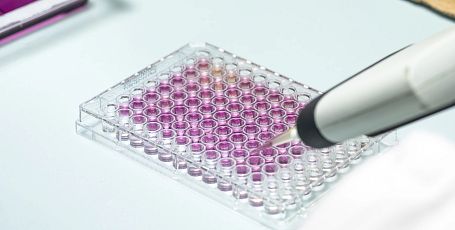
Cell-based protein arrays are an in vitro method that can weed out poor-performing drug candidates, including mAbs, early on. Cellular microarrays are slides coated with DNA sequences and cells, which allow the overexpression and representation of thousands of specific proteins in vitro, to test the binding characteristics of drugs under development. Until recently, these synthetic DNA protein libraries encoded just human proteins, but recently Charles River’s Retrogenix® business launched the first-ever complementary DNA (cDNA) library of 200 non-human proteins.
Cell-based protein arrays act as a complement and in some cases an alternative to tissue cross-reactivity (TCR) assays, which have been the gold standard for this type of analysis for more than 10 years. TCR assays determine whether a drug article can bind to various human or animal tissues. Cell-based protein arrays are very good at identifying which protein a drug is binding to, while the TCR assay is better at answering where the drug is binding, i.e., which tissues or at which locations.
Some tests used on small molecule drugs are just not needed for testing mAbs. The toxicology of mAbs is already limited relative to small molecule drugs internationally, as explained in the ICH S6 guidelines. Carcinogenicity tests may be waived in some mAb studies, and specific reproductive toxicology tests can also be delayed. Additionally, FDA and sponsors can negotiate around issues like immunogenicity of human protein in animals that often arise, but may not mask the toxic signal.
Also, the hERG and cardiac repolarization assays are not needed in mAb tests because large, targeted proteins have a low likelihood of direct cardiac ion channel interactions. Genotoxicity studies are also not required for mAbs because they are not expected to enter cells and directly interact with DNA, making them unlikely to cause genotoxic effects.
If animals are reduced or phased out in the testing of mAbs, are there validated and available or soon-to-be-available New Approach Methodologies (NAMS) that can replace animals, such as in silico modeling, in vitro tests, or 3D models like organoids or organ chips?
Findings from the Biosafe paper cited above show that NAMS have been used for regulatory filings for several years, generally for mAbs. New NAMs are constantly being developed and tested in the biomedical research sector, including at Charles River, which last year launched the Alternative Methods Advancement Project (AMAP).
Significant advances have been made in the application of NAMS for the testing of chemicals and cosmetics, and regulatory agencies have emphasized the development and use of NAMS in drug development.
In a survey conducted by the BIO NAMs Task Force across 27 pharmaceutical companies, at least 50% indicated that they have used in silico, human in vitro/ex vivo models, humanized or genetically modified animals, or surrogate molecules in rodents, with in silico and human in vitro/ex vivo approaches most often used. However, many companies surveyed said they seek pre-filing advice from one or more health authorities to reduce regulatory uncertainty. Survey respondents said a potential lack of global regulatory acceptance plays a significant role in whether they are willing to use NAMs to replace animal studies. The NAMS Task Force concluded that while it is encouraging that regulatory agencies are developing roadmaps for policy development on NAMS, global harmonization, such as regulatory standards via the ICH, will be critical for NAM adoption.
To what extent NAMS can be used when the target or pharmacology is unknown—for instance, for first-in-class drugs—remains to be seen. But it is important to remember that the future of NAMS is getting brighter by the day. There will always be new developments and new refinements that make NAMS more useful in expanded areas of drug development. The realistic end state is a hybrid whereby human NAMs-based data will be used to augment reduced in vivo studies, and with weight of evidence arguments to position a therapeutic as safe for first-in-human studies.