
Featured News
Q&A: Insights into Creating an Effective Drug Development Strategy
Getting new medicines and vaccines to the clinic quickly is crucial and having expert advice and support can save you time and money. Charles River recently conducted an on-site Lunch and Learn session courtesy of UCLA’s Magnify incubator facility, where Scientific Advisory Services (SAS) Director Samuel Chuang offered expert insights to the members of the UCLA community on how to best plan and execute their drug development strategies. The article below features participant questions from the Lunch and Learn session.
Overt drug toxicity is one of the three main causes for drugs failing during clinical trials. What are some ways to mitigate this?
Sam: In pharmaceutical research and life sciences, ensuring both the safety and efficacy of compounds is paramount. There are several reasons why some toxicity considerations might be overlooked, and understanding these reasons can help in optimizing drug development processes. Consider the following:
Three Causes for Overlooking Toxicity Considerations:
- Insufficient Preclinical Models: Many toxicity studies rely on animal models, which do not always accurately predict human responses. Differences in metabolism, drug distribution, or target engagement can result in unanticipated toxicities in humans.
- Inadequate Study Design: Sometimes, the experimental design or conditions might not capture potential toxic effects, either because of the dose selection, exposure time, or the specific endpoints chosen.
- Limited Knowledge of Mechanism of Action: For some compounds, especially those targeting pathways, the full mechanism of action may not be completely understood. Unanticipated off-target effects or secondary interactions might lead to unforeseen toxicities.
Likely Areas Where Drugs Fail:
- Liver Toxicity: Hepatotoxicity is a leading cause of drug withdrawal from the market and clinical trial termination. The liver is a primary site for drug metabolism, and damage to it can have severe consequences.
- Cardiac Toxicity: Compounds that affect the heart’s electrical activity (e.g., QT interval prolongation or cardiac function) can pose significant risks.
- Off-Target Effects: Unintended interactions can lead to various unexpected adverse effects.
And one of the key recommendations that I would share, regardless of what indication or therapeutic area that you are researching, is to think about the patient first and work backwards.”
Understanding Toxicity:
- Improved Models: Developing and utilizing advanced in vitro systems such as organ-on-a-chip or 3D cell cultures, and better in silico (computational) methods can provide early insight into human responses. These approaches are important elements of our continued commitment to developing alternative approaches to conventional animal-based toxicity testing, underscoring our dedication to the 3R's (Replacement, Reduction, and Refinement).
- Enhanced Pharmacokinetic and Pharmacodynamic Studies: Understanding how the drug is processed within the body (metabolism, distribution) and its effects can help predict and mitigate toxicity through identification of optimal dosing regimens.
- Safety Pharmacology: Prioritizing these studies can help identify potential risks before advancing a compound to later stages of development.
- Toxicogenomics: This approach studies the relationship between genomes and adverse effects, helping identify potential toxicity risks earlier in drug development.
It is crucial to address potential toxicities early in drug development, as it can save time resources and most importantly ensure patient safety.”
What are some considerations that are commonly overlooked that become costly for companies?
Sam: What is often overlooked or not understood well is the risk of failure. Developing early on a Target Product Profile (TPP) and risk management plan can help. Also having the appropriate expertise and working with people that really understand drug development can help to anticipate and mitigate risk factors.
I would like to draw attention to how you view your Contract Research Organization (CRO). Please consider how you view your CRO relationships and contrast it with what you could expect from your interactions with them. First, I should state that there are many ways to interact with a CRO, and there will be situations or stages of development that will dictate these interactions. However, when there is opportunity, one should really consider how your program could materially benefit from a closer relationship with your CRO. One could view them as service providers, contracting each for individual needed services. Working with a myriad of service providers that all perform different activities can put a lot of work on the Sponsor. For example, each of these companies you interact with will need a Confidentiality and Disclosure Agreement (CDA) in place, and then each will also need a Master Service Agreement (MSA) in place. Then factor in your study-specific contracts, and you have a lot of paperwork to manage. As data comes in from one provider, this may influence the other activities and work. The Sponsor will have to be the master controller of all this information flowing in and out. Delays from one provider can cause a ripple effect leading to further delays with other providers. As one can see, with there being so many variables, you as the Sponsor will have to try to control.
By contrast, one could have a closer relationship with a CRO, viewing them as a partner and/or an extension of your drug development team. Working with an experienced CRO with a deep breadth of services will provide an integrated team overseeing various disciplines and services, all working together to ensure that essential information is shared simultaneously and seamlessly. This helps to create solutions and mitigate risk and delays for the hiccups that inevitably arise during the course of a drug development program. A holistic and partnership-driven relationship with a CRO from the start goes a long way toward heading off many of these costly missteps that frequently arise.
An integrated CRO that is an extension of your project team has a vested interest in the success of your program and will work cohesively with you to create solutions.”
What is a bacterial reverse mutation assay?
Sam: A bacterial reverse mutation assay, commonly known as the Ames test, is a method used to evaluate the mutagenic potential of chemical compounds. Here is a brief overview:
- Principle: The assay determines if a chemical can cause mutations in the DNA of bacteria. It is called a reverse mutation assay because it tests whether a chemical can cause back mutations that allow mutant bacteria to revert to a wild type form.
- Bacteria used: The test typically employs strains of the bacterium salmonella typhimurium that are defective in their ability to synthesize the amino acid histidine. These mutants cannot grow in histidine-free media unless they undergo a reverse mutation.
- Procedure:
- The bacterial strains are exposed to different concentrations of the test chemical
- After exposure, the bacteria are plated on a medium lacking histidine
- If the chemical is mutagenic, it will cause reverse mutations, enabling the bacteria to synthesize histidine again and grow on the histidine-free medium
- Results Interpretation: The number of colonies (bacterial growth) on the histidine-free medium indicates the mutagenic potential of the chemical. An increase in colonies, compared to a control, suggests the chemical has mutagenic properties.
- Relevance: The Ames test is widely used because of its simplicity, speed, and low cost. Though it's a bacterial test, the results can provide initial insights into the mutagenic potential of chemicals and higher organisms, including humans. This test can also be utilized as an early screening criterion when selecting a candidate for drug development.
- Limitations: As with any test there are limitations. Not all mutagenic chemicals will be detected in the Ames test and not all positive results necessarily translate to mutagenicity in mammals. Additional tests, including in mammalian cells (i.e., in vitro micronucleus assay) or in vivo (i.e., in vivo micronucleus assay), are often needed for a comprehensive assessment [see the ICH (International Conference on Harmonization) harmonized tripartite guideline- Guidance on Genotoxicity Testing and Data Interpretation for pharmaceuticals intended for human use ICH-S2(R1)].
What is an Interact Meeting?
Sam: In the context of biopharmaceuticals and life sciences research, an INTERACT (INitial Targeted Engagement for Regulatory Advice on CBER (Center for Biologics Evaluation and Research) producTs) meeting refers to a specific type of meeting with the U.S. Food and Drug Administration (FDA) before an IND submission. An INTERACT meeting allows sponsors (e.g., pharmaceutical companies or researchers) to engage in very early non-binding discussions with the FDA about innovative investigational biological products that could potentially be used in future regulatory submissions. These meetings are especially useful for novel concepts or technologies that do not fit neatly into existing regulatory paradigms. By facilitating these early interactions, the FDA aims to foster innovation and streamline the development of safe and effective medical products and will provide early feedback on major facets in the development of innovative products, which often face unique challenges including unknown safety profiles, complex manufacturing processes, inclusion of innovative devices and/or the use of cutting-edge testing methodologies.
When appropriate, this is something you do as early as possible when you want that early regulatory feedback to help define the strategy.”
About Dr. Chuang
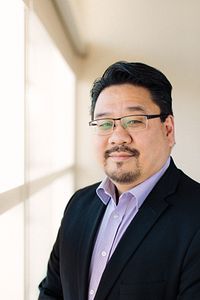
An experienced scientist, Sam Chuang, PhD collaborates with pharmaceutical and biotechnology companies worldwide, advising on drug development programs, study designs, monitoring nonclinical regulatory packages and leading multidisciplinary teams in his role as the Director of Charles River’s Scientific Advisory Services (SAS). Dr. Chuang has over 25 years of academic, biotechnology, and preclinical CRO experience and over 20 years of experience in drug development.
If you would like to find out how we can help you with your drug development needs, please contact us.