Recognizing the Need for Shared Responsibility
Endotoxin testing intersects with real environmental impact, through animal use, reagent sourcing, and plastic waste. As expectations rise across the industry, labs and suppliers share the responsibility to reduce that footprint.
Designed with sustainability in mind, our solutions help labs conserve resources without sacrificing safety or efficiency. From recombinant reagents to cartridge-based testing and recycling programs, we help you bolster a responsible future.
-
The 3Rs: Replace, Reduce, Refine
The 3Rs framework, Replacement, Reduction, and Refinement, has guided ethical animal research for over 50 years. In bacterial endotoxin testing, the 3Rs help drive a shift toward more sustainable, animal-free methods. Scientific advancements now make it possible to reduce or eliminate animal use while maintaining regulatory compliance and operational reliability. Across the industry, organizations are actively pursuing these alternatives to strengthen their sustainability commitments.
The 3Rs in Practice
- Replace: Endosafe® Trillium™, a recombinant cascade reagent (rCR), eliminates the need for horseshoe crab raw material or any animal-derived components in endotoxin detection.
- Reduce: Endosafe® LAL cartridge technology uses 95% less horseshoe crab raw material than traditional plate-based assays, minimizing ecological impact while maintaining regulatory compliance.
- Refine: Even where Limulus Amebocyte Lysate (LAL) remains necessary, ongoing improvements to manufacturing and release processes are evaluated and implemented to enhance quality, strengthen the portfolio, and support sustainability across legacy workflows.
Our Cartridges can now be Recycled with TerraCycle®
Single-use plastics are a persistent challenge in quality control labs. Even with sustainable testing methods, cartridges, pipette tips, and packaging often end up as regulated waste, despite posing minimal biological risk.
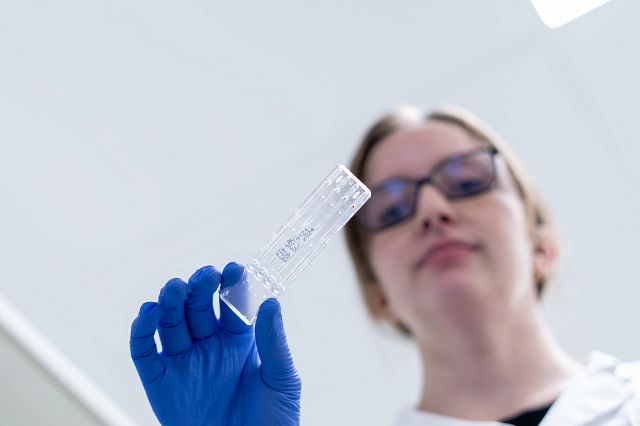
To help address this issue, we have partnered with TerraCycle to launch a recycling program for Endosafe® cartridges used in routine water testing. This program allows participating labs to recycle used cartridges, reducing landfill waste and support a circular economy.
How it works:
- Eligible labs receive a Zero Waste Box™. Participation limits may apply.
- Used water-testing cartridges are collected on-site
- Full boxes are returned to TerraCycle and processed into raw materials
- New boxes are shipped automatically for continued collection
This program helps labs meet sustainability goals without altering validated workflows. Cartridge testing already reduces horseshoe crab raw material use by over 95%, now it also supports plastic recovery.
Available in: Contiguous United States, United Kingdom, Ireland, France, Germany, Belgium, Netherlands, Spain, and Switzerland.
Join the cartridge recycling beta by emailing [email protected]
Our cartridge recycling program works to address this challenge by offering a path to recycle these cartridges, reduce waste, and ultimately support labs seeking to align their testing workflows and supply chains with sustainability goals.”
Matthew Hewitt, PhD, Vice President and Chief Technical Officer, Manufacturing Business Division, Charles River
Through this partnership with Charles River, we’re providing a practical way to recycle a high-volume lab consumable that would otherwise be destroyed. By integrating resource recovery into lab operations, we’re making it easier for science to align with sustainability.”
Tom Szaky, Founder and CEO of TerraCycle
Endosafe® Cartridges Reduce Crude Use by Design
Labs looking to reduce their reliance on traditional LAL methods have an alternative that’s already compendial, FDA-licensed, and broadly adopted: cartridge technology.
Endosafe LAL cartridges use over 95% less raw material from the Atlantic horseshoe crab than traditional plate-based LAL assays. By integrating all assay components into a single-use cartridge, the system reduces the need for manual pipetting, glassware, reagent preparation, and training, resulting in faster turnaround times and significantly lower material waste.
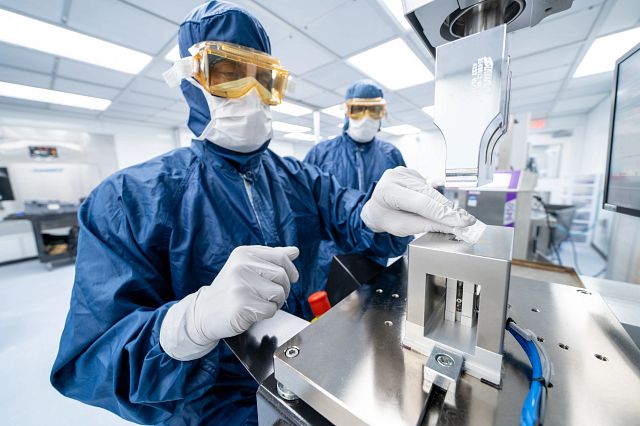
For over 20 years, cartridge-based endotoxin testing has helped labs meet regulatory requirements while operating more efficiently and sustainably. As sustainability expectations grow across the life sciences industry, replacing outdated LAL formats with cartridge-based systems is one of the most practical ways labs can reduce impact without changing workflows.
Explore the advantages of cartridge testing
Regulatory Clarity for Recombinant Testing Has Arrived
For years, labs faced regulatory uncertainty around non-animal-derived reagents for bacterial endotoxin testing. Without clear guidelines, many were hesitant to adopt recombinant options, even when sustainability and operational benefits were clear.
That changed with the implementation of USP Chapter <86> in 2025. The new chapter outlines how recombinant reagents like recombinant cascade reagent (rCR) and recombinant Factor C (rFC) can be used to meet bacterial endotoxin testing requirements. It complements existing LAL standards under USP <85>, giving labs a path forward without sacrificing compliance.
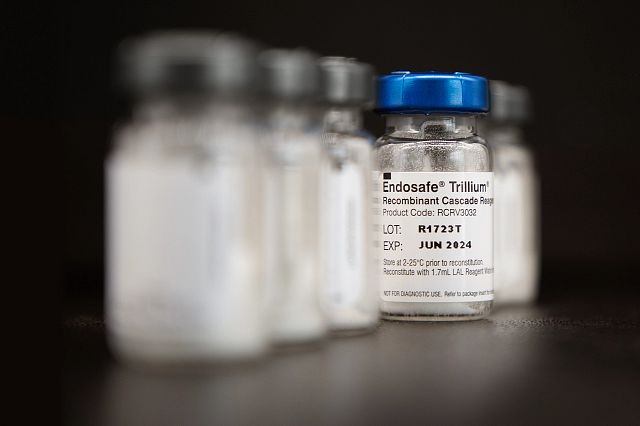
In response, we developed Endosafe Trillium, an animal-free, recombinant cascade reagent that replicates the full LAL enzymatic pathway (Factor C, Factor B, and proclotting enzyme). Trillium is available in two formats:
-
Trillium™ Reagents for Plate-Based Assays
For labs using kinetic chromogenic plate-based workflows, Trillium offers a validated alternative to traditional LAL.
Key benefits:
- Equivalent sensitivity and specificity to LAL
- Reduced risk of 1,3-β-D-glucan false positives
- Compatible with existing plate readers and accessories
- No animal-derived components
-
Trillium™ Cartridges for Faster Recombinant Testing
For labs seeking speed, simplicity, and sustainability, Trillium is also available in a cartridge format. This allows teams to adopt recombinant testing within the familiar Endosafe platform, without retraining or process changes.
Key benefits:
- Results in ~15 minutes
- Pre-loaded with Trillium reagents for consistent performance
- Minimal manual preparation
- Seamless compatibility with Endosafe instruments
- Supports USP <86> compliance and 3Rs goals

Validate Recombinant Testing with Endosafe® Support
Demonstrating that recombinant methods meet regulatory standards for LAL equivalency can feel complex and resource-intensive. Endosafe® streamlines the process with ready-to-use protocols, equivalency data, interference screen testing, and expert support throughout implementation.
Get validation guidance
Continued Commitment to Horseshoe Crab Conservation
For more than 40 years, the blood of the Atlantic horseshoe crab has been essential to bacterial endotoxin testing. Sustainable alternatives are now available and increasingly expected.
Cartridge-based testing methods and recombinant technologies reduce the volume of horseshoe crab–derived materials used in quality control workflows. These solutions help labs meet conservation goals, minimize raw material use, and align with the 3Rs framework guiding ethical scientific practices.
We remain committed to reducing horseshoe crab use through continuous product development, scientific validation, and regulatory engagement. Whether through cartridges or recombinant solutions, the goal is the same: protect patient safety while advancing environmental responsibility.