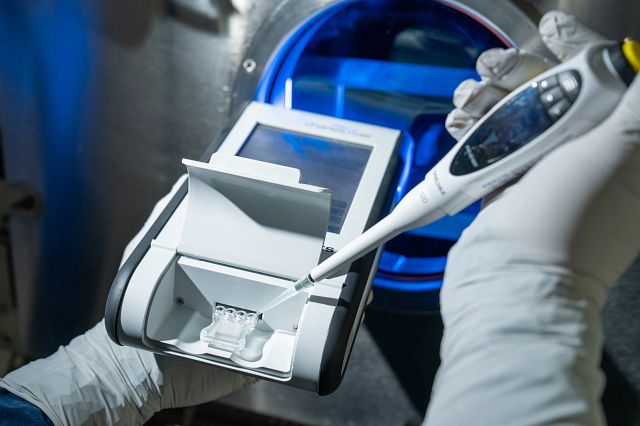
Traditional Endotoxin Testing Methods Delay Water System and Product Compliance
Many sterile processing departments still rely on traditional bacterial endotoxin test methods developed over 40 years ago such as plate-based and gel-clot formats which require long turnaround times, extensive manual steps, and skilled analysts in centralized labs. This approach is no longer practical with the publication of new water quality standards, like ANSI/AAMI ST108:2023. The guidance outlines monthly endotoxin testing at selected points in critical water systems, especially those used in sterile processing.
Endosafe® cartridge technology supports this shift, delivering accurate, quantitative results at the point of sample without adding complexity to your workflow.
Case Study: Which Endotoxin Testing Method Best Fits Your Critical Water Workflow?
Cartridge or microplate? This case study shows how one contract lab compared both methods on 120 spiked water samples under ANSI AAMI ST108. Quantitative results reveal which platform reduced hands-on time, cut material waste, and maintained validation acceptance criteria for critical water systems.
Access Case Study
Modernizing Bacterial Endotoxin Testing SOPs with Cartridge Technology
The move toward routine, point-of-use, and high-throughput endotoxin testing requires faster tools that are easier to train on and are more flexible than traditional BET methods. Since receiving its FDA license in 2006, Endosafe cartridges have been widely adopted as a kinetic chromogenic method aligned with USP <85>, and Ph. Eur. 2.6.14.
-
The Industry Standard for Water BET
- Get quantitative results in 15 minutes: Run tests at the sampling point and eliminate delays in shipping samples to a central or contract lab.
- Simplify your BET SOP: Use cartridges for direct water sampling and align with regulatory expectations like ST108 without building a new test program from the ground up.
- Train in hours, not days: The intuitive workflow reduces training curves. Even non-laboratory staff can run tests reliably after minimal hands-on time.
- Standardized for accuracy: Cartridges minimize human error. Fewer steps mean fewer variables, reducing the risk of contamination, inconsistent technique, or result in misinterpretation.
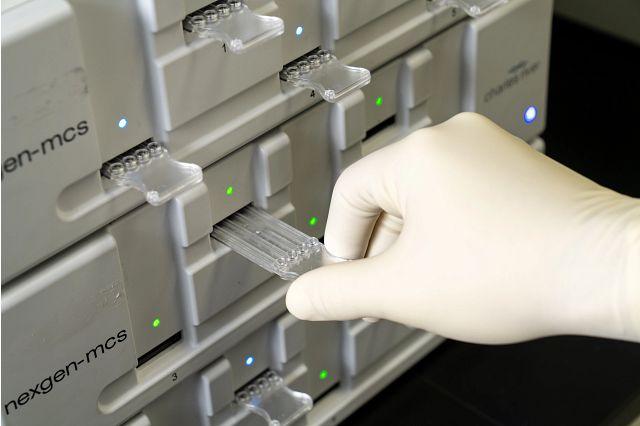
- Flexible on-demand testing: Use the Portable Testing System (PTS) for point-of-use sampling or the Multi-Cartridge System (MCS) for higher-throughput environments like reprocessing centers or testing laboratories.
- Automated, secured reporting: Document digital, time-stamped results at required selected points to support audits and internal reviews aligned with FDA 21 CFR Part 11 standards.
- Access expert technical support: Our technical services team offers guidance and troubleshooting across all testing stages, from method setup to data review, to maintain program efficiency and regulatory compliance.
Applications for Cartridge Technology in Endotoxin Water Testing
-
Medical Device Reprocessors
The newly introduced ANSI/AAMI ST108 water quality standard formalizes requirements for monthly water testing for bacterial endotoxins at selected points, minimizing the risk of infections and ensuring that medical devices function as intended. Most reprocessors have internal labs, water system oversight, and strong infection control practices in place, but readiness doesn’t always mean efficiency.
When water samples must be tested off-site, delays create inefficiencies and potential human error risks. These centers often rely on central lab-based bacterial endotoxin test protocols using traditional plate-based and gel-clot endotoxin testing methods. A water failure identified 24 hours after rinsing means the entire batch must be reprocessed, wasting time, labor, and consumables.
Endosafe cartridge technology modernizes bacterial endotoxin testing for medical devices without rebuilding operations. The Multi-Cartridge System (MCS) instrument allows labs to run up to five water samples in parallel and deliver validated, quantitative results in about 15 minutes. This enables routine selected testing with minimal delay and fits within existing lab workflows. It also simplifies staff training and reduces interpretation errors with built-in data handling.
For medical device reprocessors already performing some testing, the shift isn’t about introducing a new compliance step, it’s about modernizing and evolving your current procedure to save time, resources, and reduce cost.
Reprocessor benefits:
- Align with ST108 without slowing down: Perform routine monthly tests at required sampling points and comply with industry standards without disrupting lab throughput.
- Prevent costly reprocessing events: Early results allow intervention before contaminated water affects devices.
- Increase testing efficiency: Run multiple samples simultaneously and get digital, quantitative results in minutes.
- Reduce training burdens: Cartridges simplify the workflow, reducing complexity and keeping quality consistent even with staffing changes.
- Streamline documentation: Built-in data handling and digital reporting support audits and traceability
-
Water Management Companies
Endotoxin testing in healthcare water systems is becoming a growing responsibility for water management providers, but many may not yet be equipped to offer it. Teams may already monitor chemical parameters and microbial counts, but traditional endotoxin testing has not typically been part of standard service models, until now.
ANSI/AAMI ST108 introduces clear monthly requirements for water testing for bacterial endotoxins at the selected points of any critical water system used in sterile processing. Hospitals are beginning to expect their water vendors to meet these expectations—not just install or maintain systems but validate them. Teams that resist change risk falling behind, while those that adapt gain a competitive edge. The real hurdle lies in execution.
When companies send technicians to multiple hospitals per day, they need compact, easy-to-use equipment that can produce fast, reliable results. The Endosafe® PTS is designed for this. Technicians can carry it alongside their existing service equipment, collect a sample, and run a test on-site, getting results in about 15 minutes. The result is better client service, faster remediation when issues arise, and the ability to position your company as a full-service water validation partner.
Benefits for water management companies:
- Add BET to your service offering: Meet new client expectations and differentiate yourself as a full-service validation partner.
- Field-ready testing in about 15 minutes: The PTS fits into your existing toolset and delivers results on-site, no additional lab required.
- Minimal training required: Technicians can be onboarded quickly with a simple workflow that removes complex prep and interpretation.
- Improve client response times: Real-time results allow immediate remediation if contamination is detected, reducing risk for both parties.
- Stay competitive in a changing market: With hospitals increasingly requiring endotoxin testing, providers who can deliver will secure the business and those who can’t, risk being left behind.
-
Hospitals
Hospitals face increasing pressure to comply with new industry standards like ANSI AAMI ST108, but most aren’t equipped to regularly test their water systems for endotoxins. Many still rely on third parties to maintain their water systems and rarely conduct endotoxin testing in-house. Even when sterile processing is managed internally, testing is often treated as a one-time qualification instead of a monthly requirement.
ANSI AAMI ST108 changes that. The guidance calls for water testing for bacterial endotoxins every month at critical points, especially in systems used to rinse surgical instruments and semi-critical devices. The standard mandates a monthly endotoxin limit of <10 EU/mL and requires testing at every point of use. Hospitals are now realizing that their systems may not meet this standard, especially if they’ve relied on utility qater or unclassified sources in the past. Accreditation bodies are expected to use this as a benchmark for best practice. However, implementation isn’t simple.
Many hospitals lack dedicated QC analysts, have tight budgets, limited space, and use antiquated traditional test systems. That’s where Endosafe cartridge technology comes in.
The Portable Testing System (PTS) and cartridge format allow testing at the sampling point in about 15 minutes. There is no need for a full lab or complex preparation, and staff in sterile processing can be trained quickly and confidently operate the system.
Benefits for hospitals:
- Support ST108 compliance: Easily run tests at selected points and capture time-stamped results for audit readiness.
- Operates in tight spaces: The handheld PTS device works at the point of use without requiring a lab or extra bench space.
- Enable staff without QC experience: Cartridges are self-contained and automated, reducing training time and enabling sterile processing staff to test independently.
- Eliminate outsourcing delays: Get results in about 15 minutes without waiting for an external lab to respond.
- Protect patients and avoid reprocessing events: Early detection of endotoxin risks helps prevent contamination and downstream issues.
Validated, Compliant, and Aligned with ANSI AAMI ST108 2023
Cartridge-based testing is a recognized bacterial endotoxin test method for critical water that, when properly validated, aligns with USP, Ph. Eur., and AAMI guidelines. Our system includes full documentation to support regulatory acceptance and user-friendly tools that make it easy to implement in your lab or facility.
Get the Endosafe Cartridge Technology Brochure
See how cartridge-based endotoxin testing methods can help your facility adhere to AAMI ST108, reduce downtime, and streamline water quality monitoring.
Download the Brochure
Whether your team is updating its bacterial endotoxin test SOP, responding to new industry standards like ST108, or preparing for an audit, Endosafe cartridge technology offers a faster, more flexible solution with proven results.
Frequently Asked Questions(FAQs) About Water Testing for Bacterial Endotoxins
-
What is a bacterial endotoxin test protocol?
It’s a standardized method to detect endotoxins in water or product samples. Endosafe cartridge systems simplify this protocol with self-contained tests that require minimal setup and produce results in about 15 minutes.
-
How are endotoxins tested for in water?
Endotoxins are typically detected using LAL and recombinant assays. Cartridge-based testing automates this process at the sampling point, reducing complexity and speeding up decision-making.
-
Which water types require endotoxin testing?
Any critical water used in sterile processing or for rinsing surgical instruments needs routine endotoxin testing, especially under ST108.
-
What is ANSI/AAMI ST108:2023?
ST108 is a guidance document requiring monthly water quality monitoring, including endotoxin testing at selected points in systems used for sterile processing.
-
What are common endotoxin testing methods?
Traditional methods include gel-clot and kinetic chromogenic LAL tests. Endosafe cartridges use a chromogenic method in an automated format with faster turnaround.
-
What’s the benefit of cartridge-based testing for hospitals?
Hospitals can run tests on-site without needing QC analysts or large lab setups, helping them meet ST108 without overhauling their infrastructure.