
Sprague Dawley Rats (CD® IGS) Details
Known for their calm demeanor, adaptability, and genetic reliability, the Sprague Dawley (SD) rat has become indispensable for advancing our understanding of human health and disease. From pharmacology to cancer research, SD rats play a crucial role in helping scientists answer complex questions.
Our Sprague Dawley rat, the caesarean-derived (CD) IGS rat, originated in 1925 by Robert W. Dawley from a hybrid hooded male and a female Wistar rat. This rat was given to Charles River in 1950 by Sprague Dawley, Inc. In 1991, eight colonies were selected to form the IGS foundation colony. The Sprague Dawley rat was rederived into an isolator foundation colony in 1997.
IGS refers to animals bred using the Charles River International Genetic Standardization Program, including the Crl:CD(SD) rat. The IGS program is a management system used to minimize inbreeding and manage random genetic drift that would otherwise lead to colony divergence among colonies bred in different locations worldwide. The IGS program is validated by direct genetic analysis of animals from the foundation colony and the barrier rooms.
Note: We also offer the CD® (SD) IGS SOPF Rat, which is bred in France.
LOCATION: Kingston
UNIT: K90
Download the Report
LOCATION: Kingston
UNIT: K98
Download the Report
LOCATION: Raleigh
UNIT: R06
Download the Report
LOCATION: Raleigh
UNIT: R08
Download the Report
LOCATION: Hollister
UNIT: H41
Download the Report
➤ DOWNLOAD OUR CATALOG for instant access to Standard List Pricing
➤ TALK TO US to discuss organization or volume-based discounts
Already have an eCommerce portal account?* Login to order research models, obtain quotes, view organization-specific pricing, and see inventory. Processing time required to validate new eCommerce access requests.
*eCommerce is available in US, Canada, UK, France, Germany, Austria, Netherlands, Denmark, Finland, Norway, Sweden, Spain, Portugal, Belgium, Luxembourg, and Switzerland
Try out this model with our animal evaluation program (North America)
Try out this model with our animal evaluation program (Europe)
Sprague Dawley Rats (CD® IGS) Details
Known for their calm demeanor, adaptability, and genetic reliability, the Sprague Dawley (SD) rat has become indispensable for advancing our understanding of human health and disease. From pharmacology to cancer research, SD rats play a crucial role in helping scientists answer complex questions.
Our Sprague Dawley rat, the caesarean-derived (CD) IGS rat, originated in 1925 by Robert W. Dawley from a hybrid hooded male and a female Wistar rat. This rat was given to Charles River in 1950 by Sprague Dawley, Inc. In 1991, eight colonies were selected to form the IGS foundation colony. The Sprague Dawley rat was rederived into an isolator foundation colony in 1997.
IGS refers to animals bred using the Charles River International Genetic Standardization Program, including the Crl:CD(SD) rat. The IGS program is a management system used to minimize inbreeding and manage random genetic drift that would otherwise lead to colony divergence among colonies bred in different locations worldwide. The IGS program is validated by direct genetic analysis of animals from the foundation colony and the barrier rooms.
Note: We also offer the CD® (SD) IGS SOPF Rat, which is bred in France.

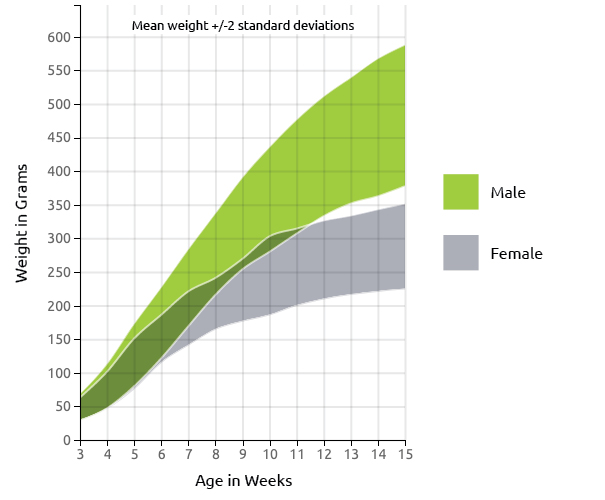
Growth chart data should be used as a guideline only.
The shaded areas on each chart are the mean weight plus or minus one standard deviation at a given age averaged across all production facilities. This represents approximately 67% of the population, with the remaining 33% falling outside of this weight range.
UNIT: A03
Download the Report
➤ DOWNLOAD OUR CATALOG for instant access to Standard List Pricing
➤ TALK TO US to discuss organization or volume-based discounts
Already have an eCommerce portal account?* Login to order research models, obtain quotes, view organization-specific pricing, and see inventory. Processing time required to validate new eCommerce access requests.
*eCommerce is available in US, Canada, UK, France, Germany, Austria, Netherlands, Denmark, Finland, Norway, Sweden, Spain, Portugal, Belgium, Luxembourg, and Switzerland
Try out this model with our animal evaluation program (North America)
Try out this model with our animal evaluation program (Europe)
Sprague Dawley Rats (CD® IGS) Details
Known for their calm demeanor, adaptability, and genetic reliability, the Sprague Dawley (SD) rat has become indispensable for advancing our understanding of human health and disease. From pharmacology to cancer research, SD rats play a crucial role in helping scientists answer complex questions.
Our Sprague Dawley rat, the caesarean-derived (CD) IGS rat, originated in 1925 by Robert W. Dawley from a hybrid hooded male and a female Wistar rat. This rat was given to Charles River in 1950 by Sprague Dawley, Inc. In 1991, eight colonies were selected to form the IGS foundation colony. The Sprague Dawley rat was rederived into an isolator foundation colony in 1997.
IGS refers to animals bred using the Charles River International Genetic Standardization Program, including the Crl:CD(SD) rat. The IGS program is a management system used to minimize inbreeding and manage random genetic drift that would otherwise lead to colony divergence among colonies bred in different locations worldwide. The IGS program is validated by direct genetic analysis of animals from the foundation colony and the barrier rooms.
Note: We also offer the CD® (SD) IGS SOPF Rat, which is bred in France.

Growth chart data should be used as a guideline only.
The shaded areas on each chart are the mean weight plus or minus one standard deviation at a given age averaged across all production facilities. This represents approximately 67% of the population, with the remaining 33% falling outside of this weight range.
UNIT: 1
Download the Report
➤ DOWNLOAD OUR CATALOG for instant access to Standard List Pricing
➤ TALK TO US to discuss organization or volume-based discounts
Already have an eCommerce portal account?* Login to order research models, obtain quotes, view organization-specific pricing, and see inventory. Processing time required to validate new eCommerce access requests.
*eCommerce is available in US, Canada, UK, France, Germany, Austria, Netherlands, Denmark, Finland, Norway, Sweden, Spain, Portugal, Belgium, Luxembourg, and Switzerland
Try out this model with our animal evaluation program (North America)
Try out this model with our animal evaluation program (Europe)
Sprague Dawley Rats (CD® IGS) Details
Known for their calm demeanor, adaptability, and genetic reliability, the Sprague Dawley (SD) rat has become indispensable for advancing our understanding of human health and disease. From pharmacology to cancer research, SD rats play a crucial role in helping scientists answer complex questions.
Our Sprague Dawley rat, the caesarean-derived (CD) IGS rat, originated in 1925 by Robert W. Dawley from a hybrid hooded male and a female Wistar rat. This rat was given to Charles River in 1950 by Sprague Dawley, Inc. In 1991, eight colonies were selected to form the IGS foundation colony. The Sprague Dawley rat was rederived into an isolator foundation colony in 1997.
IGS refers to animals bred using the Charles River International Genetic Standardization Program, including the Crl:CD(SD) rat. The IGS program is a management system used to minimize inbreeding and manage random genetic drift that would otherwise lead to colony divergence among colonies bred in different locations worldwide. The IGS program is validated by direct genetic analysis of animals from the foundation colony and the barrier rooms.
Note: We also offer the CD® (SD) IGS SOPF Rat, which is bred in France.
%20IGS%20Rat.jpg.png)
Please email us at [email protected] to request a health report for this model. For additional information on this animal model, please visit the CD® (SD) IGS rat page on the Vital River Laboratories website.
For additional information, including pricing details, please visit the CD® (SD) IGS rat page on the Vital River Laboratories website.
Try out this model with our animal evaluation program (North America)
Try out this model with our animal evaluation program (Europe)
Sprague Dawley Rats (CD® IGS) Details
Known for their calm demeanor, adaptability, and genetic reliability, the Sprague Dawley (SD) rat has become indispensable for advancing our understanding of human health and disease. From pharmacology to cancer research, SD rats play a crucial role in helping scientists answer complex questions.
Our Sprague Dawley rat, the caesarean-derived (CD) IGS rat, originated in 1925 by Robert W. Dawley from a hybrid hooded male and a female Wistar rat. This rat was given to Charles River in 1950 by Sprague Dawley, Inc. In 1991, eight colonies were selected to form the IGS foundation colony. The Sprague Dawley rat was rederived into an isolator foundation colony in 1997.
IGS refers to animals bred using the Charles River International Genetic Standardization Program, including the Crl:CD(SD) rat. The IGS program is a management system used to minimize inbreeding and manage random genetic drift that would otherwise lead to colony divergence among colonies bred in different locations worldwide. The IGS program is validated by direct genetic analysis of animals from the foundation colony and the barrier rooms.
Note: We also offer the CD® (SD) IGS SOPF Rat, which is bred in France.

Growth chart data should be used as a guideline only.
The shaded areas on each chart are the mean weight plus or minus one standard deviation at a given age averaged across all production facilities. This represents approximately 67% of the population, with the remaining 33% falling outside of this weight range.
UNIT: B23
Download the Report
➤ DOWNLOAD OUR CATALOG for instant access to Standard List Pricing
➤ TALK TO US to discuss organization or volume-based discounts
Already have an eCommerce portal account?* Login to order research models, obtain quotes, view organization-specific pricing, and see inventory. Processing time required to validate new eCommerce access requests.
*eCommerce is available in US, Canada, UK, France, Germany, Austria, Netherlands, Denmark, Finland, Norway, Sweden, Spain, Portugal, Belgium, Luxembourg, and Switzerland
Try out this model with our animal evaluation program (North America)
Try out this model with our animal evaluation program (Europe)
GUIDEBOOK
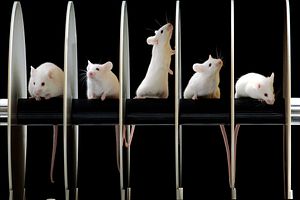
Rodent Model Genetic Quality Control
Learn the essentials of genetic QC programs: inbred/outbred colony quality control, transgenic rodent model creation, rederivation, and cryopreservation techniques. Download Now
Resources for the CD® IGS (Sprague Dawley) Rat
- Informational Resources
-
Technical Data
- Compilation of Spontaneous Neoplastic Lesions and Survival in Crl:CD® (Sprague Dawley) Rats From Control Groups - March 2013
- Histopathology Findings in 4-26 Week Old Crl:CD® (Sprague Dawley) Rats - March 2012
- Clinical Laboratory Parameters for Crl:CD® (SD) Rats - March 2006
- Compilation of Spontaneous Neoplastic Lesions and Survival in Crl:CD® (SD) Rats from Control Group - March 2004
- Postnatal Growth, Development, and Behavioral/Functional Evaluation Crl:CD® (SD) IGS BR Rats - March 2002
- Compilation of Spontaneous Neoplastic Lesions and Survival in Crl:CD® (SD) BR Rats from Control Groups - March 2001
- The Development and Maintenance of the Crl:CD® (SD) IGS BR Rat Breeding System - 1998
- Spontaneous Neoplastic Lesions and Survival in Crl:CD® (SD) BR Rats Maintained on Dietary Restriction - March 1998
- Historical Control Data (1992-1994) for Developmental and Reproductive Toxicity Studies using the Crl:CD® (SD) BR Rat - March 1996
- Hematology Parameters for the Crl:CD® BR Rat - February 1993
- Serum Chemistry Parameters for the CRL:CD® BR Rat - February 1993
- Spontaneous Neoplastic Lesions and Selected Non-neoplastic Lesions in the Crl:CD® BR Rat - February 1992
- Spontaneous Ophthalmic Lesions in the Crl:CD® BR Rat - February 1991
- Baseline Data
- Scientific Poster
Why are Sprague Dawley Rats Used in Research?
Sprague Dawley rats are valued for their versatility and are used in a wide range of scientific and biomedical research disciplines. Their physiological similarity to humans and predictable genetic traits make them ideal for:
| Drug Development |
|
| Toxicology Studies |
|
| Cancer Research |
|
| Metabolic and Endocrine Disorders |
|
| Behavioral and Neurological Studies |
|
| Developmental Biology |
|
WEBINAR
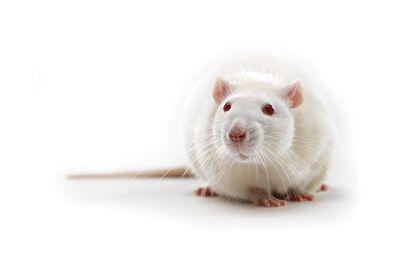
Advancing Preclinical Research with the Rat Model
This presentation will explore how the unique physiological characteristics of rats provide translational value across multiple therapeutic areas, as well as best practices for husbandry that optimize both welfare and experimental reproducibility. Watch Now
Frequently Asked Questions about Sprague Dawley Rats
-
What are the genetic characteristics of Sprague Dawley rats?
Sprague Dawley rats are renowned for their genetic diversity and consistency, which are critical for producing reliable and reproducible experimental results. Key characteristics include:
- Outbred Model: Unlike inbred strains, SD rats maintain a wider genetic variation, making findings more applicable to broader populations.
- Uniform Traits: SD rats exhibit consistent growth rates, size, and reproductive capabilities, making them predictable and reliable test subjects.
- High Adaptability: They thrive in diverse environments, ensuring consistent results across different research conditions.
These genetic traits make SD rats an ideal choice for experiments requiring precise, repeatable outcomes. -
Why are Sprague Dawley rats a preferred outbred rat model?
Several factors make Sprague Dawley rats a favorite among researchers:
- Calm Temperament: Their docile nature makes them easy to handle, reducing stress during experiments and improving accuracy.
- Cost-Effectiveness: They breed efficiently, grow quickly, and are easy to maintain, keeping research costs manageable.
- Reproducibility: With well-documented physiological baselines, researchers can depend on consistent data from study to study (National Centre for the Replacement, Refinement & Reduction of Animals in Research (NC3Rs)).
- Genetic Versatility: Their outbred status ensures a level of genetic diversity that enhances the applicability of research findings. These advantages have cemented Sprague Dawley rats as a go-to model for preclinical research across the globe.
These advantages have cemented Sprague Dawley rats as a go-to model for preclinical research across the globe. -
What are the therapeutic applications of Sprague Dawley rats?
Sprague Dawley rats are integral to therapeutic research due to their physiological similarity to humans. Researchers leverage these traits to:
- Test new therapies for chronic diseases like diabetes and cancer (American Diabetes Association)
- Develop drugs targeting metabolic disorders and neurodegenerative conditions
- Explore the effectiveness of experimental treatments in both acute and long-term studies
Their ability to model human diseases accurately has been instrumental in the development of life-saving medications and innovative therapies.