Genotyping Services for Mice and Rats
Effective rodent colony management depends on rat or mouse genotyping results, not just data. Genotyping that is conducted routinely can help keep colony sizes manageable, aid in selecting animals for study cohorts, and set aside animals for future breeding.
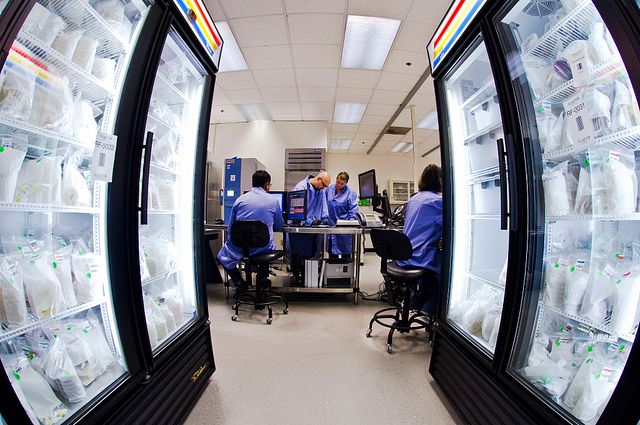
Our high-throughput, multiplatform rat and mouse genotyping laboratory delivers results from sample receipt to the facilitation of more efficient lab animal colony management. Automation of the overall genotyping process enables us to deliver fast turnaround times and makes us readily available to respond to scale up or expedite genotyping requests.
These services are only available in Europe. Regardless of your location, if you would like to speak with a member of our team about genotyping or any other topic, please fill out our contact form.
Highlights of Our Rat and Mouse Genotyping Services
| Service | Importance to Your Transgenic Colonies |
| Zygosity testing for target mutation and transgenics | Testing is critical to transgenic breeding strategies and distinguishes zygosity between homozygous and hemizygous transgenic animals. |
| CRISPR-Cas9*-generated mutations screening | PCR combined with our proprietary assays produce cleaner data and accurately identify founders that carry mutations. |
| Troubleshooting of colony issues | Our rat and mouse genotyping protocols can help troubleshoot any colony issues you may be experiencing. For example, they can help identify transgene segregation and/or instability. |
| Screening of gene targeting in ES cells | Gene targeting screening ensures the presence of the desired mutations in your transgenic animal model. |
| Transgene segregation and instability | Transgene segregation ensures the presence of the desired mutations in your transgenic animal model. |
| Identification of transgenic carriers | Via genotyping mice and rats, we will identify transgenic carriers in order to propagate genes of interest into the next-generation line. |
Guidebook: Rodent Model Genetic Quality Control
Managing a genetically engineered rodent colony is not simple. Get our new guidebook for sound advice on colony management, genetic monitoring, and embryology techniques required to protect your research.
Frequently Asked Questions (FAQs) About Our Rat and Mouse Genotyping Services
-
What kind of samples may I send?
Our automated system is optimized to extract tissue samples (ear, tail, oral swabs, hair, feces, dried tears, or organs (e.g. brain, kidney liver)) for genotyping. Simply collect and send us the tissue. If you wish to genotype any other material or tissue, please contact us via [email protected] to check feasibility.
-
How is the DNA for rat and mouse genotyping stored?
The purified DNA is stored for nine months at no extra cost. If retesting or additional analyses are requested, please submit a new order via LTM™ making reference to the stored DNA and its associated LTM™ order number. In addition, please contact [email protected] with the new order number.
-
Which kinds of mouse genotyping services do you offer?
Our mouse genotyping protocols cover both conventional PCR and conventional PCR genotyping services followed by enzyme digestion, both using capillary gel electrophoresis for the analysis of fragments.
We also provide qPCR zygosity testing (TaqMan® or SYBR® Assay) to discriminate between heterozygous, homozygous and hemizygous genetically modified animals – this analysis is only used for transgene animals to determine the relative copy number. Absolute copy number of transgenes in the genome is also a service we can offer. Small mutations, deletions, insertions, and duplications can be determined by using real time Endpoint Analysis (TaqMan® Assay).
- Could you please provide further information on your submission guidelines?
-
What is the turnaround time for rat, rabbit, or mouse genotyping analysis?
The estimated turnaround time for routine samples is 48 – 72 hours from receipt of samples to submission of results. A turnaround time of 24 hours may be possible without additional cost. Contact us [email protected] to learn more.
-
Are you running traditional gels for rat and mouse PCR genotyping?
PCR fragments are analyzed using our microfluidic PerkinElmer LabChip® GX electrophoresis platform, which is highly sensitive. Compared to traditional gel-based assays, the platform provides additional data (e.g., intensity of allele-specific peaks) that enables highly accurate, automated result interpretation.
Additionally, fragment separation using capillary electrophoresis runs faster and is less susceptible to human errors. The GX software is able to automatically make rat and mouse genotyping calls and transfer result data directly to our Laboratory Testing Management® (LTM™) system.
-
What information is needed for transfer and validation?
When setting up a new assay, please provide:
Conventional PCRRat and mouse genotyping protocol with information on primer sequences Required Expected fragment sizes Required Gel picture/picture of construct Provide if available Control samples Provide if available
Real-time PCRRat and mouse genotyping protocol with information on primer/probe sequences Required hetero-/homozygous controls Required If no rat or mouse genotyping protocol is available, please provide the sequence of interest so that our scientific staff can design appropriate primers. When setting up a new analysis, it is important to use the same sample type at this stage as for subsequent routine samples to ensure comparability of results.
-
What do I have to pay attention to while sampling for rat and mouse genotyping?
Correct handling while sampling is critical in order to avoid contamination:
- Use sterile and sharp tools for biopsy procedure.
- Sanitize the ear puncher and scissors using an appropriate method.
- Clean the ear puncher and scissors between animals to avoid sample contamination.
- Before sampling, make sure the animal's number and sex correspond to those listed on the genotyping request.
- Visually verify that each tube is clean and correctly labeled. There should be only one sample in each tube.
- Select the tissue to be sampled depending on the age of the animal.
- Use standardized sample sizes to reduce the risk of false negative results as a possible result of either increased inhibitors or insufficient template concentration.
- Tail biopsies: 0.3 – 0.5 cm
- Ear biopsies: 0.1 – 0.3 cm
-
How should I store the samples before shipment for genotyping transgenic mice and rats?
Storage at -20 °C is recommended. If samples are to processed within 24 hours of sampling, they may be stored at 4 °C.
-
Can CRISPR* models be tested?
Yes, we offer transgenic mouse genotyping services for animal lines that were modified using CRISPR*, TALEN or ZFNs. We can do the same testing for rat models. If there is no genotyping protocol, a primer design may be offered.
-
Why is genotyping mice important?
An important component of breeding transgenic mice or rats is making sure they have the expected genotype. The genotype for certain mouse genes can be wild-type, homozygous, heterozygous, and occasionally hemizygous (X-linked genes or transgenes). As the genotype influences the phenotype, it is crucial to routinely genotype transgenic mice and rats to detect genetic drift.
-
What is PCR genotyping?
Genotyping PCR is a diagnostic technique in which PCR primers are designed to amplify either a portion of a transgene (in a transgenic rodent) or a mutation (in a mutant mouse or rat). The primers are then used in a reaction containing DNA which can be taken from different animal tissues depending on requirements.
-
How is genotyping mice done?
DNA for mouse genotyping can be obtained in several ways depending on lab practices and the amount of DNA required for the assay. Mouse tail genotyping is among the more popular methods. DNA can also be sampled from ear tissue in animals whose ears have been punched for identification purposes.
-
Do you have further advice on optimizing rat and mouse genotyping protocols?
There are several informative papers on optimizing rat and mouse genotyping protocols, including:
Optimizing PCR for Mouse Genotyping: Recommendations for Reliable, Rapid, Cost Effective, Robust and Adaptable to High-Throughput Genotyping Protocol for Any Type of Mutation Open source Mouse Genotyping Methods Mol Biol. 2018;1752:1-9. doi: 10.1007/978-1-4939-7714-7_1
* CRISPR-CAS9 used under licenses to granted and pending US and international patents from The Broad Institute and ERS Genomics Limited.