Protect the Integrity of Your Science
Your new animal models may seem clean, but integrating them into your vivarium presents substantial risks that can severely undermine your research. Implementing a quarantine is not merely a precaution; it is an essential strategy to protect against pathogens that could devastate a colony and compromise the integrity of your research.
Pathogens such as the mouse hepatitis virus (MHV), mites, and pinworms can spread rapidly and without warning in an environment with shared housing. Once these pathogens establish themselves, they can be difficult to control and costly to eradicate. Even minor infections in animal models can alter how a tumor grows, how the immune system reacts, or how a drug performs.
Quarantining your models helps keep your animals healthy, productive, and available. It isn't just a safety measure; it’s a strategic plan to ensure research integrity, protect unique colonies, and prevent time-sensitive disruptions before contamination occurs.
Who Should Use Animal Quarantine Services?
| Researchers | To avoid data variability and to meet grant standards |
| Vivarium/Facility Managers | To maintain healthy colonies and prevent outbreaks |
| Study Directors | To ensure reproducible data and meet study timelines |
| Colony Managers | To safely introduce new lines and protect colonies |
| IACUC Staff/Animal Welfare Officers | To meet guidelines and maintain ethical standards |
Discuss Your Project / Request a Quote
Our Animal Quarantine Services
Quarantining is the best practice for doing science right – it's an investment in your research results and your animals' health. Collaborators may not be approved for direct shipments, complicating the introduction of new models to your facility. Our quarantine services include a dedicated project manager who will handle and streamline all logistics, most importantly the transfer of strains from collaborators to Charles River GEMS (Genetically Engineered Models and Services) facilities.
Our project managers will also collaborate with receiving institutions to confirm their essential quarantine requirements and ensure seamless delivery once clearance is achieved.
Rapid Quarantine
· 3 weeks
· Up to 10 mice
· PRIA health report
Standard PRIA® Quarantine
· 6 – 12 weeks
· Up to 18 cages per 3-ft. isolator
· Complete health report
Customized Quarantine
Contact us to discuss your testing needs based on your institution’s protocols and exclusion lists.
Rapid Quarantine
Our rapid quarantine testing can go from receipt to shipment in less than three weeks. We use PCR Rodent Infectious Agent (PRIA) testing on up to 10 mice or cages to detect a wide range of rodent pathogens. Upon receipt, we do a body swab and oral swab and collect a fecal pellet for PRIA panel testing. PRIA panel results are detailed in a health report, allowing you to make the decision on whether you can confidently introduce new animals to your colonies.
Upon animal receipt, we immediately sampled for PRIA testing. After two weeks, we PRIA tested again. We did this over 10 years for over 350 cohorts, and there was no health status change between the two tests, offering proof that testing on receipt gets the right answer.”
Christopher Dowdy, PhD, Associate Director, Scientific Development, Research Models & Services, Charles River
Standard PRIA Quarantine
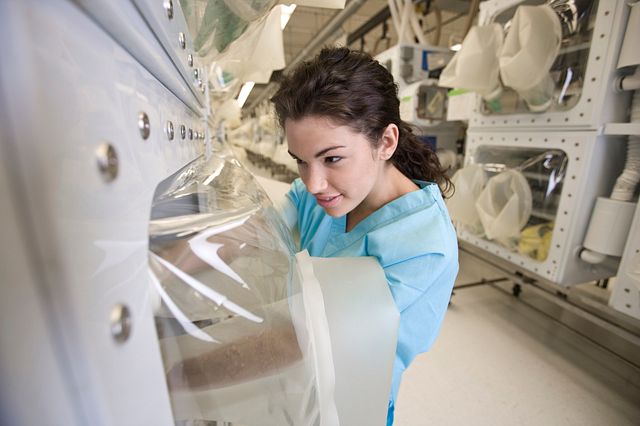
Our standard quarantine lasts 6 – 8 weeks and includes testing pooled samples from up to 10 animals per PRIA assay. During quarantine, your research models are housed in a secure, isolated environment with routine clinical monitoring. Once the quarantine period ends, we perform PCR-based PRIA panel testing to screen for a broad range of pathogens that could compromise your colony or research.
Customized Quarantine
What pathogens are on your exclusion list? We can conduct a quarantine and test after your desired duration using your chosen pathogen panel. Clients can choose from our standard pathogen panels and add additional testing based on their institutions' requirements, ensuring their lines are screened appropriately.
Turn a Positive Test into a Proactive Solution
Catching a pathogen during a quarantine is a big win. You have protected your entire facility from spreading dangerous pathogens and preserved your reputation and research integrity. But what comes next, and what does it mean for your research?
- Confirmation – Repeat the test and work with our team to understand holistically what it means.
- Rederivation – Our rederivation services remove adventitious organisms, such as viruses, bacteria, parasites, and pathogens, from your sperm and embryos and return them healthy and clean. Our IVF and mouse colony expansion services can deliver study cohorts quickly and efficiently.
- Cryopreservation – The cryopreservation of sperm and embryos preserves your strains for future research and avoids unnecessary breeding and colony maintenance costs.
Frequently Asked Questions About Animal Quarantine Services
-
Why do I need to quarantine incoming animal models?
Quarantining your animal models protects existing colonies from potential pathogens that incoming animals may have. Incoming viruses or bacteria can compromise your research, cause significant delays, drive up costs, and disrupt your entire facility.
-
How long can a quarantine take?
North America: Our rapid quarantine service can take as little as 2 – 3 weeks, while a standard PRIA quarantine can range from 6 – 12 weeks.
Europe: Our hold and screen quarantine service can take as little as 3 – 4 weeks.
-
Can animal quarantine services be customized?
Yes. Whether you need to adhere to specific IACUC/welfare protocols or are concerned about a particular exclusion list, we can accommodate any pathogen request.
-
Does Charles River handle animal quarantine logistics?
Does Charles River handle animal quarantine logistics?