
PDX Cell Line Assays
In addition to more than 370 publicly available human tumor PDX cell lines, we offer more than 75 proprietary cell lines derived from our PDX models, and this number continues to grow. All PDX-derived cell lines are fully characterized with selected clinical data and comprehensive molecular data for the originating PDX tumor, and have been characterized for their sensitivity against up to 300 reference agents with known mode of action. Learn how these models are routinely applied in 2D cell culture assays to generate actionable efficacy data.
In Vitro PDX Assays
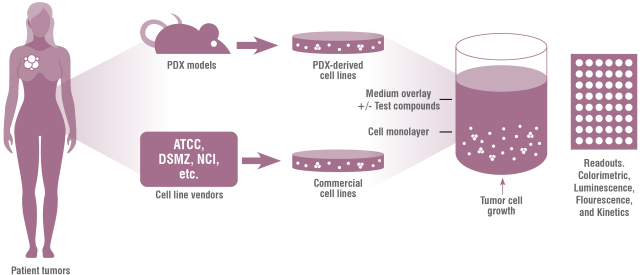
Figure 1: Diagram of 2D in vitro PDX assays. PDX-derived or publicly available cell lines are grown as monolayer culture and growth is monitored to test effects of compounds in single agent or combination assays.
Tumor cell lines derived from our portfolio of PDX models retain characteristics such as expression and mutation profiles, and are kept at low passage numbers. This creates “matched pairs” of xenografts and corresponding cell lines, which can improve translation by being able to use the same models for in vitro cell line assays, as well as ex vivo and in vivo efficacy studies.

White Paper: How PDX In Vitro Assays Are Accelerating Oncology Developability
This white paper describes that by harnessing PDX advantages with next-generation tools such as 3D technology and machine learning live cell imaging we can pave the way for a quicker path to clinical application.
Download the White Paper
In Vitro PDX Cell Line Screening
Improve speed and lower costs with fixed in vitro PDX model screening panels:
- Solid tumor histotypes
- Hematological cell lines
- Asian cancer cell lines
Need a custom solution? We can create panels of up to 100 cell lines and beyond for you. Our 2D in vitro PDX assays can be used in a variety of ways:
- Assessment of potency and selectivity in single agent screens
- Identification of mode of action via COMPARE analysis
- Combination studies
- Analysis of multidrug resistance
Combining In Vitro and In Vivo PDX Models
Experience has shown us that integrating 2D in vitro PDX assays, ex vivo 3D, in vivo models and bioinformatics data creates a comprehensive picture of your therapy. Our team can guide your combined application of these tools to facilitate drug development and enhance the speed of your oncology research.

Patient-Derived Xenografts - Cancer Model Database
Support your in vitro, in vivo, and ex vivo studies with; user friendly search, new model data (including HLA typing, growth curves, and tumor images) and multi-parameter search options for all tumor model types (PDX and CDX)
Visit our Database
Have another question or need advice on which model is right for you?
Frequently Asked Questions (FAQs) About In Vitro PDX Assays Research
-
What is a patient-derived xenograft?
Patient-derived xenografts (PDX) are models of cancer where the tissue or cells from a patient’s tumor are implanted into an immune deficient or humanized mouse. PDX assays and models simulate human tumor biology allowing for natural cancer progression, and offer the most translational research model for evaluating efficacy.
Determine which PDX model is best for your studies -
Does in vitro data correlate with in vivo PDX models?
Data collected in cell line assays such as in vitro PDX assays can be used to select PDX (patient dervived xenograft) models for subsequent in vivo efficacy studies.
Review the data on Nature.com -
What oncology models are right for me?
In a complex and changing field, knowing the next step can be difficult. Answer a few brief questions about your research to receive expert guidance on how to advance your oncology program. Receive personalized advice on the right in vitro PDX assays or models for you.
