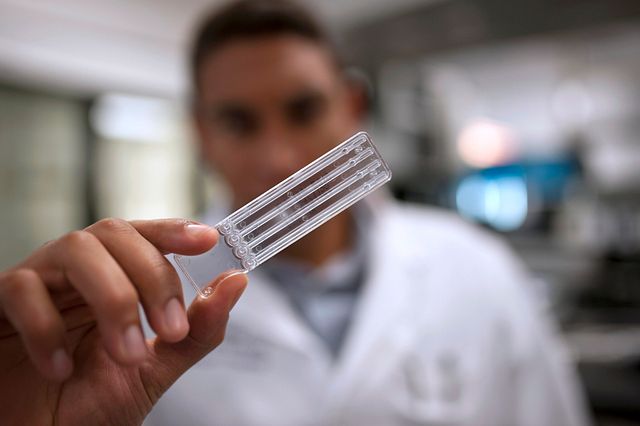
Streamline Your BET with Endosafe Cartridge Technology
Traditional endotoxin testing has always had its challenges - long turnaround times, extensive training, potential for human error, and multi-step assay preparation. In addition, an invalid test result could put your manufacturing timeline at risk. Endosafe cartridges are our answer to these pain points - offering higher sensitivity, faster results, and simpler test execution using a 15-minute rapid, kinetic chromogenic assay.
Regardless of whether you're using LAL or rCR for your endotoxin detection, the convenience and simplicity of cartridge technology is unmatched. It provides an uncomplicated pathway for integrating sustainable quality control testing into your overarching QC workflow, without the added complexity of additional instrumentation, reagents, consumables, and method modifications.
Multiple Configurations. Flexible Applications.
Endosafe FDA-Licensed LAL Cartridges
Our LAL test cartridges use Endosafe® chromogenic LAL reagent to measure color intensity, which directly correlates with the endotoxin concentration in a sample.
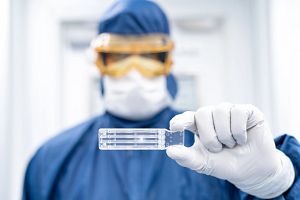
Endosafe® Trillium™ Recombinant Cascade Reagent (rCR) Cartridges
Our rCR test cartridges use an optimized Endosafe kinetic chromogenic reagent curated to simulate the natural LAL reaction. The formulation and composition of Trillium includes the 3 biological proteins (recombinant Factor C, recombinant Factor B, and recombinant proclotting enzyme) and a specific concentration of key components.
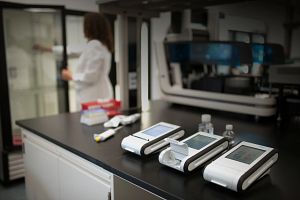
Beta-Glucan Cartridges
The Beta-glucan assay is a rapid, in-process test used for investigational purposes to ensure that products do not contain (1,3)-β-D glucans. These glucans are known to cause false-positive results in the LAL test, potentially triggering an investigation.
Preset Archived Standard Curves (ASC)
The ASC is a critical component of the Endosafe cartridges. It's a stored standard curve created from multiple reaction times for specified endotoxin concentrations using regression analysis. This innovative approach offers a statistically sound solution that meets regulatory commitments and significantly reduces variability between analysts when creating a standard curve and rehydrating reagents.

Cartridge Functionality Explained
- The four reservoirs represent duplicate sample and spike channels that allow the test to automatically run in duplicate as is the requirement for standard BET testing.
- Each channel ends in an optical cell where the samples are analyzed by the cartridge instrument. In the sample channels, the reader draws and mixes the sample with the rCR test reagent.
- In the spike channels, the sample is mixed with the our Endosafe rCR reagent and positive control. Each sample is then combined with the chromogenic substrate and incubated.
- After mixing, the reader measures color intensity directly related to the endotoxin concentration and compares the reaction times to the archived standard curve.
Endosafe® Cartridge Technology
This brochure provides detailed insights on endotoxin testing techniques, offering more streamlined, rapid, and precise solutions compared to traditional methods.
Simplify your BET
Frequently Asked Questions (FAQs) About Endosafe Cartridge Technology
-
Are Endosafe LAL cartridges a compendial method?
Yes, our LAL cartridge technology is a kinetic chromogenic method which is recognized as a compendial method per the USP<85> or Ph. Eur.<2.6.14>.
-
What manufacturing standards does Charles River Laboratories follow for producing Endosafe Trillium cartridges since it is not regulated by the FDA?
Although the FDA currently does not license recombinant reagents in the same way they license LAL, we continue to engage with the FDA in an effort to have recombinant reagents regulated. As an FDA-regulated facility, we adhere to the same quality control and manufacturing protocols as we do for our licensed reagents. We welcome our customers to audit our facility and processes as necessary.
-
Which endotoxin testing instruments are compatible with Endosafe cartridges?
We offer several highly flexible rapid testing platforms to meet the needs of a variety of sample throughputs and various lab sizes and configurations. All Endosafe testing systems support the same test cartridges for accurate, convenient, and real-time endotoxin testing, glucan concentration determination.
-
Do LAL Endosafe cartridges use less LAL than other BET methods?
Our FDA-licensed LAL test cartridges (license # 1197) use 95% less of the raw material required for a traditional bacterial endotoxin test. If all LAL tests were performed using this compendial optimized technology, today’s global LAL demand could be met with the blood from less than our current annual quota.
-
How do I qualify a new Charles River Endosafe cartridge lot?
Upon receiving test cartridges, run one cartridge using endotoxin testing reagent water and check values against the Certificate of Analysis (CoA). If they pass the cartridge lot is qualified.
For more information, visit the Endosafe® Customer Portal to locate the package insert.
-
How to select the right Endosafe® Cartridge sensitivity, without the guesswork?
Quality control managers can face challenges in selecting the correct Endosafe® cartridge sensitivity due to varying sample types, endotoxin limits, and potential interferences. The following document provides a clear and practical step-by-step guide on selecting the right Endosafe® LAL or Trillium™ rCR cartridge sensitivity, allowing quality control managers to achieve accurate and reliable endotoxin testing results, ensuring compliance with industry standards, and maintaining product safety.
Read the guide for a comprehensive walkthrough
5 Factors to Consider When Selecting Endosafe® Cartridges:
- Application Relevance: Quality control managers often struggle to ensure that their testing methods are suitable for various applications like pharmaceuticals and medical devices. Endosafe® cartridges provide tailored solutions for different applications, ensuring precise and reliable endotoxin testing, achieving accurate results, and maintaining high standards of quality control across diverse testing environments.
- Sample Type and Endotoxin Limit: Different samples have varying endotoxin limits, making it challenging to choose the right testing sensitivity. By understanding the nature of the sample and its endotoxin limit, quality control managers can select the appropriate cartridge sensitivity ensuring that all samples are tested within the required parameters, maintaining compliance and safety.
- Managing Interference: Interfering substances in samples can affect the accuracy of endotoxin testing. Conducting suitability testing helps determine the level of interference and the necessary dilution while overcoming sample interference and leading to valid and reliable test results.
- Cartridge Sensitivity Selection: Choosing the correct cartridge sensitivity can take time due to the range of options available. Read our new guide to select the right sensitivity based on sample type and required dilution so you may confidently select the optimal cartridge, ensuring precise endotoxin detection in specific testing scenarios.
- Routine Testing and Suitability: Ensuring ongoing routine testing accuracy can be difficult without proper initial suitability testing. Performing suitability testing and back calculating the required cartridge sensitivity ensures effective routine testing. This allows quality control processes to be streamlined, providing consistent and dependable results over time.
-
How do I store Endosafe reagent cartridges?
Store cartridges between 2 – 25° C (36-77° F). Do not open the pouch until you are ready to use the cartridge. If using a pack that contains more than one cartridge, be sure to keep the pouch sealed between uses.
-
What are the benefits of Endosafe cartridges over traditional BET methods?
Endosafe cartridges save time, require less reagents and equipment, and provide quantitative results. View a comparison study of conventional bacterial endotoxin testing and the Endosafe endotoxin testing cartridges.
-
Do I need any special reagents to run my sample with Endosafe cartridges?
No, just the sample and endotoxin testing reagent water. Most samples require dilution in endotoxin testing reagent water to overcome interference. If concerned about glucans, a glucan blocking buffer (BG600) can be used and the sample can be diluted 1:1 and then run on a cartridge.
-
Do I need to perform an alternative method validation?
Endosafe endotoxin testing cartridges do not require an extensive alternative method validation. Only the regular product validation using 3 different lots of product is required.
-
How is sensitivity determined for the Endosafe cartridges?
We supply Endosafe cartridges with various sensitivities as the level of endotoxin that is allowed in specific products vary. Your choice of cartridge sensitivity will depend on the type of sample being tested, the endotoxin limit, and level of interference (how much dilution is required). The Charles River Technical Support Team is here to help you choose the correct cartridge sensitivity. Please reach out with any questions you have to Endosafe®[email protected].
Ready to Transform Your BET Process?
Discover the unparalleled speed, ease, and precision of Endosafe cartridge technology. We invite you to evaluate its performance for yourself. Request a demonstration today and understand why more than 5,000 organizations have integrated this advanced technology into their manufacturing processes. Begin your journey towards operational excellence.