Discovery
|
Regina Kelder
The Evolving Cancer Mouse Model
What models are trending, what are their limitations, and what does the future look like for mice in oncology drug development?
For more than 75 years, research mice have been integral to the study of cancer. There are few oncology drugs on the market—from the small molecule drugs to monoclonal antibodies, immunotherapies, and most recently cell and gene therapies—that have not been informed by research findings in mouse models. Cancer mouse models have helped to uncover important details about the pathogenesis of disease and helped verify theories of cancer biology initially developed in cultured cells.1 They have been critical in identifying therapeutic targets.
However, mouse models also have limitations that have been challenging in oncology drug development. Mouse models are not people. They are genetically similar but not identical, and those differences can impact oncology drug discovery efforts and the overall translatability to the clinic.
Steady Advances in the Diversity of Cancer Mouse Models
Traditionally, researchers have used both syngeneic mouse models and xenograft mouse models, which use subcutaneously or orthotopically transplanted tumors to study cancer and test cancer drugs. Syngeneic models, otherwise known as allograft mouse tumor systems, are generated through the implantation of host animal tumor cells from genetically and immunologically compatible donors. In contrast, xenograft models utilize an animal that does not have an intact immune system; the immunocompromised mice can be implanted with human tumor cells without the risk of graft rejection.
There are also transgenic mouse models, which are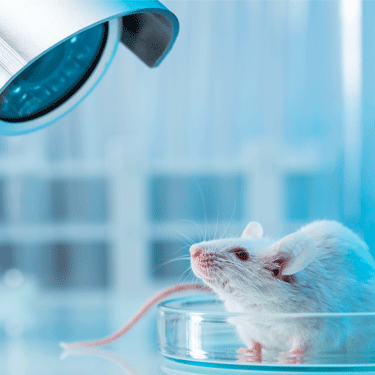 genetically engineered to express cancer genes or mutate tumor suppressor genes so that the genetic defects give rise to mouse tumors. The use of genetically modified mouse models to study gene function in health and disease started in the early 1980s. Initially, foreign genes were introduced into the genome by random integration, frequently with variable copy number in tandem, through microinjection of DNA into fertilized eggs. But advances in embryonic stem cell research opened the door to targeted mutations that could be passed on to the progeny. Recent breakthroughs in genome editing, especially CRISPR/Cas9 technology, have advanced the field even further. (More on CRISPR later.)
Most recently, we’ve seen an evolution in mice endowed with increasingly more sophisticated functional human immune systems. These are mice with little or no mouse immune system and most commonly engrafted with specific human immune cells. The two most used humanization options are PBMC mice, which are developed by injecting peripheral blood mononuclear cells into immunodeficient mice, and CD34+ mice, which are generally made by engrafting CD34+ hematopoietic stem cells (HSC) from human cord blood.
In conjunction with these methods of humanization, the strain of the mouse matters. An optimal strain is the triple immunodeficient strain of mice, which lacks functional and mature T cell, B cell, and natural killer cells and has reduced macrophage and dendritic cell function. These animals can host xenograft cells, tissue, and human immune system components and are arguably the most versatile—but also the most expensive—in the humanization group.
The two humanized platforms (PBMC and CD34+ HSC) can be used with human xenograft tumors. That can be either PDX or CDX. PDX humanized mice have been engrafted with human tumors known as patient-derived xenografts. These “avatars” preserve the original characteristics of a patient’s cancer and have been shown to mimic the disease more effectively than deriving tumors from cancer cell line-derived xenografts (CDX), though the CDX does have its advantages in certain kinds of oncology studies.
Interestingly, these various kinds of cancer mouse models have dominated at different times over the course of oncology drug development. Xenograft and allograft models were commonly used in the early years of chemotherapy. Transgenic mice became highly useful in the testing of targeted therapies, which emerged in the 1990s as a powerful way of interfering with specific proteins that tumors rely on to grow and spread throughout the body.
The dawn of checkpoint inhibitors and other immunotherapy strategies in the 2010s caused a resurgence in the use of syngeneic models and ushered in the expansion of humanized models. Today, we are entering a new age of cell and gene therapies, which also lean heavily on humanized models.
Limitations of Current Cancer Mouse Models
Despite the versatility of these mouse models, we still haven’t solved the translation problem. The more we learn about the complexity of cancer, the more we realize that all mouse models have limitations in their ability to mimic the extremely complex process of human carcinogenesis, physiology, and progression. No matter how much we manipulate a mouse model, it still won’t check every box we need to ensure perfect translation from animal to human. Is it any surprise, then, that so many drugs end up faltering in the clinic and never make it to market?
 Consider the advancing field of cancer immunotherapies. Immunotherapy is now the standard of care for several cancers, yet durable responses and long-term survival with immunotherapy, while certainly evident in some advanced disease patients, are not widespread.2 By one estimate, only about 15-20 percent of patients achieve a durable response.3 Determining why some patients do well, and others resist treatment, is a major focus of oncology research today.
Targeted therapies are also powerful tools and have revolutionized the treatment of some cancers. The approval of Herceptin more than two decades ago changed the course for women with certain breast cancer mutations. Yet only a small percentage of targeted drugs get approved.
There are multiple reasons why translatability is so hard in drug development, not all of which are due to mouse models. Mouse models used to study immuno-oncology—predominantly syngeneic and humanized models—as well as immunodeficient models, primarily rely on subcutaneous implantation methods rather than the more challenging technique of engrafting and growing orthotopic tumors in the organ of origin, which are likely more predictive of the clinical response in a real-world setting, but also more complex to establish and evaluate.4
Tumor diversity is difficult to model in mice, which makes understanding responses to immunotherapy more challenging, and the rapid kinetics of tumor growth in syngeneic models don’t always provide enough time to evaluate the effectiveness of immunotherapy.5
The PBMC humanized mouse model is limited by the development of severe graft-versus-host disease roughly 2-5 weeks after injection of human cells, giving a narrow experimental window for drug studies.6 Other concerns with humanized mice include residual murine immunity, which can interfere with immune cell reconstitution; lack of proper antigen presentation due to deficient B and innate cells; and inconsistent response to some immuno-oncology drugs due to variability of tumor growth kinetics and immune cell reconstitution.7
Future Directions in Cancer Mouse Models
So, what does the future look like for mouse models?
With so many different treatment strategies now available to attack cancer, combination therapies are increasingly being studied in animals and in the clinic as a kind of one-two punch to try to decrease the chances that resistant cancers will develop and to improve patient outcomes.
Even before the first immunotherapy approvals in the early 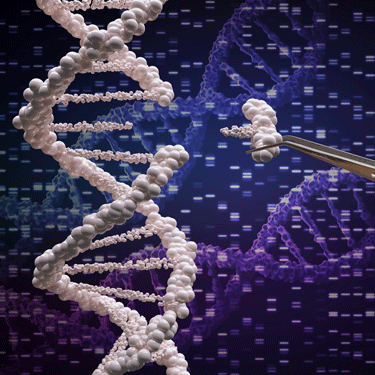 2010s, researchers began combining two immunotherapies in mice to try to slow tumor growth and extend survival, and found that the schedule of the treatments was critical to success.8 Today, there are at least 35 FDA-approved combination immunotherapies.9 The next generation of combination therapies is also combining immunotherapies with other types of treatment, including chemotherapy and radiotherapy, and targeted therapies, to improve their effectiveness. Bi-specific antibodies are a current focus, and even multi-specific antibodies are being studied intently. 10, 11
“Mouse models will likely continue to be refined as well, especially in the area of humanization, where the goal will be to improve the engraftment of myeloid populations,” says Patrick Fadden, PhD, Research Director at Charles River’s Discovery Oncology site in Morrisville, NC. “Considering the combinations of targeted and immunotherapies, along with the rapid rise of cellular and gene therapies, researchers will continue to push the complexity of these models in order to keep pace.”
Still, determining the best mouse model or models to measure the safety and efficacy of two drugs, which might work differently in the body, can be challenging. As treatments become even more complex and individualized, so might the design of the preclinical drug studies for evaluating those treatments.
Consider the Gene Editing Technology CRISPR/Cas9
Genetically engineered mouse models (GEMMs) are increasingly important in oncology research and cancer medicine, where they enable scientists to replicate human genetic mutations and study how these changes influence tumor initiation, progression, and therapeutic response. By using genetically engineered mouse models in cancer research, investigators gain insights into cancer biology and drug resistance, while the use of genetically engineered mouse models in cancer medicine supports the development and preclinical testing of innovative therapies that can be translated into clinical practice.
The application of the CRISPR/Cas9 system has revolutionized the field of model creation by reducing the cost and time compared to conventional methods, and by increasing the versatility of generating cancer mouse models. Less than a decade after the first clinical trials of CRISPR/Cas9 many companies, including Charles River, are using the tool to knockout or modify DNA in animal models to study disease phenotypes and develop new treatments.
The field of humanized mouse models continues to expand as well, with each iteration bringing us closer and closer to mimicking people’s immune systems. As innovative technologies continue to be developed, humanized mice are becoming increasingly more complex.
“We are still just scratching the surface of what these animal models can be used for,” says Jenny Rowe, PhD, who provides technical and scientific oversight for humanized mouse model development and production at Charles River. “The hope is always to create a humanized mouse model that can better recapitulate what is observed in a clinical setting. Pairing the appropriate model to address the specific scientific questions being asked helps bridge this gap.”
Lastly, the emergence of alternative technologies—from organs-on-a-chip and organoids to in silico models and cryo-EM—means that researchers will likely reduce their decades-long reliance on mouse models. But for this to happen the non-animal models will need to be extensively validated to ensure they are as reliable if not better than animal models currently are.
In other words, we are decades away from ending our relationship with the hardworking cancer mouse model.
Research Models & Services
In the rapidly evolving world of biomedical science, Charles River’s comprehensive portfolio of rat and mouse cancer models and services allows us to help our clients research, discover, and develop new therapies.

Oncology Preclinical Study Planning Toolkit
Take control of your efficacy study by getting instant access to study pricing, cancer model data, and connection to our oncology specialists, so that you feel supported on your oncology efficacy journey.
References
- Bates, Betsy. “First FDA-Approved Chemo Agent Turns 60.” Internal Medicine News, March 1, 2009. https://cdn.mdedge.com/files/s3fs-public/issues/articles/70173_main_4.pdf.
- Kluger, H., J. C. Barrett, J. F. Gainor, O. Hamid, M. Hurwitz, T. LaVallee, R. A. Moss, R. Zappasodi, R. J. Sullivan, H. Tawbi, and E. Sharon. 2023. “Society for Immunotherapy of Cancer (SITC) Consensus Definitions for Resistance to Combinations of Immune Checkpoint Inhibitors.” Journal for ImmunoTherapy of Cancer 11 (3): e005921. https://pmc.ncbi.nlm.nih.gov/articles/PMC10016305/.
- Johns Hopkins Medicine. “Immunotherapy: Precision Medicine in Action.” Accessed August 21, 2025. https://www.hopkinsmedicine.org/inhealth/about-us/immunotherapy-precision-medicine-action-policy-brief.html.
- Ireson, C. R., Alavijeh, M. S., Palmer, A. M., Fowler, E. R., and Jones, H. J. “The Role of Mouse Tumour Models in the Discovery and Development of Anticancer Drugs.” British Journal of Cancer 121, no. 2 (2019): 101–108. https://www.nature.com/articles/s41416-019-0495-5.
- Chulpanova, D. S., K. V. Kitaeva, C. S. Rutland, A. A. Rizvanov, and V. V. Solovyeva. 2020. “Mouse Tumor Models for Advanced Cancer Immunotherapy.” International Journal of Molecular Sciences 21 (11): 4118. https://www.ncbi.nlm.nih.gov/pmc/articles/PMC7312663/.
- Long, J. E., M. Jankovic, and D. Maddalo. 2021. “Drug Discovery Oncology in a Mouse: Concepts, Models and Limitations.” Future Science OA 7 (8). https://www.tandfonline.com/doi/full/10.2144/fsoa-2021-0019
- Guil-Luna, S., Sedlik, C., and Piaggio, E. “Humanized Mouse Models to Evaluate Cancer Immunotherapeutics.” Annual Review of Cancer Biology 5 (2021): 119–136. https://www.annualreviews.org/doi/full/10.1146/annurev-cancerbio-050520-100526.
- National Cancer Institute. 2017. “Timing and Sequence Critical for Immunotherapy Combination.” Cancer Currents Blog, October 3, 2017. https://www.cancer.gov/news-events/cancer-currents-blog/2017/combining-checkpoint-inhibitors.
- Lu, L., M. Zhan, X.-Y. Li, H. Zhang, D. J. Dauphars, J. Jiang, H. Yin, S.-Y. Li, S. Luo, Y. Li, and Y.-W. He. 2022. “Clinically Approved Combination Immunotherapy: Current Status, Limitations, and Future Perspective.” Current Research in Immunology 3: 118–127. https://www.sciencedirect.com/science/article/pii/S2590255522000087.
- Yu, S., Y. Wang, P. He, B. Shao, F. Liu, Z. Xiang, T. Yang, Y. Zeng, T. He, J. Ma, X. Wang, and L. Liu. 2022. “Effective Combinations of Immunotherapy and Radiotherapy for Cancer Treatment.” Frontiers in Oncology 12: 809304. https://www.ncbi.nlm.nih.gov/pmc/articles/PMC8858950/.
- Levy, R. “The Power of Plus: Combining Immunotherapy with Other Treatments Is Showing Great Promise against a Variety of Cancers.” Dana-Farber Cancer Institute, September 7, 2022. https://www.dana-farber.org/newsroom/features/the-power-of-plus/.