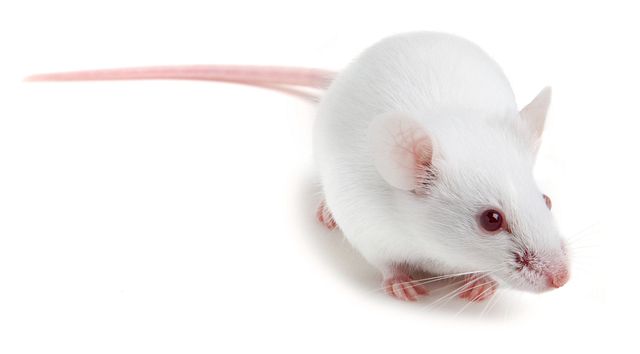
SCID Mouse Models
SCID mice possess a genetic autosomal recessive mutation designated Prkdcscid.** They are homozygous for the Prkdcscid allele, which has been mapped to the centromeric end of chromosome 16. These mice have severe combined immunodeficiency affecting both B and T lymphocytes.
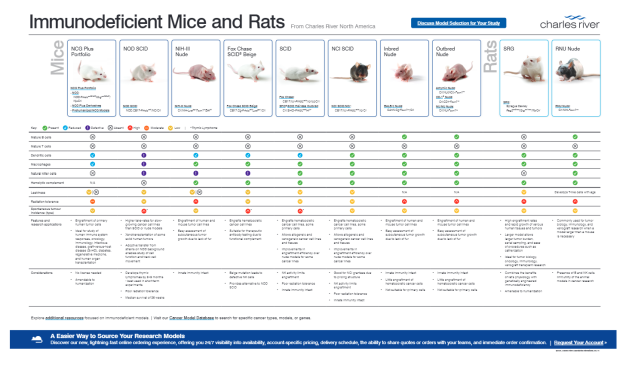
Immunodeficient Models Poster
This poster lists the major phenotypes of Charles River's immunodeficient mice and rats. It includes information on model features, degree of immunodeficiency, and gene functions.
They lack functional lymphocytes because of impaired VDJ rearrangement (rearrangement of separate gene elements of the immunoglobulin and T-cell antigen receptor genes). While typical SCID mice are haired, our portfolio includes hairless models that make ideal candidates for tumor imaging and measurements:
- Fox Chase SCID Mouse (C.B.17 SCID)*
- Fox Chase SCID Beige Mouse*
- NOD SCID Mouse
- SCID Hairless Congenic Mouse (SHC™)
- SCID Hairless Outbred (SHO) Mouse
- SCID/NCr Mouse
* Download xenograft data for the Fox Chase SCID mouse and Fox Chase SCID Beige mouse.
** Please note that the Prkdcscid mutation makes these mice more sensitive to radiation and certain drugs that may impair their DNA, compared to mice that don’t carry the mutation. Due to their sensitivity, SCID mouse models are not optimal for use in research that includes radiation. To determine the appropriate dosing and/or route of administration, a drug tolerance study is recommended.
Frequently Asked Questions (FAQs) About SCID Mice
-
What does SCID mean?
SCID stands for severe combined immunodeficiency disease. This means that SCID mice show a severe immunodeficiency that genetically affects both B and T lymphocytes.
-
What are SCID mouse models typically used for?
SCID models are typically used in biology studies of the immune system. SCID mouse models are also used for tumor growth studies and studies of normal and abnormal lymphocyte development and function.
-
What other resources do you have on SCID Mice?
Selecting the most appropriate mouse model to use is an essential step researchers make when designing a new study. To assist them in expediting the selection of a SCID mouse model, Charles River has compiled xenograft data on the Fox Chase SCID mouse and the Fox Chase SCID Beige mouse.
Did You Know We Deliver Drug Discovery Services from Day One?
Charles River offers a range of translational oncology studies, including in vitro assays and in vivo models, that mirror human cancers. Whether you want to test your therapy in a cell biology assay consisting of the elements of the tumor microenvironment or in models using real patient tissue, we can help.
Learn More

