Testing Immunotherapies in Syngeneic Models
Cancer immunotherapies are designed to work in conjunction with a patient's immune system to increase native anti-tumor responses. In this field of study, conventional xenograft models lack relevance due to the animals’ immunocompromised status. A syngeneic mouse model (e.g., 4T1 and MC38 cell lines), however, provides an effective approach for studying how cancer therapies perform in the presence of a functional immune system.
Syngeneic Mouse Models
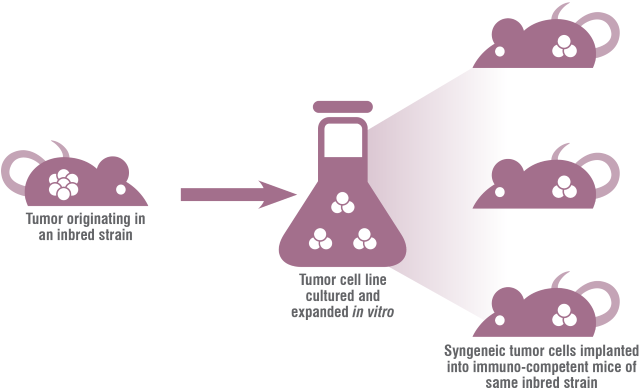
Figure 1: Diagram of syngeneic mouse models. Tumor tissue of the same (murine) genetic background is implanted into a mouse with an intact native immune system.
Immunocompetent Mouse Models for Syngeneic Studies
Charles River offers study-ready, genetically standardized BALB/c and C57BL/6 mice for intact immune response and immuno-oncology studies.
Cancer Types Spotlight
Cancer Model Database
Support your in vitro, in vivo, and ex vivo studies with a user-friendly search, new model data (including HLA typing, growth curves, and tumor images), and multi-parameter search options for all tumor model types.
Visit Our Database
Characterized Syngeneic Mouse Models
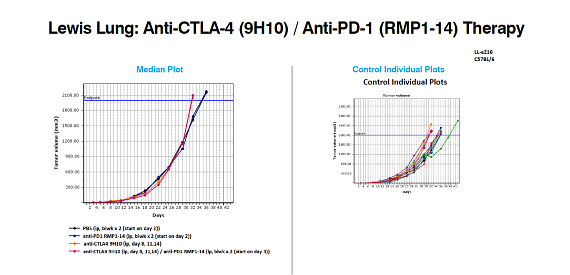
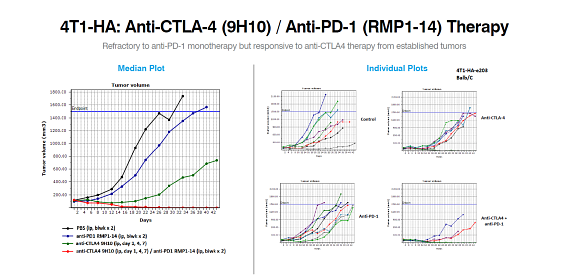
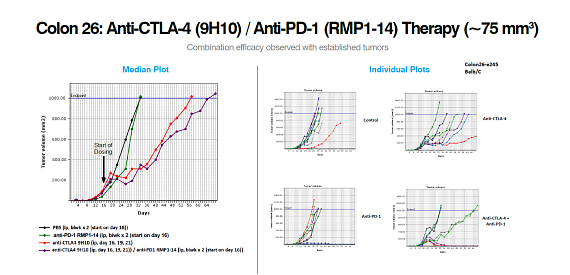
Charles River offers a broad range of syngeneic mouse models with well-characterized responses to known immune checkpoint inhibitors (e.g., anti-PDL-1, anti-PD-1, anti-CTLA-4), immune profiling, and genetic evaluation (e.g., whole exome sequencing, RNA-seq). With a portfolio of syngeneic models that are responsive to immunotherapies as well as complimentary in vitro and in vivo models in patient-derived xenografts (PDX), humanized models, and target validation, Charles River is your ideal partner to advance your immuno-oncology pipeline.
Syngeneic model selection is often based on:
- Responsiveness to known immune-modulating therapies such as anti-CTLA-4 and anti-PD-1
- Extent and composition of tumor-infiltrating leukocytes (TIL)
- Immunogenicity
We offer syngeneic mouse models with and without profile. Our syngeneic models with profile have been evaluated for response with checkpoint inhibitors and/or chemotherapies. We also offer syngeneic models with growth curves, but no standard agent/checkpoint inhibitor data. The following syngeneic models are available now:
| Histotype | Available Cell Lines |
|---|
| Bladder | MB49*, MBT-2*, UPPL-1541* |
| Breast | 11509-F*, 4T1*, 4T1 EF1A-mKate2, 4T1 luc, 4T1-BRCA1(+/−), 4T1-HA*, E0771*, EMT-6*, EMT-6-BRCA1(−/−)*, EMT-6-BRCA1(+/−) |
| Colon | Colon_38_FR, Colon26*, CT26*, MC38*, MC38-OVA* |
| Hepatoma | Yoshida |
| Leukemia | C1498*, L-1210*, P388* |
| Lung | J558*, KLN 205, KP*, KP1-lung*, KP4-lung*, Lewis Lung*, LL_FR*, LL-OVA*, Madison109* |
| Lymphoma | A20*, E.G7-OVA*, EL4*, El4-CD20 |
| Mastocytoma | P815 |
| Melanoma | B16F10*, B16F10-OVA, CHL-1*, CloudmanS91*, YUMM1.7* |
| Neuroblastoma | N1E-115* |
| Oropharyngeal | mEER |
| Pancreatic | Pan02* |
| Plasmacytoma | J558 |
| Renal | Renca* |
| Sarcoma | EHS, Meth A |
| Teratoma | F9_FR |
* Lines that are available with profile
Syngeneic Model Data
Access our new syngeneic model data including checkpoint inhibitor (e.g. anti-PDL-1, anti-PD-1, anti-CTLA-4), whole exome sequencing (WES), and RNA-seq data. This data gives you the ability to choose based on mutation status in addition to sensitivity immune checkpoint inhibitors.
Download now
PK/PD Studies
In addition, pharmacological effects and pharmacokinetics of test compounds can be determined in the tumor microenvironment with high sensitivity and temporal resolution by our in vivo microdialysis services. In vivo implantable microdevices can also be used to aid studies by allowing simultaneous in vivo testing of multiple drugs, drug doses, or drug combinations in a single tumor.
Complementary Immunology Assays
As the science evolves, we have worked to enhance our portfolio with additional mouse models of cancer and will continue to expand into additional models that allow for this simulation in vitro and in vivo, including humanized models, genetically altered models, and cytokine response, T-cell activation, and toxicity assays.
Additionally, we offer targeted transcriptomics using NanoString gene expression analysis platform to provide information on how the therapeutic is regulating the tumor microenvironment.
Have another question or need advice on which model is right for you?
Contact Us
Frequently Asked Questions (FAQs) on Syngeneic Mouse Models