
In Vitro Parkinson’s Disease Models and Assays
We offer an extensive portfolio of in vitro models and assays for Parkinson’s disease (PD) studies. Disease-relevant models include immortalized neuroblastoma cells, induced pluripotent stem cells, and primary rodent neurons that can be modified using gene editing technologies (RNAi/CRISPR). These models are typically differentiated into neuronal precursor cell lines such as dopaminergic neurons. Several phenotypic screens are available using high content imaging-based methods to measure PD-specific readouts.
Exploratory Toxicology for Neuroscience Drug Discovery
This eBook describes strategies across the early stages of drug discovery to support confidence in your lead small molecule candidate and to ensure you proceed through the drug development process with the most promising candidate.
Download eBook
In Vitro Models and Assays
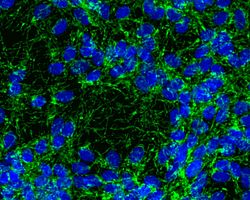
- Stem cell-derived neurons
- CRISPR/Cas9 gene editing
- Microglial activation assays
- Parkinson's disease assays
- MPP+ Neuronal Cell Death Assays
Animal Models of Parkinson’s Disease
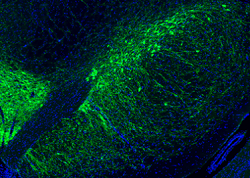 We offer a comprehensive and translatable modeling platform of chemically and biologically induced and genetic models to study mechanism of action and efficacy of novel PD therapies. The portfolio of in vivo animal models for Parkinson’s disease includes validated and established chemically induced and genetic models.
In Vivo Animal Models, Biomarkers, and Tools
- MPTP-induced
- 6-hydroxydopamine-induced
- AAV1/2-A53T-alpha-synuclein transgenic
- Fine motor kinematic gait
- Touchscreen testing
- Behavioral deficits
- L-dopa induced dyskinesia
- PD psychosis
- Haloperidol-induced catalepsy

Parkinson's Disease Resources
Check out our Parkinson’s Disease posters, publications and other scientific resources…
Browse The Resources
Our approach to studying Parkinson’s disease models is to thoroughly validate both induced and transgenic animal models to study novel disease modifying and symptom management therapies. We use cutting-edge translational tools and biomarkers to better inform preclinical and clinical outcomes.
Plan Your Next Study with Aged Mice
Charles River offers study-ready aged C57BL/6 mice up to 78+ weeks of age, supporting research in neurodegeneration, immunology, and age-related disease models. Learn More
Frequently Asked Questions (FAQs) about Parkinson’s Disease Models
-
How are you working to advance Parkinson’s disease drug discovery?
Developed in collaboration with the Michael J. Fox Foundation’s Parkinson’s Disease Research Tools Consortium, the alpha-synuclein aggregation assay for Parkinson’s disease cell models uses an aggregative selective anti-alpha-synuclein antibody (MJFR14). We have also collaborated with the foundation to focus on in vivo phenotyping of an alpha-synuclein knockout mouse model and an alpha-synuclein A53T knock-in model.
-
Why do so many preclinical PD studies take place in mice instead of rats? Is one species preferred over the other?
There are a lot of practical reasons to choose one species over the other when searching for the appropriate Parkinson’s disease models. If a transgenic or knockout model is needed, mice are preferred because more transgenic mice are available than transgenic rats and knockout models are only developed in mice. Conversely, certain rat models (AAV-alpha-synuclein) are more richly characterized than corresponding mouse models. For example, the 6-OHDA rat model is more popular than the MPTP mouse model because the 6-OHDA model is more stable and supports robust efficacy studies.
-
Do the lesions of the AAV-alpha-synuclein (AAV-α-syn) rodent models reflect those of humans with PD?
Yes. The effects on dopamine and Lewy bodies suggest that the lesions in the AAV-α-syn rodent Parkinson’s disease models reflect those of human disease pathology. However, because the human α-syn is introduced into a rodent model, it is not a one-to-one comparison. Human PD patients have increased α-syn, which is also a major component of Lewy bodies. Unlike models that target dopamine directly (such as the 6-OHDA and MPTP models), AAV-α-syn rodent models show accumulation of α-syn beyond the striatum and substantia nigra, resulting in a more complete phenotype of the disease state. This model better recapitulates the human condition, including behavioral changes than the 6-OHDA or MPTP models, which focus on a specific part of the disease.
-
Does Charles River offer study-ready research animal models for aging studies?
Yes, we maintain colonies of aged C57BL/6 mice (up to 78+ weeks of age) for various age-related and neuroscience research applications. We can also offer other rodent models upon request.