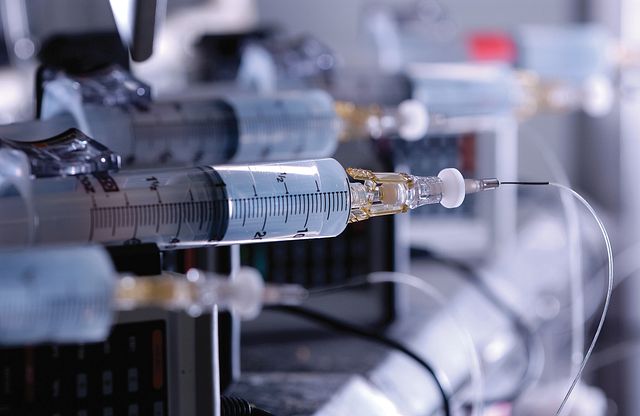
Infusion Toxicology Studies
Charles River offers both intermittent and continuous infusion models for both rodent and nonrodent species. Our vast infusion experience and cutting-edge infusion technology ensure high quality, cost-effective solutions to your most complex and challenging study designs. Collaboration with experts across divisions within our organization enables us to conduct infusion toxicology studies with integrated endpoints, seamlessly, resulting in comprehensive and robust solutions to your infusion challenges.
We continue to expand our capabilities for specialized routes of administration to best support the conduct of toxicology and safety pharmacology studies that adhere to global regulatory requirements, including ICH-compliant reproductive and juvenile toxicology studies that often require these specialized techniques.
Revolutionize Your Toxicology Strategy
Launch your nonclinical studies in as little as two days, monitor progress with real-time data, and receive comprehensive data-driven reports in just over a week with our integrated toxicology solutions.
Consult an Expert
Infusion Toxicology Assessments and Study Types
Study Types
- Small molecules and biologics (proteins/mAbs, peptides, oligonucleotides)
- Intravenous as well as subcutaneous infusion studies using external or, if required, implantable programmable micro-infusion pumps
- Use of target tissue dosing (including cerebrospinal deliveries into the intrathecal, epidural or cerebral spaces; and both general intracerebral infusion and specific localized directed injection/infusion using 3D MRI imaging) in routine laboratory species
- Infusion into tumor-bearing animals for efficacy studies, dosing, and sampling via dual vascular catheterization and peritoneal fluid exchanges
Specialized Assessments for Infusion Toxicology Studies
- Cardiovascular monitoring by radiotelemetry
- Cardiac biomarker profiling
- Neurological assessments
- Reproductive and juvenile assessments with continuous infusion
- Cerebrospinal fluid (CSF) sampling
- Vitreous and ocular tissue sampling
- Terminal whole-body perfusion
- Specialized histopathology techniques
- Imaging of catheter placement
- Remote infusion with physiological measurements, and ambulatory pumps
Infusion Toxicology Supported Therapeutic Areas
- Oncology
- Infectious diseases
- Central nervous system
- Diabetes
- Inflammatory/autoimmune diseases
- Cardiac diseases
Do you require infusion modes of delivery?
Ask an Expert