
REACH Chemical Testing
The Registration, Evaluation, Authorisation, and Restriction of Chemicals (REACH) regulation (EC) No #1907/2006 addresses the production and use of chemical substances, and their potential impact on both human health and the environment. Implemented on June 1st, 2007, the mandate created a single regulatory system for both existing and new chemicals in Europe.
Under REACH, all chemicals manufactured or imported in quantities of greater than one metric ton per year must undergo REACH testing and be registered in a central database managed by the European Chemicals Agency (ECHA) in Helsinki, Finland. ECHA handles the evaluation of dossiers and substances in conjunction with the member state competent authorities. Authorization for use is required for substances of very high concern.
REACH puts greater responsibility on the industry to manage the risks from chemicals and to provide appropriate safety information following the completion of REACH chemical testing. The legislation impacts all industry sectors and, ultimately, all downstream users of chemicals.
With over 40 years of experience in serving the needs of the chemical industry, our team is prepared to assist you with REACH compliance testing and support in a complete and timely manner.

Future-Proof Your Endocrine Disruptor Strategy Under REACH
View this webinar to explore endocrine disruptor testing under REACH, real-life testing solution examples.
Watch now
Regulatory Advisory Services
Our chemical regulatory advisory services include the assessment of data requirements, REACH compliance testing strategies, data evaluation, exposure and risk assessments, and dossier preparation. For non-EU manufacturers, we can serve as an only representative. Dossier updates, advice and/or statements on draft decisions from ECHA, CLH dossiers, etc., can all be performed by the highly experienced and knowledgeable scientists in our Regulatory Affairs group.
Physicochemical Testing
We conduct physicochemical testing with a wide range of chemical classes. Resulting REACH testing data is proven to support registrations in the United States, Canada, Australia, South America, Asia, and Europe. We can help you satisfy regulatory requirements with a full range of REACH testing services, available in complete packages or as stand-alone studies.
Analytical Support
We have a dedicated team of analytical chemists who have many years of experience in the development and validation of methods intended to support REACH testing. Working closely with our experts ensures that potential issues, such as poor solubility and stability under test conditions, are addressed as early as possible in the program.

Charles River's REACH eGuide
Our REACH eGuide helps you understand requirements, avoid common pitfalls, and develop an effective strategy to register your chemicals.
Download Now
Environmental Fate
We use environmentally controlled incubation rooms to conduct the in-life phases of environmental fate studies. REACH chemical testing systems are available from a wide variety of geographical locations globally. All are fully characterized and confirmed as viable before the start of the study.
Ecotoxicology
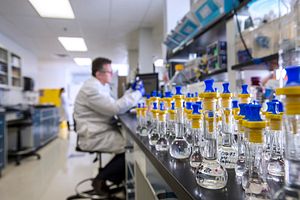
Our custom-designed ecotoxicology facilities enable both aquatic and terrestrial toxicology investigations to support your REACH compliance testing. All of our laboratories have independent environmental controls to accommodate a wide range of test organisms and conditions, including radiolabeled test items.
Toxicology
We have extensive global capacity for all your toxicity testing needs. Our experience in REACH chemical testing includes the accumulation of comprehensive background data, which is particularly relevant for supporting reproductive toxicology and carcinogenicity studies.
- Acute Toxicology
Acute toxicity testing is used to define the intrinsic toxicity of a test item and provides data for establishing the risk assessment of acute exposure to a test item. As part of our REACH compliance testing, we offer a full spectrum of regulatory-compliant studies to evaluate oral, dermal, and inhalation toxicity, dermal and ocular irritation, and skin sensitization. In vitro models are available to assess dermal irritation or corrosivity and ocular irritation, as well as the latest accepted models to test for non in vivo skin sensitization. - Genetic Toxicology
Our genetic toxicology studies typically follow a tiered approach, beginning with an in vitro (bacterial) Ames test and progressing to short-term in vitro assays using mammalian tissues. We offer a range of REACH testing studies to include these as well as additional in vivo assays and alternative strategies, such as the in vitro BlueScreen HC™ assay. - Repeat-Dose Toxicology
Ranging from sub-acute to chronic exposure, we offer repeat-dose studies using standard and specialized routes of administration. All repeat-dose REACH testing is supported by our formulation and analytical chemists and veterinary pathologists.
Developmental and Reproductive Toxicology (DART)
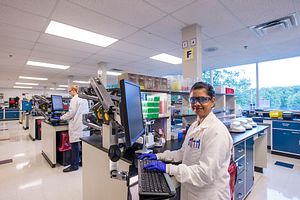
You can rely on our experts for all aspects of your REACH chemical testing. Our team of DART toxicologists is the largest in the industry, with vast experience in the design and conduct of reproductive toxicity studies to support international product registrations. We perform our studies in rodents and rabbits using appropriate routes of administration (e.g., oral, inhalation), and can include more specialized functional assessments, such as neurobehavioral testing, if required. Our complete portfolio of testing services includes the extended one-generation reproduction study (EOGRTS), as well as reproductive and developmental screening.

ECHA’s CRO Days – Implications for your Chemical Programs
Learn our experts’ key takeaways from ECHA’s CRO Days and the possible implications for your chemical testing program.
Gain Insights
Alternative Methods for REACH Testing
- In Vitro Absorption Studies
Annex IX confirms that in vitro dermal absorption studies are accepted forms of sub-chronic toxicity studies in rodents, reducing animal usage. We routinely perform studies that are designed to comply with OECD Test Guideline 428 in conjunction with the accompanying Guidance Document No. 28, as well as other relevant industry documentation. - In Vitro Corrosivity and Irritation Models
We offer two in vitro models created by SkinEthic as alternative methods to screen for dermal/ocular irritation and corrosive potential (OECD 431 and 439). The SkinEthic models are 3D reconstructed human epidermis (EpiSkin® and human corneal epithelium [HCE]) that provide accurate data while eliminating the need for animals. Where predictions can be made, these models are approved as an alternative to an OECD 405 study. Where no prediction can be made, an OECD 405 study would still be needed. - MucilAir™ In Vitro Human Airway Toxicity Test
MucilAir™ is a mucus secreting, ciliated epithelial model of the human airway produced by Epithelix Sàrl, Switzerland. It is derived from human airway cells that have been collected from healthy donors and cultured at the air interface on permeable membranes. We offer this as an in vitro model with morphology and functions mirroring the tracheobronchial epithelium, which can be used to identify potential airway toxicants in chemicals.